Gas Dryer Heats Then Stops Heating During the Cycle
A gas dryer that tumbles normally, starts hot, and later leaves a normal load damp has a distinct failure pattern. Initial heat shows that the dryer ignited and produced heat at least once; it does not prove airflow, burner cycling, gas delivery, controls, or gas-valve components will keep working through the cycle. Careful diagnosis separates these possibilities safely at home.
Check Airflow and Drying Conditions First
Long dry times often begin with restricted airflow. A dryer must move heated, moisture-laden air through the lint path, blower housing, exhaust duct, and exterior hood. When that route is restricted, heat can build inside the dryer and protective thermal devices may interrupt normal burner cycling.
Clean the lint screen before testing and confirm that the exterior exhaust hood opens while the dryer runs. Use a normal wet load rather than repeatedly checking an empty drum, which does not duplicate normal drying conditions. Note when drying performance declines, whether the dryer begins hot, and whether there are error codes, unusual odors, or other changes.
A crushed duct, excess elbows, lint buildup, or a blocked exterior termination can reduce exhaust flow. The lint screen is only one part of the route. For a persistent concern, washer and dryer repair in Pelham should address the complete drying system rather than one assumed part.
Observe the Burner Sequence After Airflow Is Evaluated
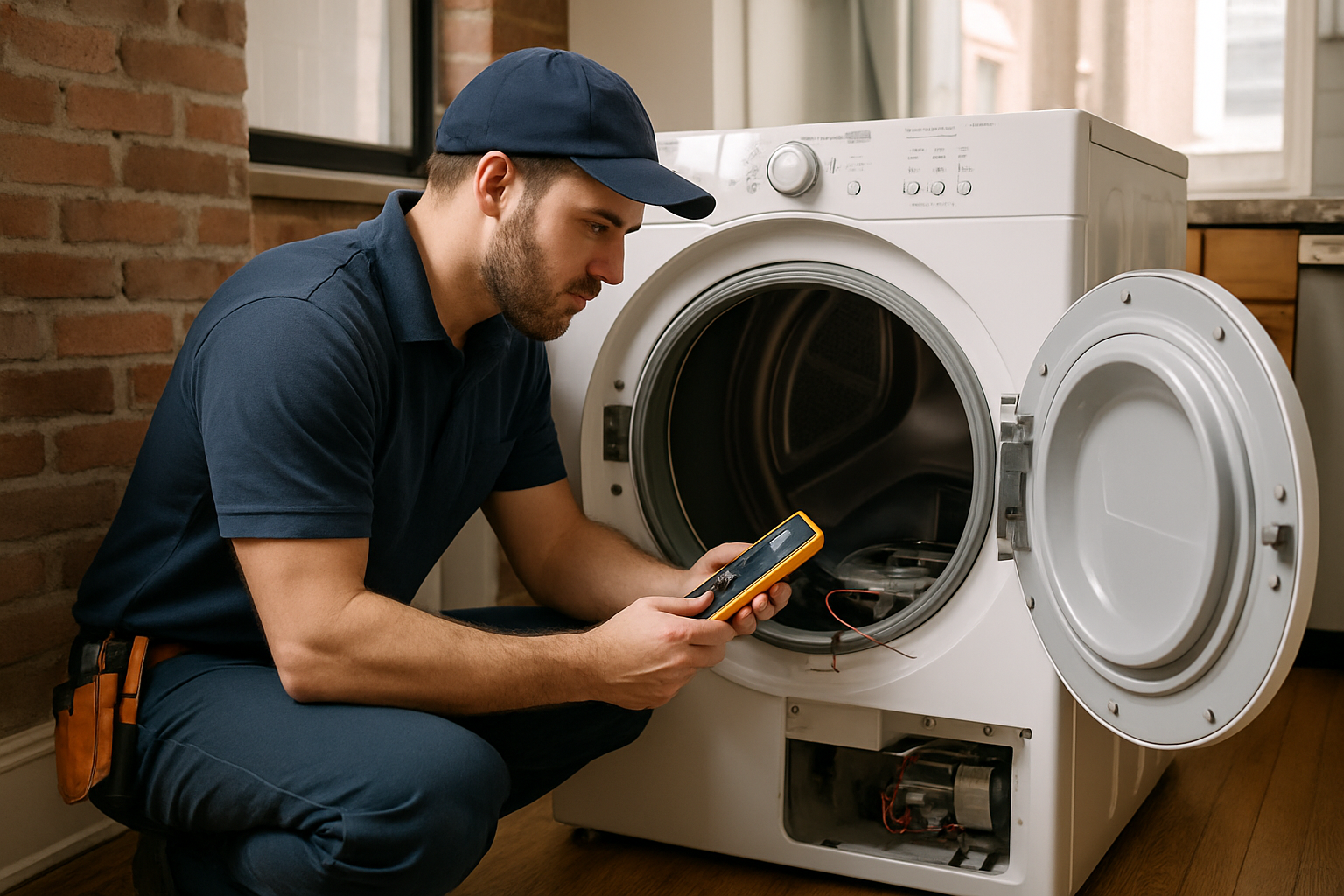
Initial burner operation does not rule out an airflow problem or a burner-related fault. Once airflow conditions are evaluated, a technician can observe the burner sequence using manufacturer procedures. The important details are whether the igniter operates, whether the burner lights, how long the flame remains active, and what happens when heat drops out.
Depending on the model and the observed behavior, diagnosis may include gas-valve solenoid coils, the igniter and flame-sensing behavior, thermal and operating controls, wiring connections, supply voltage, and applicable control outputs. Gas-valve coils can work while cold and become unreliable as the dryer runs, producing heat at first and no flame later.
However, similar symptoms can result from a high-limit event caused by poor airflow, an ignition-related issue, a loose connection, or a control-related problem. The appropriate repair follows the confirmed failure, not the most commonly discussed replacement part.
Use Cycle Behavior as a Clue, Not a Diagnosis
Cycle behavior can help describe the problem, but it cannot independently identify a failed component. If a timed cycle appears to perform differently from a sensor cycle, record that observation for the technician. It may indicate that cycle-control behavior should be considered along with airflow and heating performance.
Timed dry seeming better does not automatically eliminate a vent restriction. A longer setting can make a load appear improved while moisture removal remains slow because exhaust airflow is poor. Sensor-cycle behavior may also be affected by load size, moisture removal, and the dryer’s ability to maintain heat.
The key issue is whether the burner cycles appropriately with a representative wet load. That requires safe, model-specific testing rather than conclusions based on one cycle. Whirlpool owners may find Whirlpool dryer repair in New Rochelle useful when seeking model-specific diagnosis information.
Know When to Stop Using the Dryer
Stop using the dryer rather than running additional cycles if you notice a gas odor, burning smell, unusual cabinet heat, breaker trips, or a drum that stops turning. These conditions should be assessed before the appliance is operated again.
Do not remove dryer panels, bypass the door switch, perform live-voltage testing, or attempt gas-system testing. Disconnecting the vent while the dryer operates is also not a safe airflow experiment because it can introduce lint, moisture, and combustion-related concerns into the laundry area.
For homeowners outside Pelham, the same diagnostic order applies: confirm safe airflow conditions, then isolate the burner or control fault. This approach also applies when seeking appliance repair in Scarsdale for a dryer that loses heat or takes too long to dry.
Frequently Asked Questions
Why does my gas dryer get hot at first and then leave clothes damp?
The burner may stop operating after initial ignition, or restricted airflow may cause abnormal protective cycling. Proper drying requires stable burner operation, adequate exhaust flow, and correct control behavior throughout the cycle.
Can a clogged dryer vent make a gas dryer stop heating?
Yes. Restricted exhaust can raise internal temperatures and interrupt normal heating through protective cycling. The entire exhaust route should be evaluated, not just the lint screen or exterior hood.
Do failed gas-valve coils always cause intermittent heat?
No. Coils are one possible cause. Ignition components, thermal controls, wiring connections, airflow restrictions, and control-related issues can create a similar starts-hot, then-goes-cold symptom.
If timed dry works better, does that rule out airflow trouble?
No. A longer timed setting can mask slow moisture removal. Airflow should still be verified before deciding the problem is limited to a sensor or cycle-control function.
When should I stop using a gas dryer?
Stop use for a gas odor, burning smell, unusual cabinet heat, breaker trips, or a drum that stops turning. Avoid panel removal and gas or electrical testing until the dryer is assessed safely.
You might also like