Freezer Cold, Refrigerator Warm? What a Technician Checks First
A freezer cold refrigerator warm complaint can be confusing: ice stays frozen, yet milk, produce, and leftovers in the fresh-food section are not cold enough. In many refrigerators, this symptom points to an airflow or temperature-control problem—not automatically a failed compressor or one bad part.
Protect food first. If the fresh-food compartment remains warm, move perishables to a reliably cold location. Temperature notes, frost, noises, airflow symptoms, and the model number help a technician follow the actual cooling sequence rather than guess.
Measure Temperatures and Identify the Refrigerator Design
A refrigerator display can be useful, but it may not show the temperature throughout the compartment. Place an appliance thermometer in the freezer and fresh-food sections, then record readings over several hours. Note whether the refrigerator area is consistently warm, cools intermittently, or is warmer in one location.
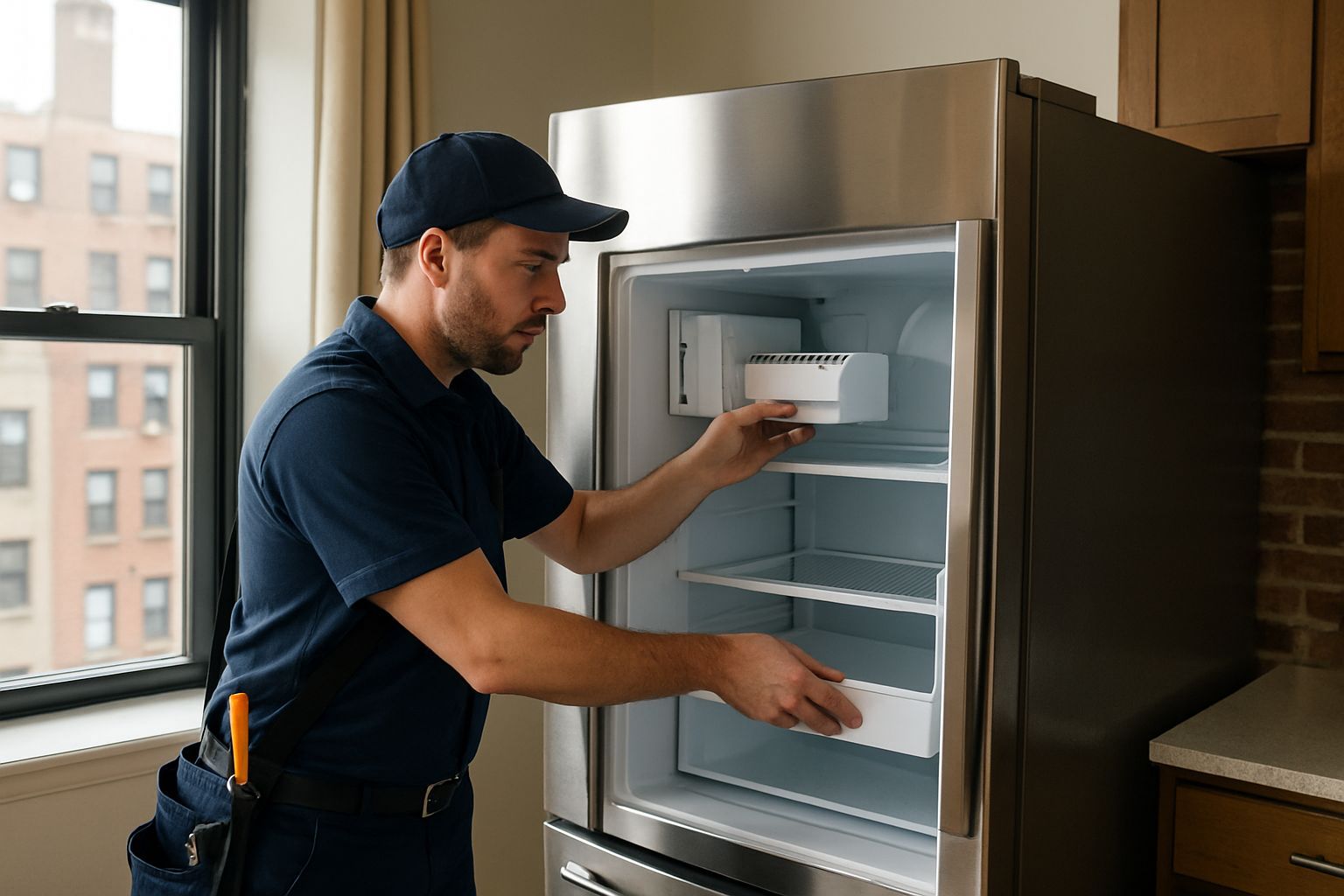
The appliance design matters. Many conventional refrigerators use one evaporator in the freezer. A fan moves cold air through ducts to the refrigerator section, while return-air passages bring air back for recooling. A restriction, weak fan, damper problem, or frost buildup can leave the freezer cold while the refrigerator warms.
That explanation is not universal. Some French-door and premium models use separate evaporators for the freezer and fresh-food sections. A technician identifies the model’s cooling design before testing an airflow path, fan, sensor, or control function.
Make Safe, Useful Checks Before Service
Check simple conditions without taking the refrigerator apart. Make sure food packages are not blocking supply vents or return vents. Depending on the model, these openings may be near the rear wall, upper area, or lower drawers. Groceries packed tightly against vents can limit circulation even when the freezer remains cold.
Confirm that both doors close fully. Look for obvious gasket tears, crumbs, containers, or drawer-alignment issues that prevent a proper seal. A door that does not seal can introduce warm, humid air continuously. If it can be checked safely, note whether the interior light turns off when the door closes. A light that remains on adds heat to the compartment.
Also record visible frost, water under drawers, unusual fan sounds, repeated clicking, error codes, and the model number. Do not remove sealed-system panels, defeat door switches, or perform live electrical tests.
Use Airflow and Frost as Diagnostic Clues
On a single-evaporator refrigerator, cold air must travel from the evaporator area to the fresh-food section and return again. A damper may regulate that airflow. A fan can run while still failing to provide enough airflow because of a fan-performance problem, iced passage, improperly fitted cover, or restricted return path.
Frost is important, but it is not a diagnosis by itself. Frost that restricts the evaporator or an air duct can reduce the cold air available to the refrigerator compartment. Depending on the model and frost pattern, a technician may evaluate the defrost system, fan, air passages, sensors, and controls.
Condenser airflow can also affect cooling performance. During normal service procedures, a technician can inspect condenser cleanliness and verify condenser-fan operation where applicable. The goal is to find where the cooling process is interrupted rather than replace parts based only on the symptom.
Follow a Model-Specific Technician Diagnostic Sequence
A proper visit starts by confirming the complaint with measured temperatures and identifying the refrigerator’s architecture. This prevents applying a single-evaporator airflow theory to a model with separate cooling systems.
The technician can inspect the evaporator-cover fit, frost pattern, supply and return-air paths, damper position where applicable, and evaporator-fan operation. Fan speed or command may matter, not merely whether a fan makes noise. If airflow does not explain the condition, further checks can include thermistors, wiring connectors, harness continuity, relevant switches, and control outputs.
For persistent fresh-food cooling concerns, professional refrigerator repair in Westchester County can help identify the actual cause. Model-specific configuration also matters for GE appliance repair in Pelham. Sultan provides general appliance repair in Mount Pleasant for nearby homeowners.
Frequently Asked Questions
Why is my freezer cold but my refrigerator compartment warm?
A conventional refrigerator may have enough freezer cooling but insufficient airflow to the fresh-food section. Restricted vents, an iced return path, damper problem, fan-performance issue, frost restriction, sensor issue, or control issue can contribute.
Can a refrigerator fan run but still fail to move enough air?
Yes. Hearing a fan does not confirm proper airflow. The fan may not operate at the needed speed, or frost, a blocked duct, misfitted cover, or return-air restriction may limit air reaching the refrigerator compartment.
Will a blocked air vent make the refrigerator section warm?
It can. Packages against supply or return vents can disrupt circulation. Clear space around vents and the rear wall, then monitor temperatures with an appliance thermometer. If temperatures remain warm, further diagnosis is appropriate.
Does frost on the evaporator mean the control board is bad?
No. Frost can indicate a defrost-related restriction, but it does not identify one failed component. A technician evaluates the frost pattern, defrost function, fan, sensors, wiring, and control outputs before blaming an electronic control.
Should I replace the damper, thermistor, or control board myself?
These parts should not be selected by symptom alone. The same warm-refrigerator complaint can have different causes. Avoid live testing or sealed-system disassembly; a technician can safely test the related airflow and electrical functions.
You might also like