Why Is My Refrigerator Warm but the Freezer Still Cold?
A refrigerator that feels warm while the freezer remains cold has a split-temperature problem, but the symptom does not identify one failed part. Many models use freezer-produced air to cool the fresh-food compartment. When that air is blocked, restricted by frost, or directed incorrectly, the freezer can seem normal while refrigerated food warms. Confirm temperatures first, protect perishables, and avoid invasive repairs.
Verify the Fresh-Food Temperature First
Place a thermometer in a glass of water in the fresh-food compartment and let it stabilize before recording the reading. Water changes temperature more slowly than air, so this method gives a more useful picture than a quick reading near a vent or the control display.
Compare that result with the freezer’s actual condition, not only its selected setting. A freezer holding near its normal temperature while the refrigerator is too warm often suggests an air-delivery or control concern rather than a broad cooling failure.
If the fresh-food compartment cannot maintain a safe temperature, move perishable food to a reliably cold location. Do not assume food is safe because the freezer remains cold or because the refrigerator was cool earlier.
Check Airflow, Doors, and Visible Obstructions
Look for packages, bins, or oversized containers blocking visible supply or return vents. Refrigerators need clear circulation paths, and tightly packed food can interfere with movement between compartments. Rearrange only accessible items; do not force covers, louvers, or other components.
Make sure both doors close completely. A container, shelf, or drawer that prevents closure can admit warm room air. Examine each gasket for visible damage, gaps, or sections that do not sit evenly against the cabinet. Record unusual conditions instead of trying to reshape parts.
Note whether the problem followed a door-left-open event or power interruption. Those events can contribute to frost or airflow trouble and give useful context during diagnosis. A recent filter concern or ice-maker issue may also be worth recording, but neither confirms the cause.
Treat Frost as a Clue, Not a Diagnosis
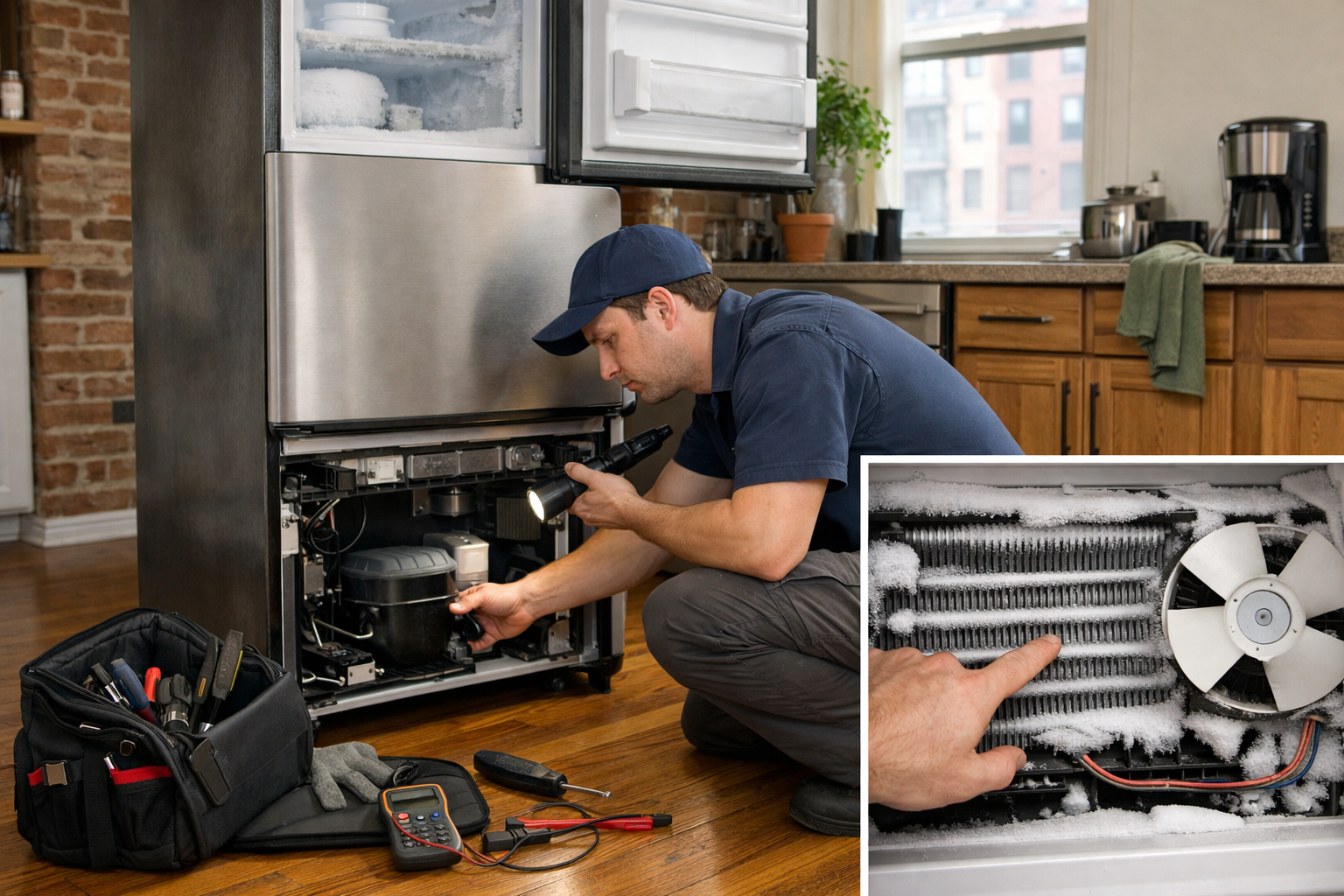
Unusual frost, ice, or water can restrict an air passage or interfere with normal circulation. A fan-like rubbing sound may occur when ice affects airflow around a fan area. Frost alone, however, does not prove a defrost failure; its location and pattern, the model’s design, and recent operating history all matter.
Do not remove panels, chip at ice, force an air damper, bypass a door switch, or access electrical components. These actions can damage parts, create a shock risk, or hide a pattern needed for diagnosis. A temporary thaw or reset may restore airflow briefly, but it does not confirm the underlying cause.
Some models use dual evaporators or separate fresh-food cooling. That changes diagnosis; do not order a part or assume a sealed-system issue from this symptom.
Record Details Before Scheduling Service
Write down the model number, displayed temperature settings, warning codes, and the stabilized fresh-food thermometer reading. Note whether the freezer seems normally cold, whether frost or water is visible, and whether you hear rubbing or fan-like noises. Include door-seal conditions and whether a power interruption or door-left-open event preceded the problem.
A technician can confirm compartment temperatures and consider the model’s cooling architecture before evaluating airflow paths, fan operation, damper movement where fitted, door-switch inputs, frost patterns, defrost performance, sensors, wiring, and control response. Model-specific testing is needed before naming a failed component.
For focused refrigerator repair in Pelham, document these details rather than guessing. Homeowners seeking appliance repair in Scarsdale can follow the same approach: protect food, note conditions, and avoid dismantling the refrigerator.
Frequently Asked Questions
Why is my refrigerator warm if the freezer is cold?
The freezer may still produce cold air, but that air may not reach the fresh-food compartment properly. Airflow restrictions, frost, a damper concern, fan operation, sensors, or controls can contribute. The model’s design determines the appropriate checks.
Can blocked vents make the fresh-food section warm?
Yes. Packages can block visible supply or return vents and reduce circulation. Rearrange accessible items so air can move, but do not force covers or louvers. If temperatures stay high after stabilization, diagnosis may be needed.
Does freezer frost always mean a defrost problem?
No. Frost can follow a door left ajar or an air leak, as well as a defrost-related issue. Its pattern and location matter. Treat frost as a clue, not a final diagnosis.
Can a damper or fan cause this symptom?
It can, depending on the model. A damper directs cold air and a fan moves it, but ice blockage, door-switch inputs, wiring, sensors, and controls can look similar. Testing is required before identifying a failed component.
When should I move food and schedule refrigerator service?
Move perishables when the fresh-food compartment cannot maintain a safe temperature. Schedule service after verifying temperature, clearing visible vent obstructions, and checking door closure. Avoid removing panels or attempting electrical repairs or forceful ice removal.
You might also like