Refrigerator Ice Maker Not Making Ice? What a Technician Checks First
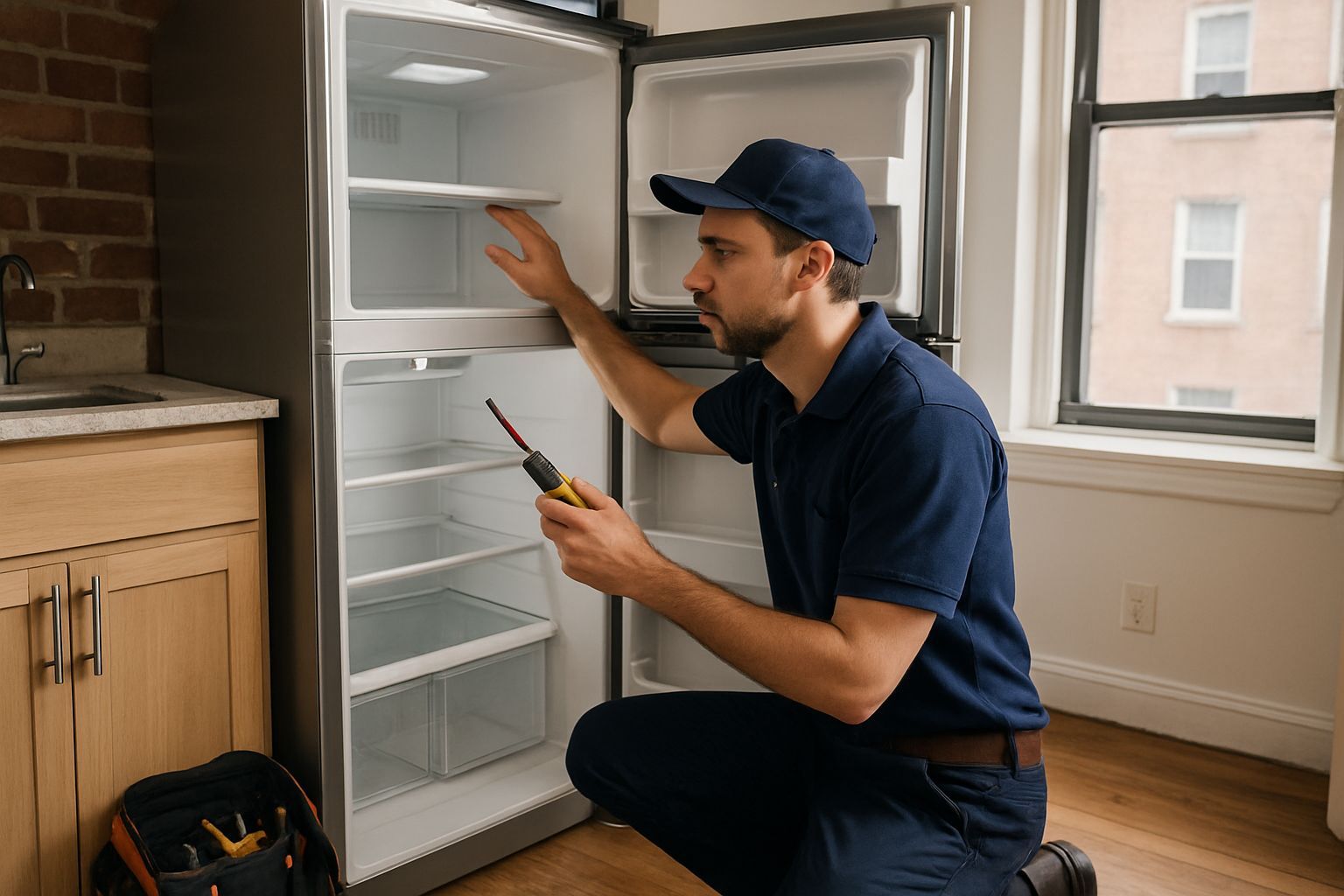
A refrigerator ice maker may stop producing, make tiny or hollow cubes, leave cubes in the mold, or fail to refill. For Pelham homeowners, the useful first step is identifying where the ice-making sequence stops rather than assuming one part has failed.
Freezer conditions, water supply, sensing, harvest, and controls work together. Similar symptoms can come from different points in that sequence, so the ice maker assembly is not automatically the cause.
Start With the Ice-Making Pattern
The visible pattern gives useful diagnostic direction. Before moving food or trying a reset, note what the ice maker is actually doing. No cubes can mean it is not harvesting, is not receiving a water fill, is switched off, or is held in a shutoff condition.
Cubes left in the mold may suggest a harvest-side interruption, although the exact cause depends on the model and its operating conditions. Small, thin, or hollow cubes often indicate that too little water enters during filling. Restricted water flow, water-pressure concerns, valve behavior, or another model-specific condition may contribute.
A frozen fill tube is a separate pattern. It can prevent water from entering the mold even when another part of the sequence occurs. Recurring freeze-ups can involve valve sealing, heater operation, tubing placement, water pressure, controls, and the refrigerator’s design.
Safe Checks You Can Make at Home
Confirm that the ice maker is turned on and that the ice bin is seated correctly. If the manufacturer identifies the bin as user-removable, remove obvious loose ice clumps before reinstalling it. Do not force parts that do not move easily.
Check that both refrigerator doors close fully, and note whether frozen foods are solid. A freezer that feels generally cold may still not maintain the conditions needed for normal ice production. If the refrigerator has a water dispenser, observe whether its flow seems normal.
Normal dispenser flow is helpful information, but it does not prove that the ice maker’s water path or inlet-valve function is correct. Record the complete model number, photograph displayed error codes, and document the ice condition. For upkeep information, see this refrigerator repair and maintenance guide.
Why Technicians Follow the Sequence
Professional diagnosis starts by confirming freezer conditions and determining how the exact model is designed to make ice. Refrigerators can use different sensing systems, heaters, control boards, harnesses, and diagnostic routines, so a visual check alone cannot identify every fault.
A technician may check whether the bin sensor or shutoff system reads the bin as full, whether the ice maker is harvesting, and whether the control commands a water fill. They can inspect the fill tube, inlet-valve response, applicable wiring connections, and water-path restrictions.
For recurring fill-tube freeze-ups or overfill patterns, diagnosis may include water pressure and whether the valve seals properly after filling. Heater circuits, door wiring, connectors, control outputs, and stored diagnostic information may also be relevant where the model supports those checks.
When to Stop Troubleshooting
Do not remove the ice maker, force a harvest cycle, bypass switches, or perform live-voltage tests. Avoid using heat to thaw internal refrigerator components, since this can damage parts or create additional safety concerns.
If water is leaking, shut off the refrigerator’s water supply and seek service. Service is also appropriate when the fill tube appears frozen, production remains inconsistent after basic checks, or the refrigerator displays an error code.
For model-specific diagnosis in Pelham or nearby communities, professional refrigerator repair in Westchester County is available. Homeowners in nearby areas may also find this appliance repair service in Mamaroneck relevant.
Frequently Asked Questions
Why is my ice maker not making ice if the freezer feels cold?
Feeling cold does not confirm proper operating conditions. The problem may involve temperature, sensing, harvest operation, water fill, wiring, or controls. A technician confirms actual conditions and the ice-making sequence required for that particular model.
Why is my ice maker making tiny or hollow cubes?
Tiny or hollow cubes can mean too little water reaches the mold during filling. A restricted water path, water-pressure concern, valve response, or another model-specific condition may contribute. Cube shape alone does not identify the failed component.
Can a frozen fill tube stop the ice maker from refilling?
Yes. A frozen fill tube can block water from entering the ice mold. The underlying reason still requires diagnosis because valve sealing, heater operation, tubing placement, water pressure, and control behavior can all be relevant.
Does normal dispenser flow prove the ice maker valve works?
No. Normal dispenser flow is a useful observation, but it does not confirm the ice maker receives the correct fill command or that its specific valve function and water path are operating properly.
Should I replace the ice maker assembly right away?
Not before diagnosis. The ice maker may not be the source of the problem. Confirming freezer conditions, fill behavior, sensing, water delivery, wiring, and model diagnostics helps identify the appropriate repair.
You might also like