Why Does My Gas Oven Take So Long to Preheat?
When a gas oven takes too long to preheat while the surface burners ignite normally, it is understandable to question the gas supply. Cooktop burners are a useful clue, but they do not use the same components or sequence as the bake system. A slow oven may eventually heat, stall below the setting, or cook unevenly despite a preheat message.
Why Cooktop Burners Can Work While the Oven Heats Slowly
Surface burners and the bake burner are separate systems. The cooktop can have its own igniters, valves, and burner assemblies, while the oven follows a different ignition and heat-control sequence.
Many gas ovens use hot-surface ignition: the igniter heats, the gas valve opens when operating conditions are met, gas reaches the bake burner, and the burner lights. Other models use spark ignition, so the system must be identified before diagnosis.
Normal cooktop operation does not rule out an oven-specific problem involving ignition, burner flame, temperature sensing, wiring, connections, or control output. It also does not confirm that the cavity can reach or maintain the selected temperature. Oven and cooktop repair in Pelham can evaluate the complete bake-cycle sequence instead of selecting a part from one symptom.
Why a Glowing Igniter Can Still Cause Slow Preheat
On applicable hot-surface-ignition ovens, a glowing igniter can be misleading. Orange glow shows that it receives power and becomes hot; it does not prove proper performance.
An igniter can weaken over time while still glowing. It may fail to draw the model-specific electrical current needed for reliable gas-valve opening, leading to delayed flame, long preheat, intermittent heating, or failure to reach the selected temperature.
No single amperage applies to every range. Evaluation follows the manufacturer procedure for the specific model, so color alone should not determine whether an igniter is replaced. Testing also helps distinguish an igniter concern from a valve, wiring, or control issue. A visible glow is not a complete diagnosis.
Safe Observations to Make Before Calling for Service
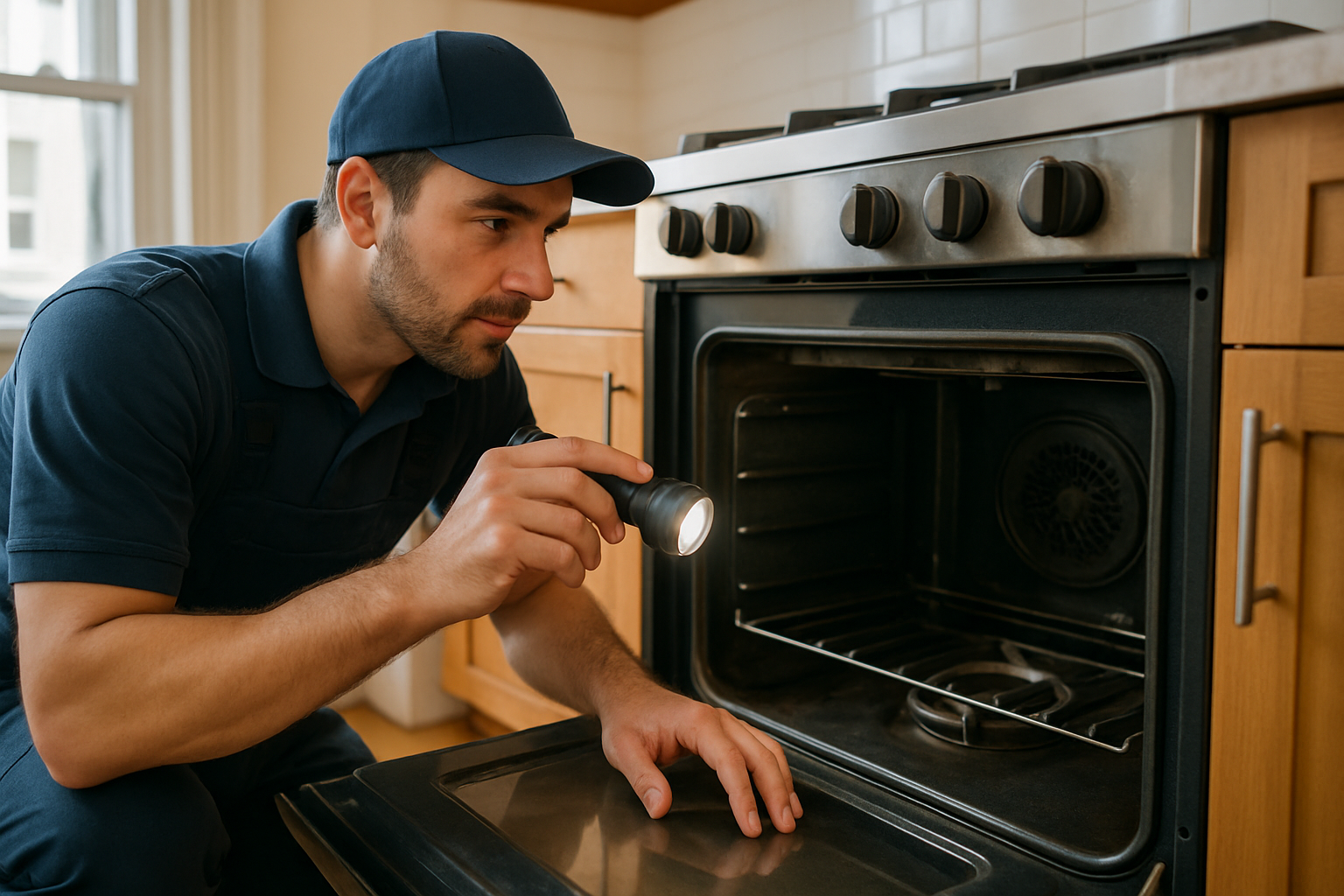
Do not remove oven panels, disconnect gas components, or perform live electrical testing. Instead, record observations that help describe the problem:
- Confirm Bake mode and the intended temperature.
- Note approximate preheat time and cooking results after the preheat display.
- Through the window, observe delayed ignition or repeated heating attempts.
- Check that the door closes and racks, foil, or cookware are not blocking airflow.
- Record error codes and the complete model number.
These details can separate slow heating from door-seal, airflow, temperature-cycling, or calibration concerns. For a GE range, GE appliance repair in Pelham is relevant to brand-specific oven and ignition concerns.
Stop using the range and seek prompt professional help for a gas odor, repeated ignition popping, smoke, visible damage, or breaker tripping. Do not relight, disassemble, or test a suspected gas or electrical fault.
What a Technician Checks During Diagnosis
Diagnosis begins by verifying the complaint during normal Bake operation. A technician confirms the selected mode, observes the ignition sequence, and measures how the oven cavity heats over time with appropriate test equipment.
For a gas oven, the process may include evaluating igniter condition and model-specific electrical performance, confirming gas-valve operation, and observing burner flame after ignition. Sensor feedback, wiring harnesses, grounds, connectors, and control output also require inspection. A poor connection or control concern can resemble a weak igniter.
The technician also distinguishes slow heat-up from inaccurate temperature cycling. An oven may light normally but struggle to maintain heat, respond inaccurately to sensor feedback, lose heat through a door-seal concern, or have an airflow issue. The oven’s actual temperature behavior matters more than one preheat alert. For related symptoms, review this guide to common oven warning signs.
Frequently Asked Questions
Why do my gas burners work but my oven takes a long time to preheat?
The cooktop and bake system use different components and operating sequences. Working surface burners do not confirm that the oven igniter, bake burner, gas valve, sensor, wiring, or control system is operating correctly.
Can a gas-oven igniter glow and still be too weak to open the gas valve?
Yes. On applicable hot-surface systems, an igniter can glow while failing to meet the model-required electrical performance for dependable gas-valve opening. Its appearance alone cannot confirm that it is working properly.
Is it safe to keep using an oven that heats slowly?
Avoid using the oven if there is a gas odor, repeated popping, smoke, visible damage, or breaker tripping. Without those warning signs, inconsistent heating can still affect cooking results and should be professionally diagnosed.
Why does my oven say it is preheated when food is still undercooked?
A preheat indication is not a complete measure of cavity-temperature performance. Slow heat rise, inaccurate cycling, sensor feedback, airflow, or door-seal concerns can still affect how the oven maintains heat and cooks food.
Should I replace the igniter, sensor, or control board myself?
Parts should not be chosen from one symptom. A glowing igniter, working cooktop, or preheat chime does not identify the failed component. Gas and live-electrical testing belong to a qualified technician. Appliance repair in New Rochelle can address oven and cooktop concerns outside Pelham.
You might also like