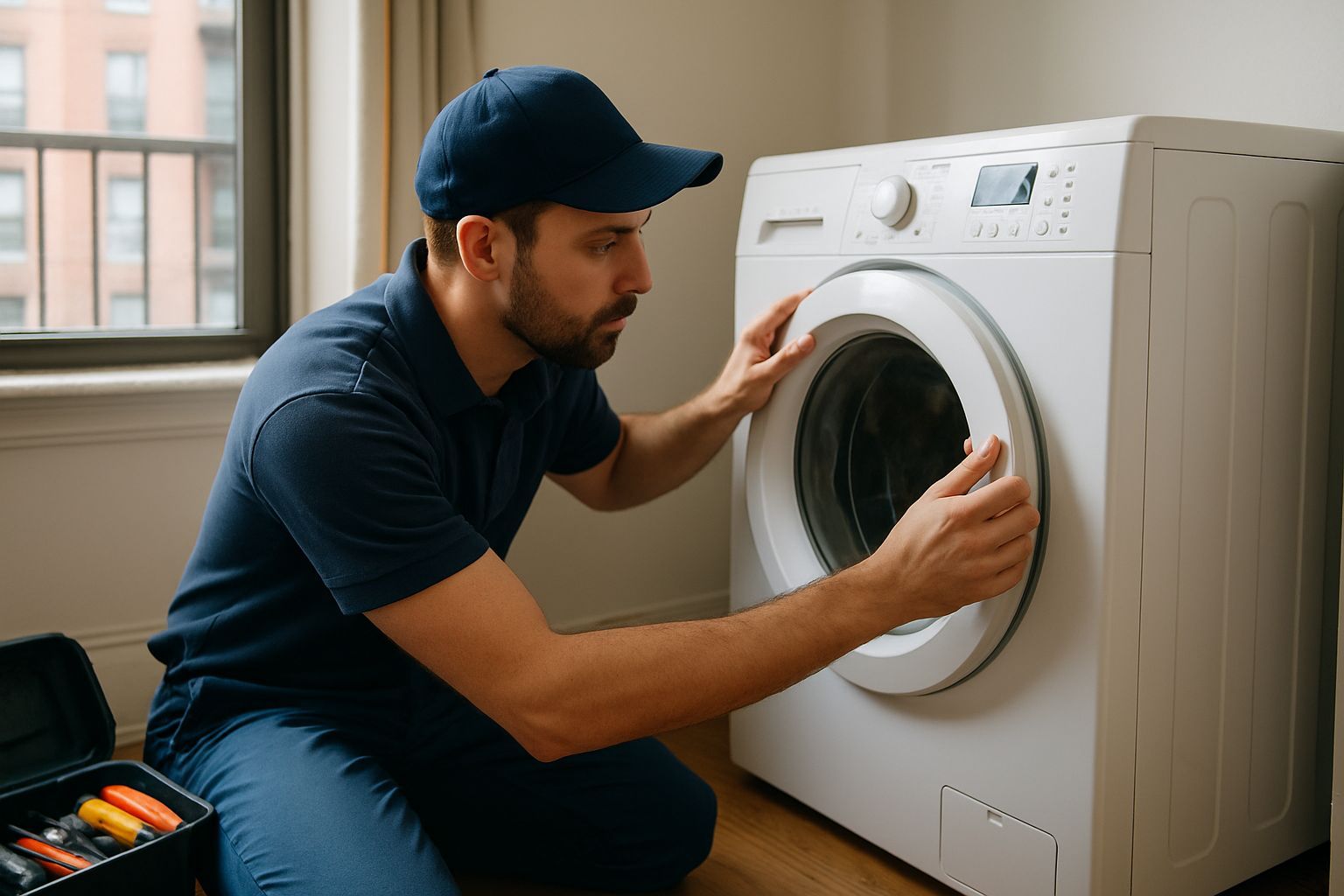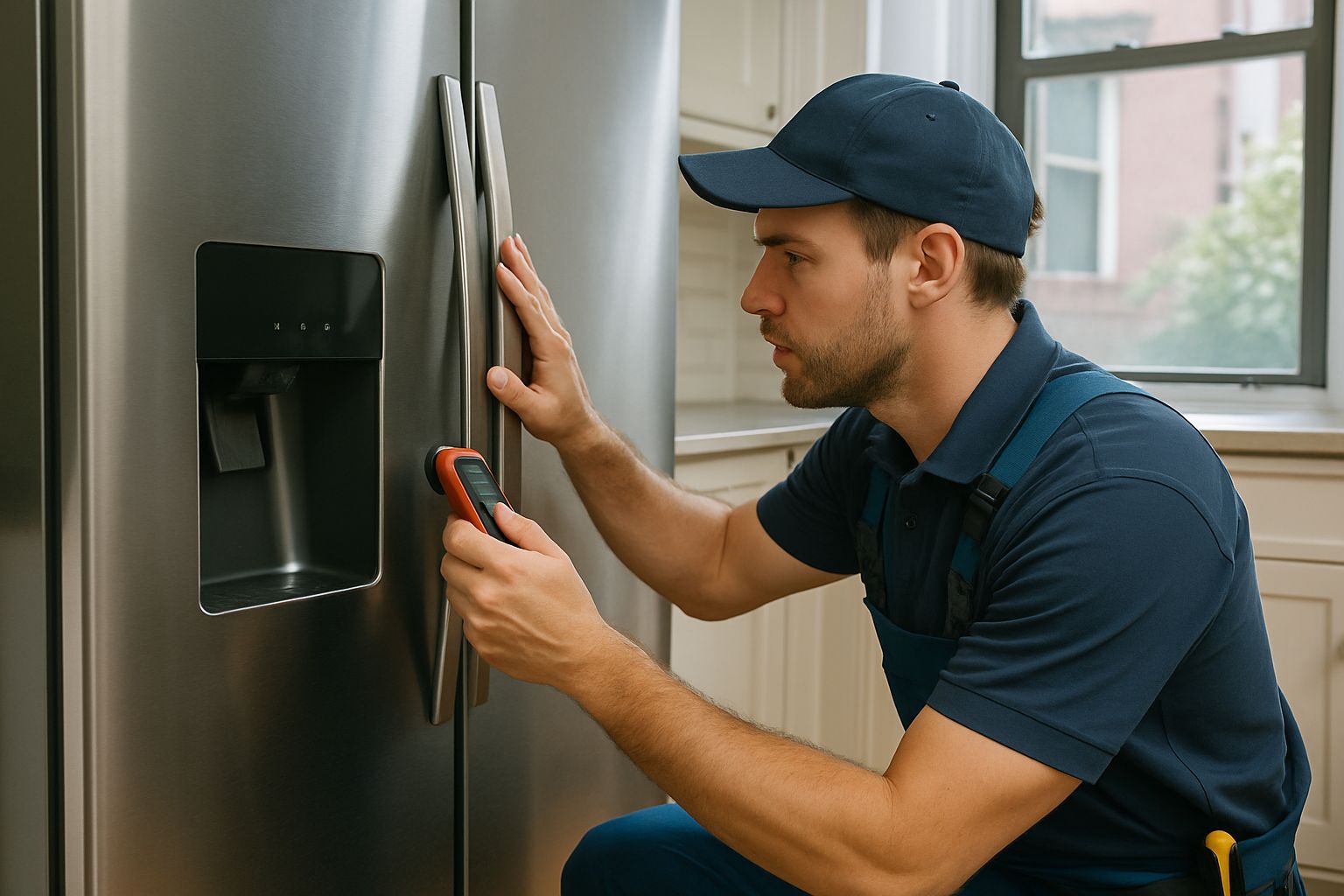
Why Does My Refrigerator Light Stay On With the Door Closed?
A refrigerator light that stays on after the door closes can be more than an inconvenience. You may notice a door alarm, unusual fan behavior, warmth, or changed cooling performance. The light is not automatically the failed part. Often, the refrigerator is receiving an incorrect door-open signal. Because designs vary, first confirm the symptom without damaging the gasket or attempting electrical repairs.
Why the Door Status Signal Matters
Refrigerators use door status for more than the interior light. Traditional models may have a visible plunger switch on the cabinet frame; the closing door presses it and turns the light off. Others use hidden sensing, such as a door magnet and a cabinet sensor, so there may be no button to press. If the signal remains “open,” the appliance can keep the light on or act as though the door is open. Depending on the model, a false signal may affect the alarm, display, fan operation, air-damper logic, or airflow controls. These clues do not prove the light is causing a cooling failure. They can instead point to the same door-status issue.
Confirm the Light Safely Before Assuming a Failure
Do not judge the light by peeking through a cracked door opening. That gap can prevent gasket sealing and may keep the sensor from changing status. Instead, place a phone securely inside for a brief, normal door-close test. Keep it clear of food, shelves, the gasket, and the door, then review the recording.
Before testing, remove packaging, tall containers, bins, or shelves that prevent a full close. Check the gasket contact area for visible crumbs or sticky residue, and note an obvious gap or sagging door. Identify whether the fresh-food compartment, freezer, or both are affected. Record alarms, cooling changes, and the full model number. Do not reshape a gasket or adjust hinges unless the owner manual specifically permits it.
What a Technician Checks
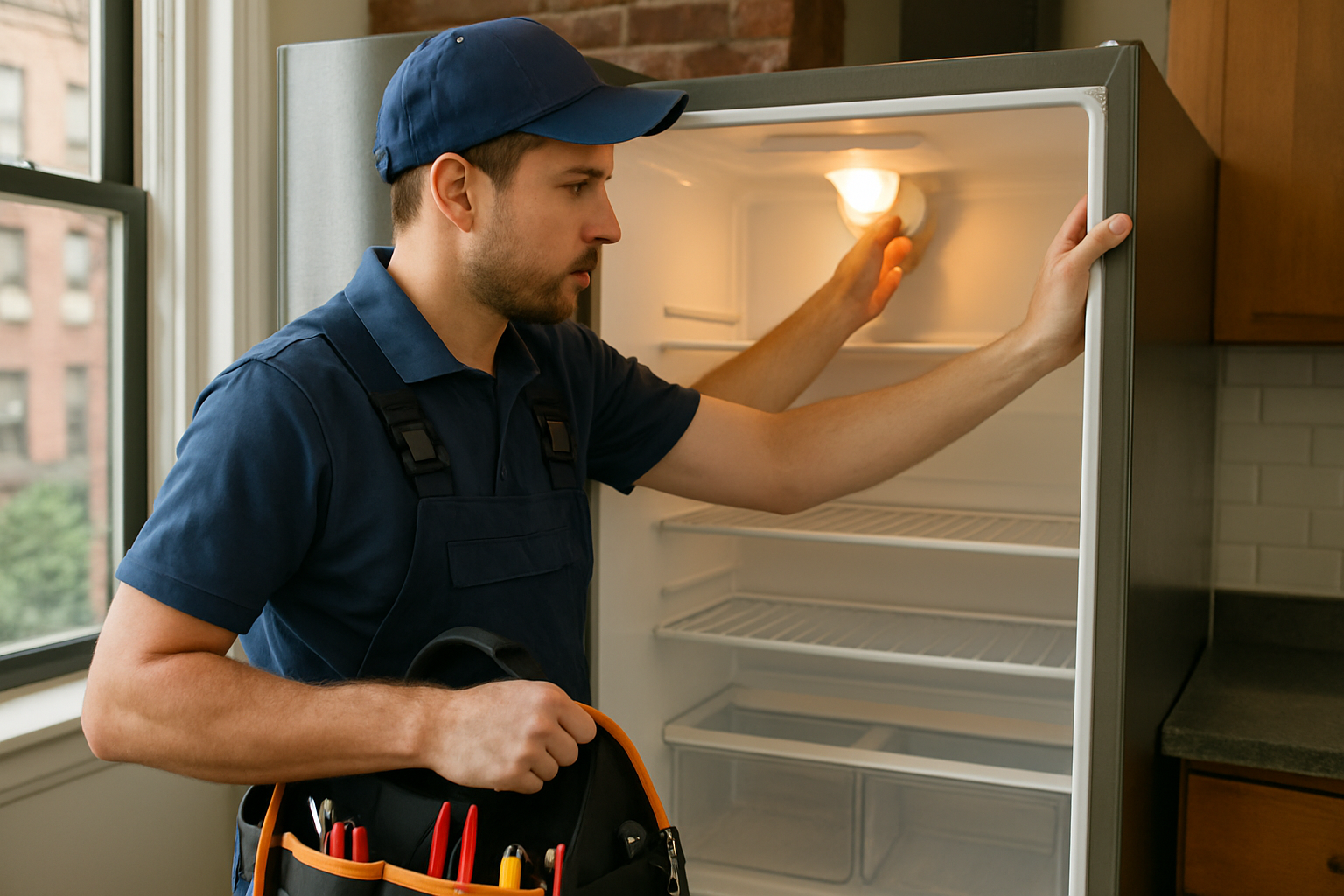
After confirming a persistent light, diagnosis should follow the model’s sequence rather than start with part replacement. An LED module, lamp, driver, or control board may be involved, but replacing one before verifying the door input may not solve the problem.
A technician can identify whether the refrigerator uses a physical switch or a hidden magnet-and-sensor arrangement. Inspection may include switch travel, door alignment, hinge condition, gasket contact, wiring, connectors, and the lighting circuit. Model-specific procedures can verify door-open and door-closed inputs. Some refrigerators intentionally stop or change fan operation with an open door, so cooling and airflow should be checked again after the door-status fault is corrected and the door is closed normally.
For ongoing light, alarm, temperature, or unusual-operation concerns, consider professional refrigerator repair in Westchester County rather than replacing electrical components from the symptom alone.
When to Stop Using the Refrigerator
A persistent light is not always an immediate emergency, but some signs require prompt service. Stop using the refrigerator and arrange inspection if you notice smoke, a burning odor, melted plastic, repeated breaker trips, or worsening food temperatures. Avoid electrical repairs or bypassing a switch while the appliance is powered.
Food safety matters separately from the visible light. If the refrigerator or freezer is no longer maintaining expected temperatures, move perishable food to a safe alternative as appropriate. A door-status issue may be isolated, but do not dismiss a cooling concern because the light is the most obvious symptom.
For nearby homeowners, appliance repair in New Rochelle is available for model-specific evaluation of lighting, door sensing, airflow, and cooling-related symptoms.
Frequently Asked Questions
How can I tell whether my refrigerator light stays on after the door closes?
Place a phone securely inside for a brief test, close the door normally, and review the video. Keep the phone clear of the gasket and door. Do not leave a cracked opening to watch the light directly.
Can a refrigerator door switch affect the fan or cooling controls?
It can, depending on the model. Some refrigerators change fan, airflow, alarm, or display behavior when they detect an open door. A technician should confirm intended operation before connecting that behavior to a cooling problem.
Why is there no visible door switch in my refrigerator?
Your model may use a hidden sensor and a door-mounted magnet instead of a plunger-style switch. The sensing method is model-specific, so no visible button does not rule out a door-status fault.
Could a misaligned door keep the refrigerator light on?
Yes. A sagging or obstructed door may fail to press a visible switch or bring a hidden magnet into the correct sensing position. Check obvious interference and gasket gaps, but leave hinge adjustments to approved instructions or a technician.
Should I replace the LED light before having the door sensor checked?
Not necessarily. If the refrigerator believes the door is open, a new LED module may behave exactly like the old one. Confirming the door-status signal first helps identify whether the issue is sensing, wiring, the lighting circuit, or another model-specific component.
You might also like