Why Is Frost Building Up on Your Freezer’s Back Wall?
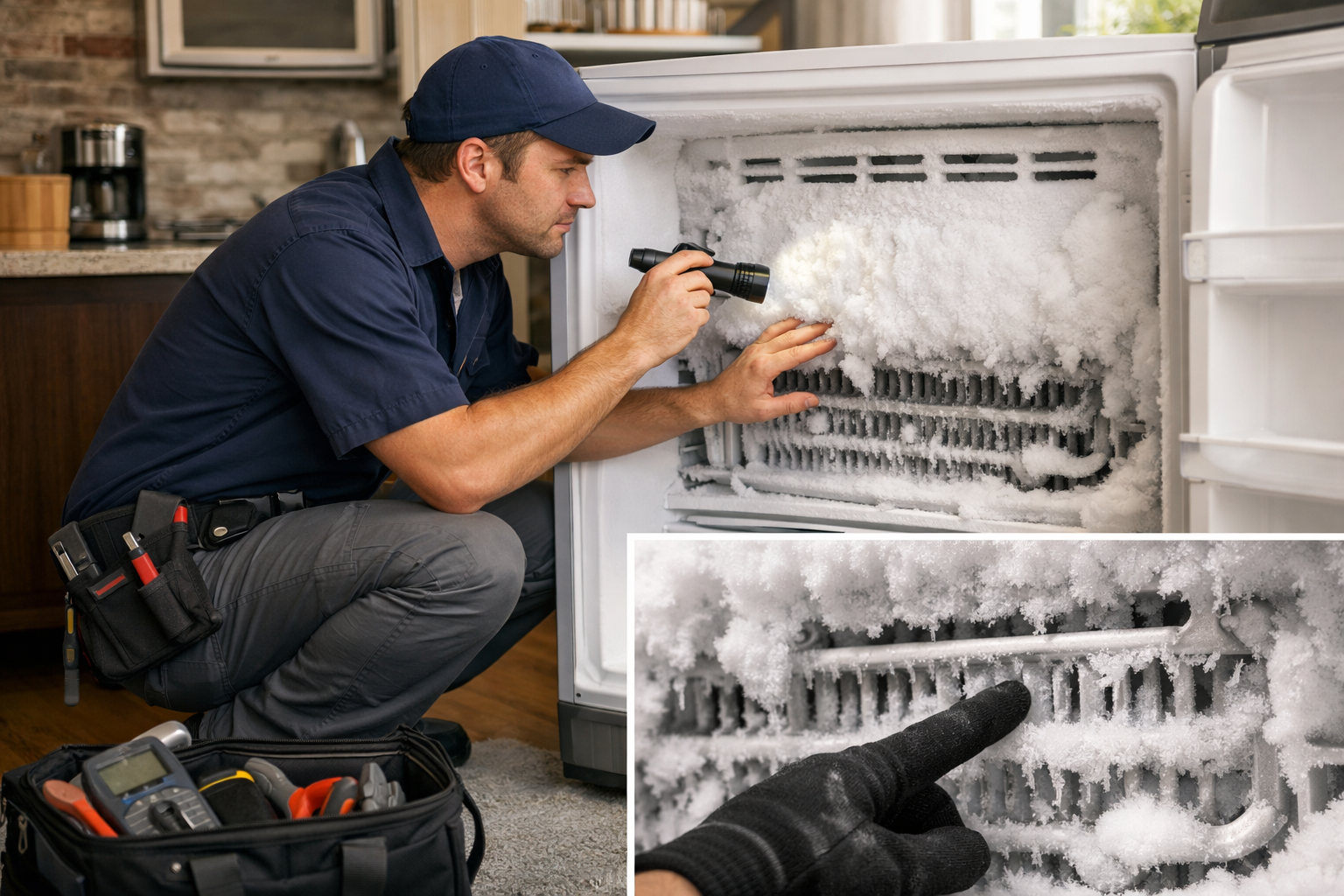
Frozen food can remain solid while a refrigerator develops an airflow problem. Frost or ice spreading across the freezer’s rear wall is a symptom to watch, not proof that a part has failed. On many models, that panel covers the evaporator area. For Pelham homeowners, the question is whether this is a one-time moisture event or a recurring pattern needing diagnosis.
Why the Rear Freezer Wall Can Frost Over
Refrigerators normally manage some moisture and frost during cooling. A defrost cycle is designed to clear frost from the evaporator area. When that process is interrupted, frost can spread broadly across the rear freezer panel. Recurring, widespread frost can be consistent with a defrost-system concern, but the panel alone cannot identify a failed component.
Depending on the model, the cause may involve heater operation, a temperature sensor or terminator, wiring, or control logic. Moisture entering through an open or poorly sealed door can look similar. Crumbs, residue, gasket damage, deformation, visible gaps, or packages and drawers preventing closure can contribute to buildup.
Not every ice pattern has the same meaning. Localized ice or an unusual pattern behind the panel may follow a different diagnostic path, including refrigeration-system performance.
Why Food Can Still Seem Frozen
The freezer can stay cold enough to preserve food during early airflow restriction. The system may still produce cold, and frost can make the rear area seem especially cold. As ice thickens, however, air may move less freely through the freezer and, on many designs, into the fresh-food compartment.
One progression is a mostly normal-looking freezer while the refrigerator section gradually warms. Reduced airflow, longer run times, changing temperatures, or unusual fan noise may also appear. In some cases, the fan can contact ice as buildup increases.
This is why frozen food is not the only test. Watch changes over several days. If refrigerated items are warming while rear-wall frost returns, the appliance needs more than a visual check from a technician instead.
Safe Checks You Can Make First
Begin with low-risk observations. Confirm that packages, drawers, and bins are not blocking the freezer door. Close it and look for an obvious gap or an item pushing against it. Inspect the accessible gasket for crumbs, residue, tears, flattened areas, or sections that do not contact the cabinet evenly.
Clean the gasket only as directed in the owner manual. Do not pull, reshape, or use adhesives to repair it. Photograph the model number, rear-wall frost, and any temperature display or error code. Note whether frost returns after a full thaw, whether the refrigerator compartment is warming, and whether you hear fan noise.
Avoid removing the interior rear panel, chipping ice with sharp tools, forcing defrost, or applying heat to plastic liners. These steps can damage panels, wiring, fans, or refrigeration components.
When a Technician Should Diagnose the Refrigerator
When rear-wall frost returns, the refrigerator section warms, airflow is weak, or a fan makes unusual noise, schedule refrigerator repair in Pelham. Diagnosis is also appropriate when the door seems to close correctly but frost continues building.
A technician can verify compartment temperatures, door-switch response, gasket contact, cabinet alignment, airflow, fan behavior, and installation conditions. Where appropriate, inspection of the evaporator area can distinguish widespread icing, moisture-intrusion frost, a blocked drain, and a localized abnormal pattern.
Model-specific wiring diagrams and diagnostic procedures guide assessment of the defrost circuit, including the heater, sensor or terminator, harness, and control operation. A board or heater should not be replaced from rear-wall frost alone. For nearby homeowners, appliance repair in Mamaroneck can address recurring refrigerator cooling concerns with a model-specific evaluation.
Frequently Asked Questions
Why is there frost on the back wall of my freezer?
Frost on the rear freezer wall may result from moisture entering through a door that does not seal well or from a defrost process concern. The frost pattern, airflow, temperatures, and model-specific testing help determine the cause.
Can a dirty freezer door gasket cause frost buildup?
Yes. Residue or debris can interfere with gasket contact and allow humid air into the freezer. Check for visible dirt, crumbs, tears, deformation, and obstructions that keep the door from closing fully.
Why is my freezer still cold but my refrigerator section is getting warm?
Restricted freezer airflow can affect the refrigerator section before freezer food obviously thaws. Heavy frost near the evaporator area can reduce the cold-air movement many refrigerators use to cool the fresh-food compartment.
Will unplugging the refrigerator fix rear-wall frost permanently?
A manual thaw can clear ice and temporarily improve airflow, but it does not establish or correct the underlying cause. If frost returns, arrange diagnosis rather than repeatedly thawing the appliance.
Should I keep using a refrigerator when frost keeps coming back?
Monitor food temperatures closely. Recurring frost, weak airflow, unusual fan noise, or a warming refrigerator section are reasons to arrange diagnosis promptly because cooling performance may continue to decline.
You might also like