Why Does My Gas Cooktop Flame Go Out on Low?
A gas surface burner that lights normally and holds a strong high flame but sputters, becomes unstable, or goes out at simmer needs a different approach from one that will not ignite. The cause may involve burner alignment, residue around small flame openings, model-specific low-flame settings, or flame-monitoring components. Do not assume one part has failed. Safe observation, rather than repeated testing, is the priority.
Start With Safety Before Testing
Turn the burner off immediately if you notice a gas odor, hissing, delayed ignition, a flash at ignition, repeated flame loss, yellow or lifting flames, or unusual soot. Leave the area and contact the gas utility or emergency services from outside when appropriate.
An extinguished burner can release unburned gas. Do not keep relighting it to see whether it will stay lit. A properly operating burner should ignite without a delayed burst and remain stable as the control is turned down. If it is safe, make one brief observation and record a video from ignition through low. It can show flickering, lifting, uneven shrinking, or abrupt flame loss.
Check the Burner Only When It Is Cool
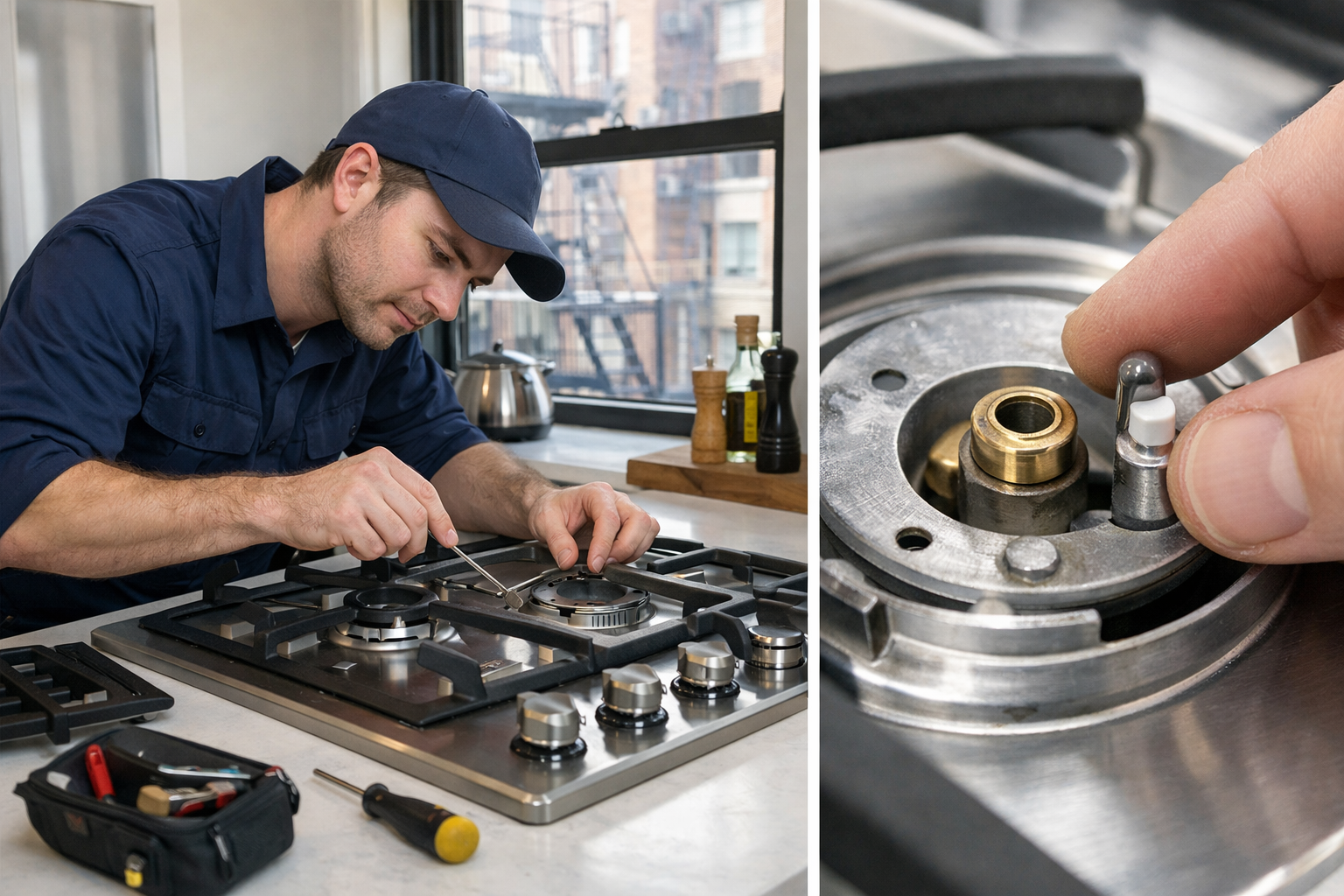
After the cooktop has fully cooled, confirm that the removable burner cap is seated level and positioned as directed in the owner manual. A cap that appears nearly correct can still sit off its intended indexing points and affect the flame path around the burner.
Look for visible food residue or spill debris on accessible burner surfaces, especially near small simmer-flame openings. Do not probe, enlarge, scrape aggressively, or insert objects into burner ports. Those actions can damage the burner or alter its flame pattern.
Note whether one burner or several are affected, whether the problem occurs only at the lowest setting, and whether it began after a boil-over, cleaning, installation, or gas-supply work. Also note normal ignition and any clicking after flame loss. These details help distinguish a localized burner concern from a broader appliance, installation, or supply-related issue.
Separate This Symptom From Other Burner Problems
A burner that goes out on low is not automatically the same as one that never lights or one that remains lit while clicking continuously. Yellow flames, lifting flames, delayed ignition, uneven flame rings, and soot are abnormal conditions that warrant stopping use rather than continued testing.
If several burners have abnormal flame behavior, the overall fuel supply or installation context may need professional evaluation. One affected burner may point toward its cap, head, accessible port pattern, electrode area, or valve operation, but it does not identify a failed component by itself.
If the burner stays lit but the igniter continues sparking, review why a lit gas burner may keep clicking. Some cooktops use re-ignition systems that may respond when a flame is not recognized, although continuous clicking and low-flame outage can also occur independently.
What a Technician Can Evaluate
A technician confirms the complaint at high, medium, and low settings using the appliance’s specified procedure. A normal high flame with poor simmer stability follows a different diagnostic path than no ignition or a distorted flame at every setting.
The evaluation can include burner-cap indexing, burner-head condition, accessible port pattern, contamination, burner-base contact, and ignition-electrode placement. Depending on the design, service may also consider minimum-flame settings, valve operation, fuel type or conversion correctness, supply conditions, and flame-sensing or re-ignition behavior. These are service procedures, not homeowner adjustments.
For this symptom, see professional oven and cooktop repair in Pelham, GE range and cooktop repair information, or appliance repair in Peekskill.
Frequently Asked Questions
Why does my gas cooktop burner stay lit on high but go out on low?
High-flame operation does not confirm stable low-flame operation. At simmer, cap placement, the small-flame pattern, contamination, minimum-flame calibration, valve behavior, and gas delivery can become more significant. A technician should verify the cause using the manufacturer’s procedure.
Can a burner cap that looks almost correct cause a low flame to fail?
Yes. A cap that is not level or properly indexed can disrupt the flame path even when the burner lights. Once the cooktop is cool, reseat the removable cap only as directed in the owner manual. If the problem continues, arrange evaluation.
Is it safe to keep relighting a burner that goes out at simmer?
No. Repeated relighting can increase the chance of unburned gas being released if the flame fails again. Turn the burner off. Do not use it if you smell gas or see abnormal flame behavior, and contact appropriate help from outside if necessary.
Why does only one burner go out while the others work normally?
One affected burner can indicate a localized condition involving its cap, head, ports, electrode area, or valve operation. It does not prove which component is responsible, but comparison with the other burners gives a technician useful diagnostic information.
Could continuous clicking and a low flame going out be related?
They can be related on a cooktop with flame-sensing re-ignition, where the appliance attempts to spark after it does not recognize a stable flame. Either symptom can also occur independently, so diagnosis should address the burner and the cooktop’s design.
You might also like