Why Does My Dryer Squeal When It Starts Then Get Quieter?
A dryer that squeals when it starts but becomes quieter can be tempting to ignore. A high-pitched noise during drum rotation is not normal, however, and the change in volume is only a clue—not proof of one failed part. For Pelham homeowners, noting when the sound begins, changes, or returns helps distinguish a developing mechanical concern from an isolated object contacting the drum.
Why a Startup Squeal Can Fade
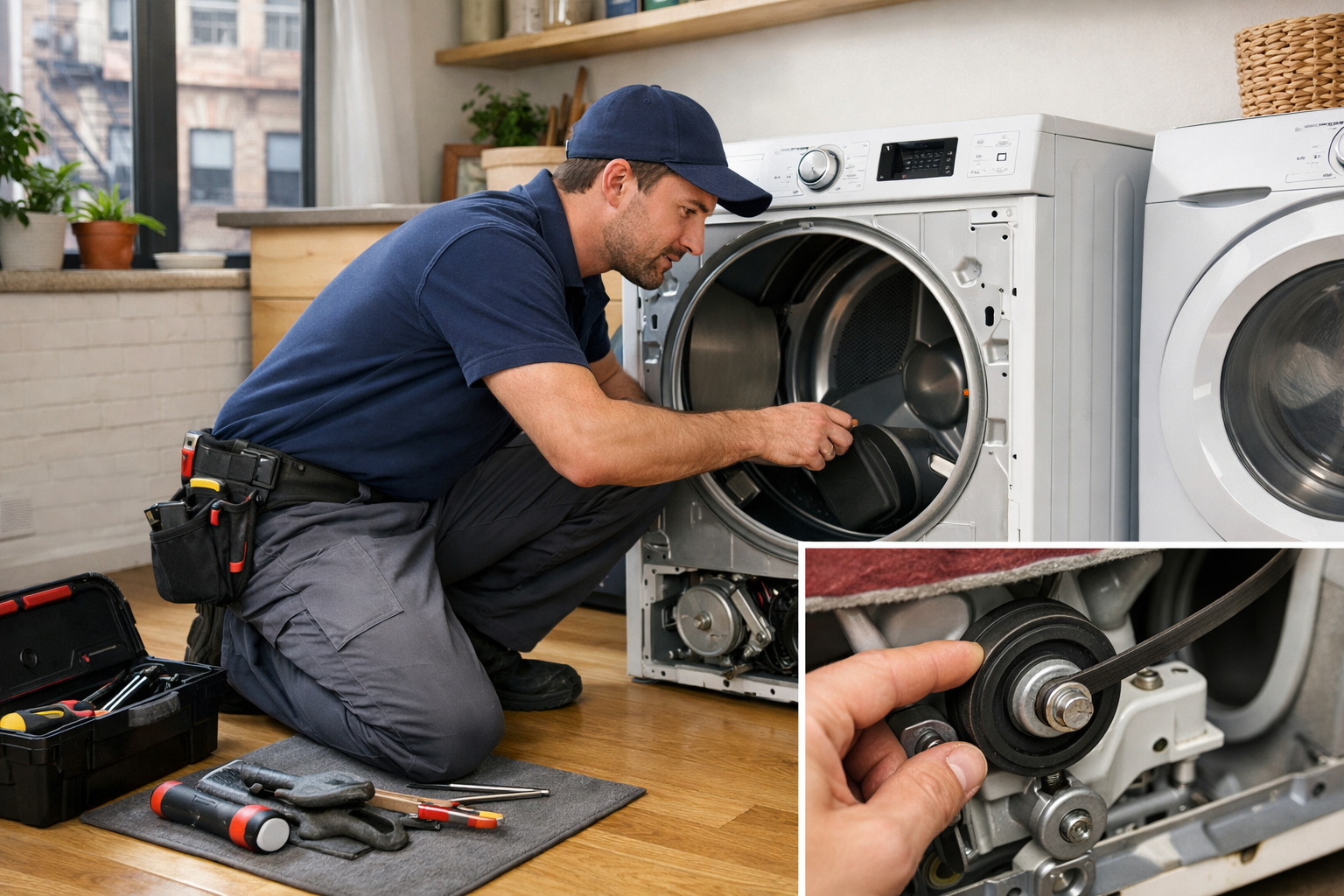
Several parts move together whenever the drum turns, including the belt, drum-support rollers and shafts, idler pulley, front glides or seals, motor pulley, and blower assembly. A worn support or pulley may squeal more noticeably when cold and quiet somewhat as it runs. Belt tension or tracking can create a similar startup sound.
An object caught near the drum path, a worn front support, or a blower-wheel issue can also make noise. Less commonly, motor bushings or pulley wear may be involved. These symptoms overlap, so a quieter sound does not show which component needs replacement. Continuing to run the dryer can allow a minor wear issue to progress into belt damage or a broader drum-support repair. A sound that disappears is still worth addressing if it returns regularly during use.
Notice the Sound and Drum Pattern
With the dryer off and cool, recall whether the squeal begins as the drum starts, follows each rotation, appears with heavier loads, or continues throughout tumbling. A rhythmic chirp can differ from a steady squeal, and a new grinding or scraping noise needs faster attention.
Note whether the drum turns smoothly and whether the sound changes in length or volume. A short recording made from a safe distance and the model number can help a technician start efficiently. If the noise occurs whenever the drum tumbles, drive components are a reasonable focus. Cabinet vibration or a loose item can sound similar, so the pattern is useful but is not a diagnosis. Those details can help when arranging dryer repair in Pelham.
Safe Checks Before You Schedule Service
Begin only with checks that do not require opening the cabinet. Stop using the dryer immediately if there is smoke, a burning odor, metal scraping, unusual exterior heat, a damaged power cord, or repeated breaker trips.
With the appliance off and cool, check the drum and pockets for loose items that could contact the drum, seal, or baffles. Clean the lint screen. During normal operation, look only at the exterior vent hood to see whether it opens freely.
Do not remove panels, reach into moving areas, disconnect the duct, or run the dryer vented indoors. A squeal alone does not prove lint buildup or a blocked vent. Normal drying also does not show that rotating components are sound.
Professional Diagnosis and When to Stop Using It
A technician should first confirm whether the sound tracks drum rotation or another source, such as cabinet vibration. Then the model-specific procedure guides inspection of the belt and its routing, rollers and shafts, idler pulley and bracket, front glides or seals, drum supports, blower wheel, motor pulley or bushings, and mounting hardware.
Parts that look alike may fit or operate differently across models, so diagnosis should come before recommending components. Arrange service soon if squealing grows louder, lasts longer, changes to grinding or scraping, or comes with poor drum movement. Stop using the dryer for odor, smoke, overheating, or electrical warning signs.
For nearby assistance, residents can review appliance repair in White Plains. For brand-specific symptom support, see Whirlpool dryer repair in New Rochelle.
Frequently Asked Questions
Why does my dryer squeal only when it first starts?
Startup noise may occur when a roller, pulley, belt path, or front glide is more noticeable while cold. As parts move, the sound can soften, but that pattern cannot identify a specific failed component without inspection.
Can a dryer squeal even if it still dries clothes normally?
Yes. Drying performance and drum-drive condition are separate. The appliance can produce heat and move air while rollers, an idler pulley, a belt, or a drum support develops mechanical noise.
Is a squealing dryer safe to keep using?
Stop using it for smoke, burning odor, metal scraping, excessive exterior heat, cord damage, or breaker trips. Without those warnings, arrange diagnosis promptly if the sound persists, worsens, or affects drum movement.
Can lint or a foreign object cause a dryer squeal?
A foreign object can contact the drum path and create noise. Lint accumulation can affect operation, but a squeal by itself does not establish that lint or a blocked vent is the cause.
Should I replace the belt, rollers, or idler pulley first?
Not without diagnosis. Similar squeals can come from several locations, and replacing one component first may not correct the sound. A technician should identify the source and verify the proper repair for the model.
You might also like