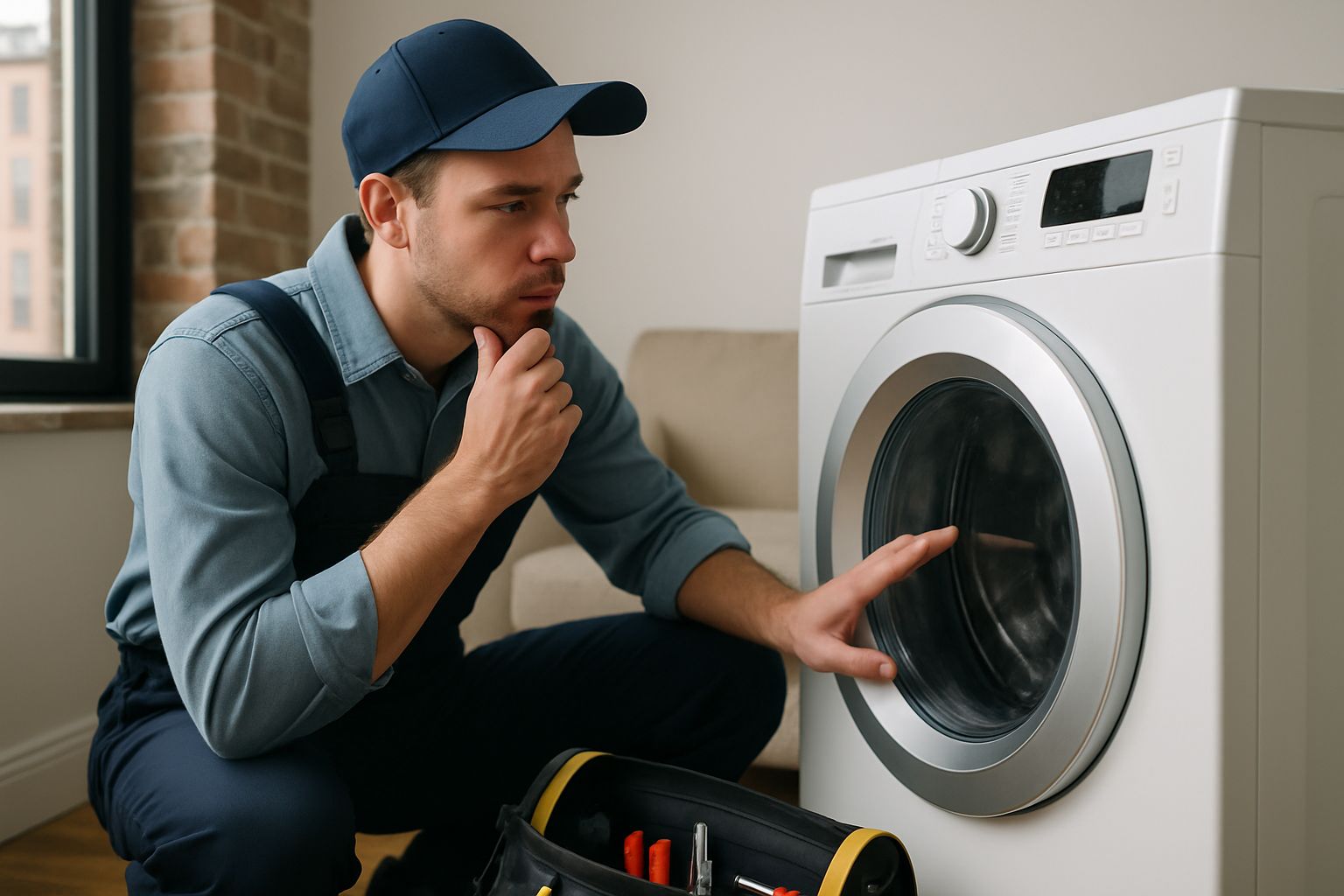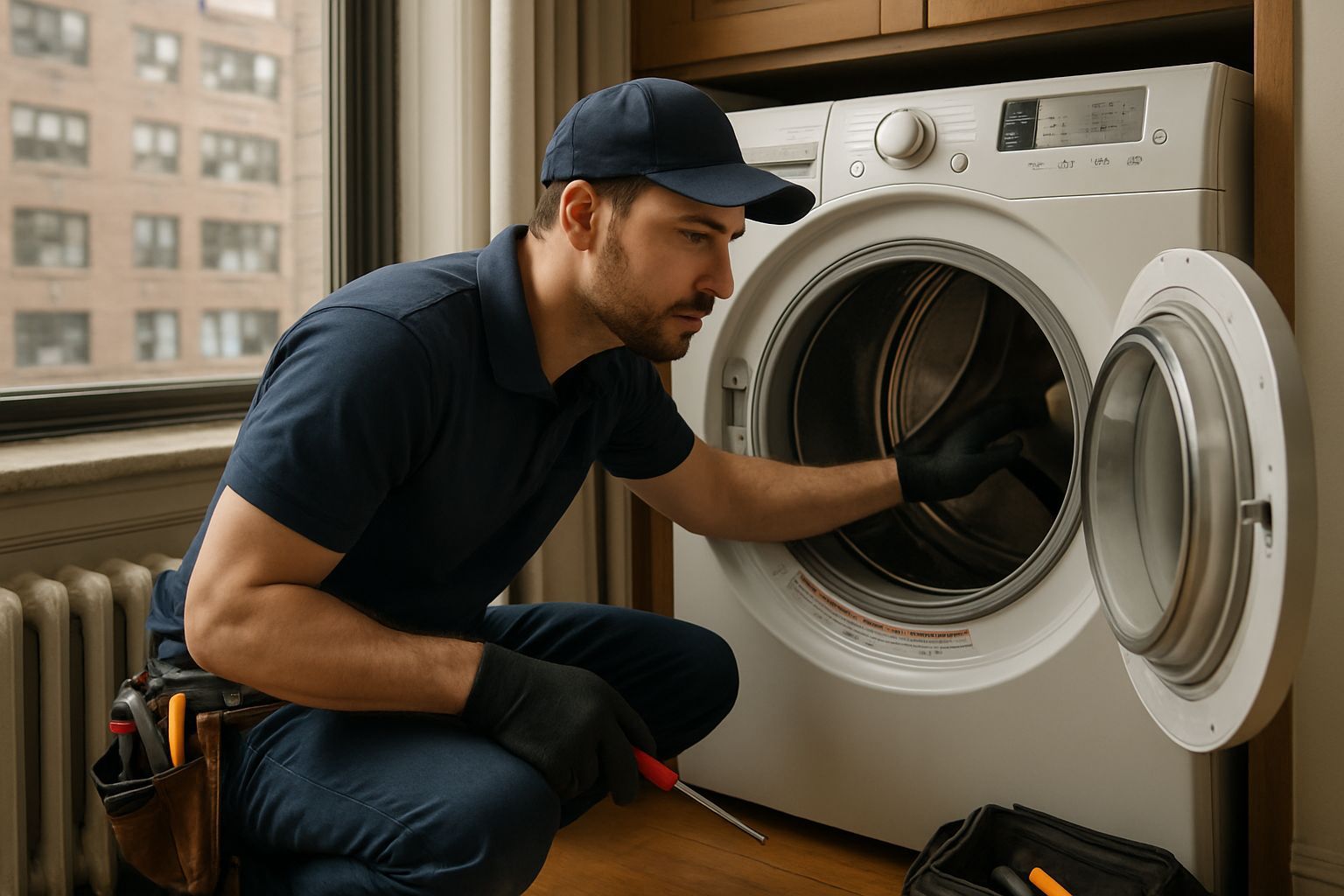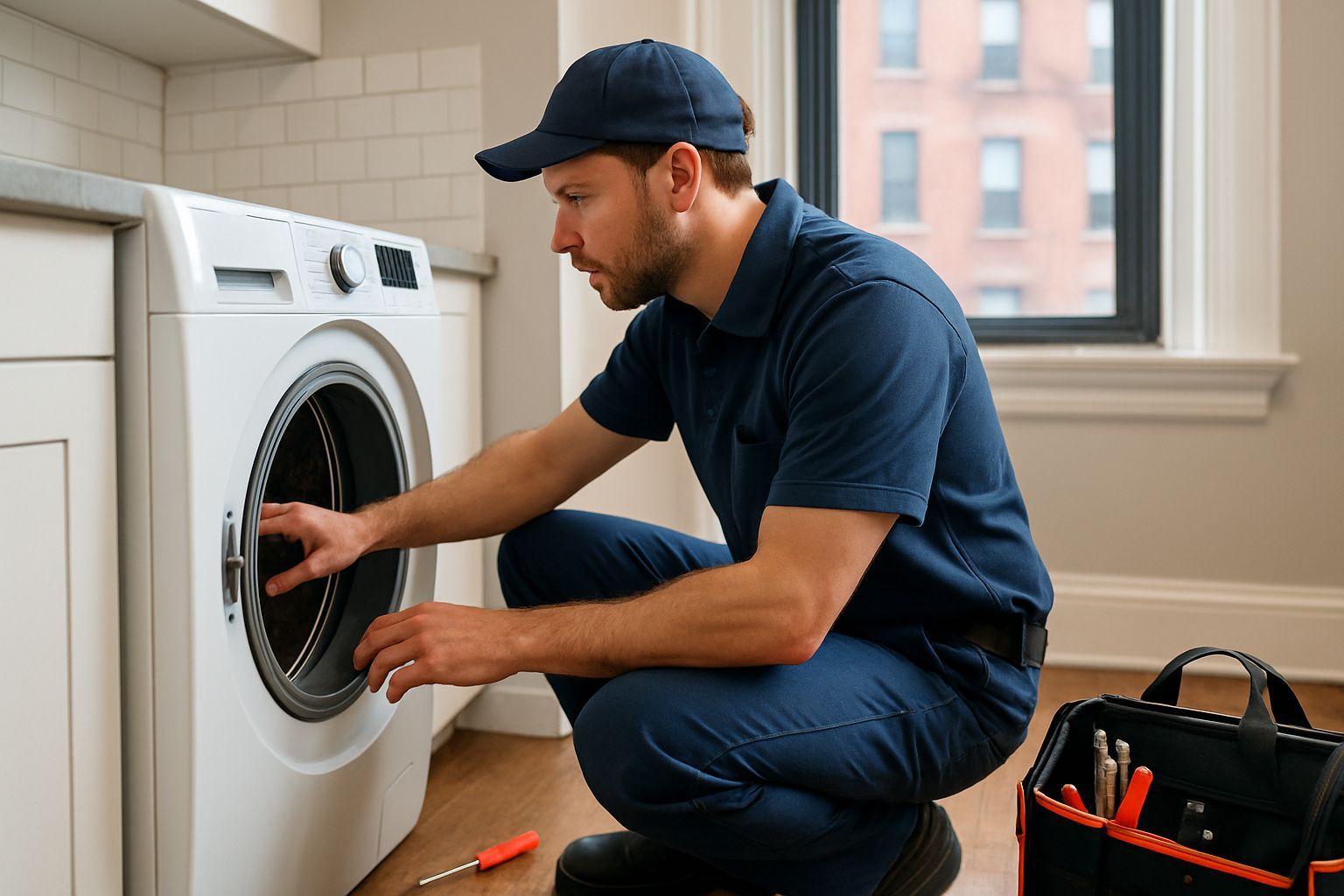
Washer Keeps Filling but Water Level Will Not Rise? Check the Drain Hose First
A washer that keeps taking in water without appearing to get fuller can be alarming. You may hear water entering, yet the tub level stays low or the washer refills during agitation. One possible cause is drain-hose siphoning, where water escapes as quickly as it enters. This is especially worth considering after installation, moving the appliance, or plumbing changes.
How Drain-Hose Siphoning Can Prevent Filling
During a normal fill, water should remain in the tub until the washer reaches a drain portion of its cycle. A siphon can allow water to flow out through the drain hose before the selected level is reached, even when the drain pump is not supposed to be operating.
This may happen when a hose is routed too low, inserted too far into a standpipe, or sealed tightly at the drain connection. An airtight connection can interfere with the air movement needed for proper drainage. Approved hose height, insertion depth, and air-gap requirements vary by model, so there is no single measurement that applies safely to every washer.
The most useful clue is water visibly entering the standpipe or laundry sink while the machine is filling and the pump should be inactive.
Signs to Watch for Around the Drain Connection
Siphoning can resemble a failed washer part. The machine may seem to fill forever, refill repeatedly, or never maintain the water level you selected. You may hear the inlet water running while the tub level rises very slowly or does not rise at all.
If the drain hose enters a standpipe, observe from a safe position whether water is flowing into that pipe during the fill stage. If it drains into a laundry sink, look for water entering the sink while the washer should still be filling. Do not pull the hose out, reach behind a running washer, or change the connection during a live cycle.
A photo of the visible hose route and drain connection can help document the setup. It may also be useful if the symptom began after the washer was moved, a drain hose was replaced, or plumbing work was completed.
Safe Steps Before Assuming a Part Has Failed
If the tub is nearing overflow or water is reaching the floor, stop the cycle and turn off the water faucets. Limiting water damage is more important than continuing a test cycle.
Next, consider whether the issue began after a new installation, moving the washer for cleaning or flooring, plumbing or standpipe work, replacing the drain hose, or rearranging the laundry area. Then inspect only what is clearly visible and safe to reach. Check that the hose is not crushed behind the machine and review the model’s installation instructions for routing and drain requirements.
The hose should not be taped or sealed airtight to a standpipe. Avoid disconnecting hoses under pressure, bypassing a lid lock, opening the cabinet, or performing electrical tests. Those actions can create flood, shock, or equipment-damage risks and may not identify the actual cause.
Other Faults Can Cause Similar Repeated Filling
A drain-hose setup is an important possibility, but it is not the only reason a washer may fail to hold its water level. An inlet valve that does not shut off properly can continue allowing water into the tub. Problems involving the pressure-sensing hose, air dome or trap, connections, or restrictions can prevent the washer from reading the actual level correctly.
The pressure sensor or switch may also fail to respond as expected. Wiring, stored fault information where available, or a control issue can affect filling behavior. A separate drain-pump issue is possible if the washer is actually commanding the pump to run when it should not.
A technician can observe whether water exits during filling, compare hose routing with model-specific requirements, and check the sensing system, inlet-valve shutoff, wiring, faults, and control outputs. For help, see washer and dryer repair in Pelham or appliance repair in New Rochelle.
Frequently Asked Questions
Why does my washer keep filling without getting fuller?
Water may be entering the tub while water also leaves through the drain hose. Siphoning can cause this pattern, although pressure-sensing issues, an inlet-valve problem, control concerns, or improper pump operation can create similar symptoms.
Can a drain hose cause a washing machine to keep adding water?
Yes. If the drain-hose installation creates a siphon, water can leave during filling. The washer may continue adding water because it cannot reach or maintain the selected water level inside the tub.
How can I tell whether my washer is siphoning water out?
Without moving the hose, look for water flowing into the standpipe or laundry sink while the washer is in its fill stage. This observation is useful when the drain pump should not be operating.
Does repeated filling always mean the water inlet valve is bad?
No. A valve that fails to shut off is one possibility, but repeated filling can also involve siphoning, pressure-sensing problems, wiring concerns, a control fault, or a drain pump running unexpectedly.
Should I keep running the washer if water leaves during filling?
No. Stop the cycle if water is approaching overflow or reaching the floor, then turn off the water faucets. Continuing to operate the washer can increase the risk of water damage before the cause is identified.
You might also like