Why Does My Dryer Stop Mid-Cycle and Restart After Cooling?
A dryer that stops before clothes are dry and runs again after sitting can point to a heat-related protective response, but it is not a diagnosis. Excess heat, motor overload behavior, restricted exhaust airflow, drum-drive resistance, electrical interruptions, or cycle-control issues can produce a similar pattern. Observe once safely; do not repeatedly restart it or replace parts based on the symptom alone.
Treat Heat and Electrical Warnings Seriously
Stop using the dryer immediately for smoke, a burning odor, scorched clothing, unusually hot cabinet surfaces, a damaged power cord, gas odor, or repeated breaker trips. These warnings require professional assessment rather than further troubleshooting.
If none are present, clean the lint screen before the next load. During normal operation, check from outside whether the exterior vent hood opens. A hood that does not open normally may indicate poor exhaust flow. Also note weak drying performance, unusual noise, or a hood that barely moves.
Do not disconnect ductwork, run the dryer indoors, remove cabinet panels, or reach into moving areas. Restricted airflow can retain heat, lengthen drying time, and contribute to shutdown behavior after the dryer cools. It deserves attention even if a later restart appears normal.
Confirm Whether the Dryer Actually Shuts Down
Not every early cycle ending is a true loss of operation. Sensor settings and temperature-based logic can change timing as conditions inside the drum change. During one supervised, normal-sized load, note the selected cycle, approximate run time, display status, whether the drum and heat stopped together, any error code, and whether the dryer restarted immediately or only after cooling.
A display that stays lit while the drum stops differs from a dryer that loses all apparent operation. Likewise, a problem that occurs only while heat is active differs from a stop that occurs regardless of heating conditions. These details help identify the operating sequence without assuming which part failed.
Avoid repeatedly restarting the dryer to reproduce the symptom. One careful observation gives a technician useful information while limiting added heat and stress on the appliance.
Consider the Possible Causes as a System
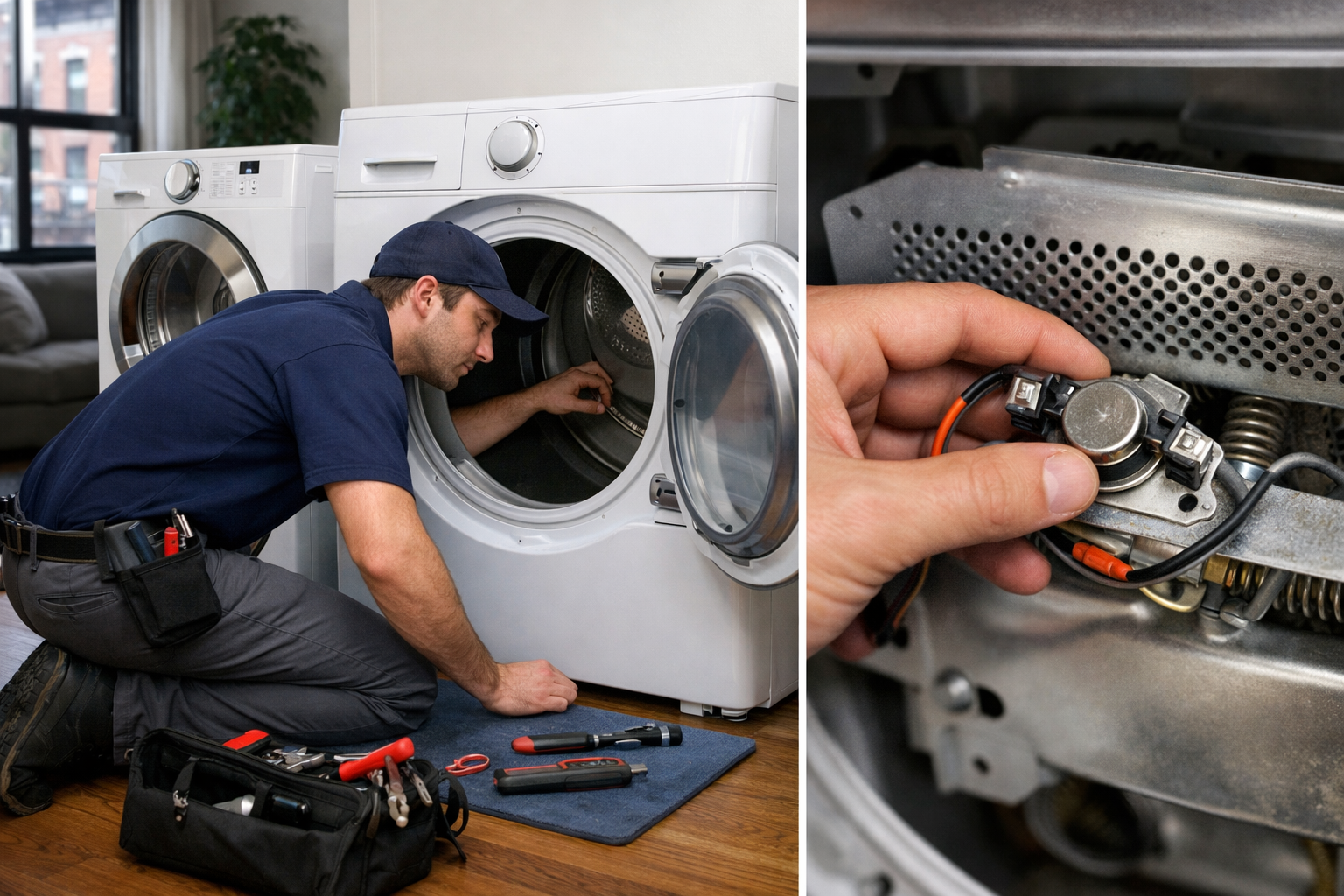
A motor can have an internal overload protector that opens when motor temperature becomes too high and resets after cooling. That does not automatically mean the motor is the only issue. Excessive drum-drive resistance, a blower problem, lint accumulation, or restricted exhaust airflow can increase operating load or heat.
Electrical concerns can also interrupt operation. Depending on the model, a loose terminal, damaged harness connection, door-switch interruption, timer behavior, or electronic control output may produce a similar pattern. Gas and electric dryers use different heating systems and safety components, so the correct test sequence depends on the exact model and wiring information.
A squeal at startup is another useful clue. Our guide on why a dryer squeals at startup explains how moving drum-drive parts can create resistance. Noise alone, however, does not explain every mid-cycle shutdown.
Know What a Technician Can Check
A proper diagnosis starts by confirming the complaint on the correct cycle instead of assuming that the motor, thermostat, timer, or control board needs replacement. The technician can inspect the exhaust path, lint accumulation, blower-wheel condition, and drum movement for excessive drag involving the belt, rollers, or idler.
Electrical testing is also important. Using model-specific wiring information, a technician can check incoming power, terminals, harnesses, door-switch continuity, cycling and high-limit controls, heater or gas-burner operation, and timer or control outputs. Some supported models may also store fault information that helps clarify the sequence.
For a dryer with this pattern, washer and dryer repair in Pelham can assess the complete operating sequence and confirm safe full-cycle operation after repair. Homeowners outside Pelham can explore appliance repair in Scarsdale.
Frequently Asked Questions
Why does my dryer stop mid-cycle but work again later?
A cooling delay can suggest that a protective component opened after heat or motor temperature increased. Restricted airflow, drum-drive resistance, motor overload behavior, electrical intermittency, and control issues can overlap with this symptom. The restart alone does not identify the failed part.
Does a dryer that restarts after cooling always need a new motor?
No. A motor overload may be involved, but it can be responding to restricted airflow, a blower issue, or excessive drum drag. Testing the motor and the systems affecting its operating conditions is more reliable than replacing it from the restart pattern.
Can a blocked vent make a dryer shut off before clothes are dry?
Yes. Poor exhaust flow can trap heat and reduce drying performance. It may contribute to protective shutdown behavior before the load is dry. Clean the lint screen and observe the exterior hood, but leave duct disconnection and internal airflow work to a technician.
Why does my dryer stop on sensor dry but not timed dry?
Sensor dry and timed dry use different operating logic. If the dryer consistently behaves differently between these cycles, that observation can help narrow whether the issue relates to sensing, cycle control, heating conditions, or another portion of the operating sequence.
When should I stop using a dryer that shuts off unexpectedly?
Stop immediately for smoke, burning smells, scorched clothing, excessive cabinet heat, a damaged cord, gas odor, or repeated breaker trips. Without those warnings, avoid repeated restart attempts and arrange diagnosis if the dryer continues stopping unexpectedly.
You might also like