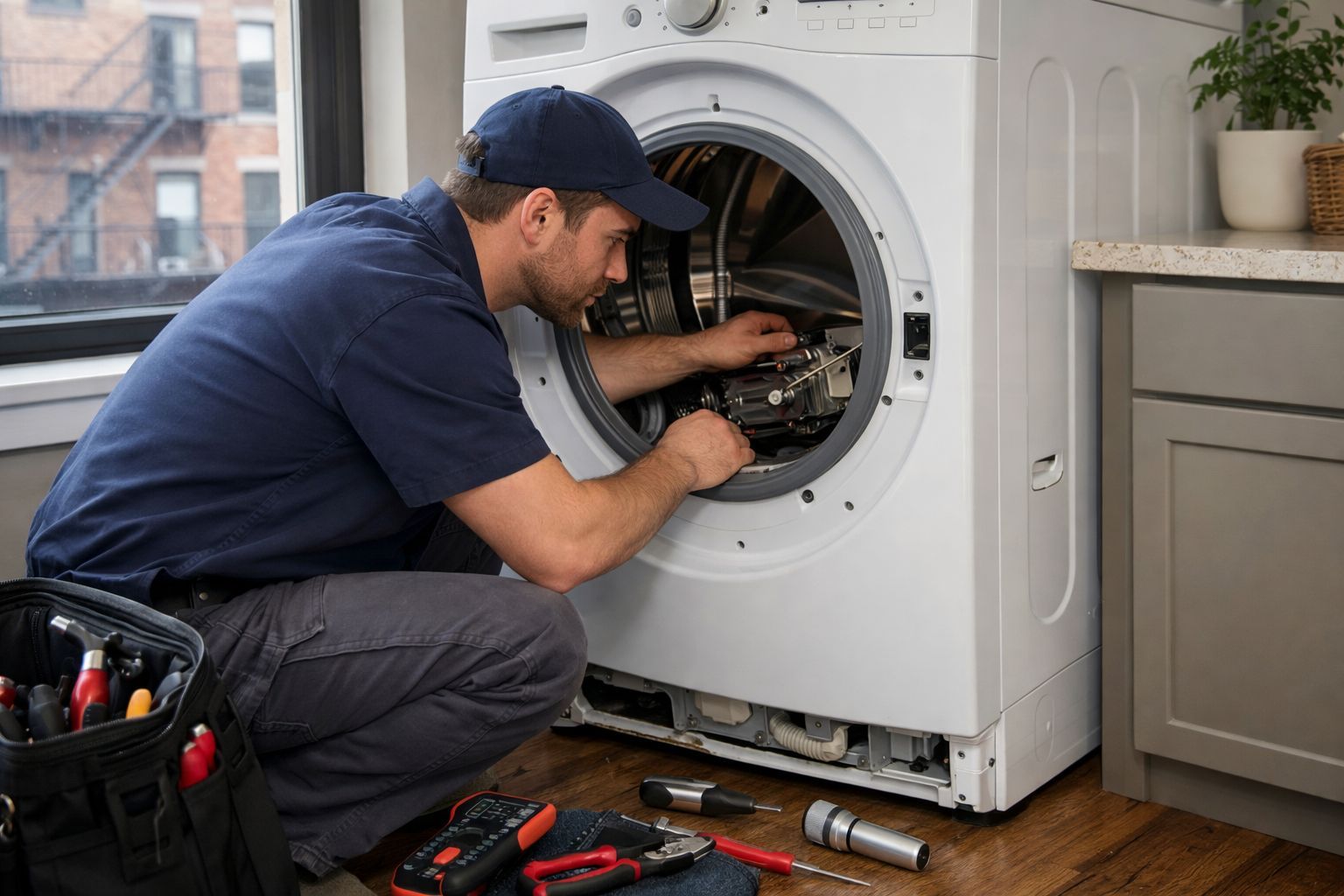
Why Does My Washing Machine Walk During the Spin Cycle?
A washing machine that shakes, bangs, or moves across the laundry-room floor is not simply noisy. During high-speed spin, the basket creates substantial force. When that force is not controlled by a balanced load, stable installation, and sound internal support, the cabinet can vibrate enough to “walk.” The pattern of movement helps separate a loading or setup issue from a repair concern.
Start With Load Balance and Spin Pattern
A washer may spin smoothly through most loads yet shake violently with one blanket, comforter, bath mat, or small group of heavy items. These items can hold water unevenly or clump on one side of the basket. As speed rises, that uneven weight pulls the basket off balance.
If thumping or movement begins, stop the cycle when it is safe. Do not let the washer continue if it is striking a wall, cabinet, hoses, or equipment; severe movement can strain connections. With power off, redistribute a lopsided load. Avoid washing one heavy item alone unless the owner manual permits it; a bulky item may need items to distribute weight.
Note the next load. Movement only with bulky or single-item loads is different from repeated walking with ordinary, evenly distributed laundry.
Check Stability, Feet, and Floor Conditions
A washer needs a firm floor and solid contact at every leveling foot. Gently press opposite top corners with the machine off. It should not rock. A washer may appear level while one foot carries too little weight, allowing cabinet vibration to worsen during spin.
An uneven surface or a floor with noticeable flex can amplify normal vibration into banging and movement, particularly in older laundry spaces. Installation conditions affect how vibration is transferred; the washer is not always the only source.
Homeowners can observe rocking and whether different loads change the pattern. Do not reach beneath a running washer, remove panels, modify suspension components, or disconnect water, drain, or electrical connections during a vibration check.
Recognize Signs of an Internal Mechanical Concern
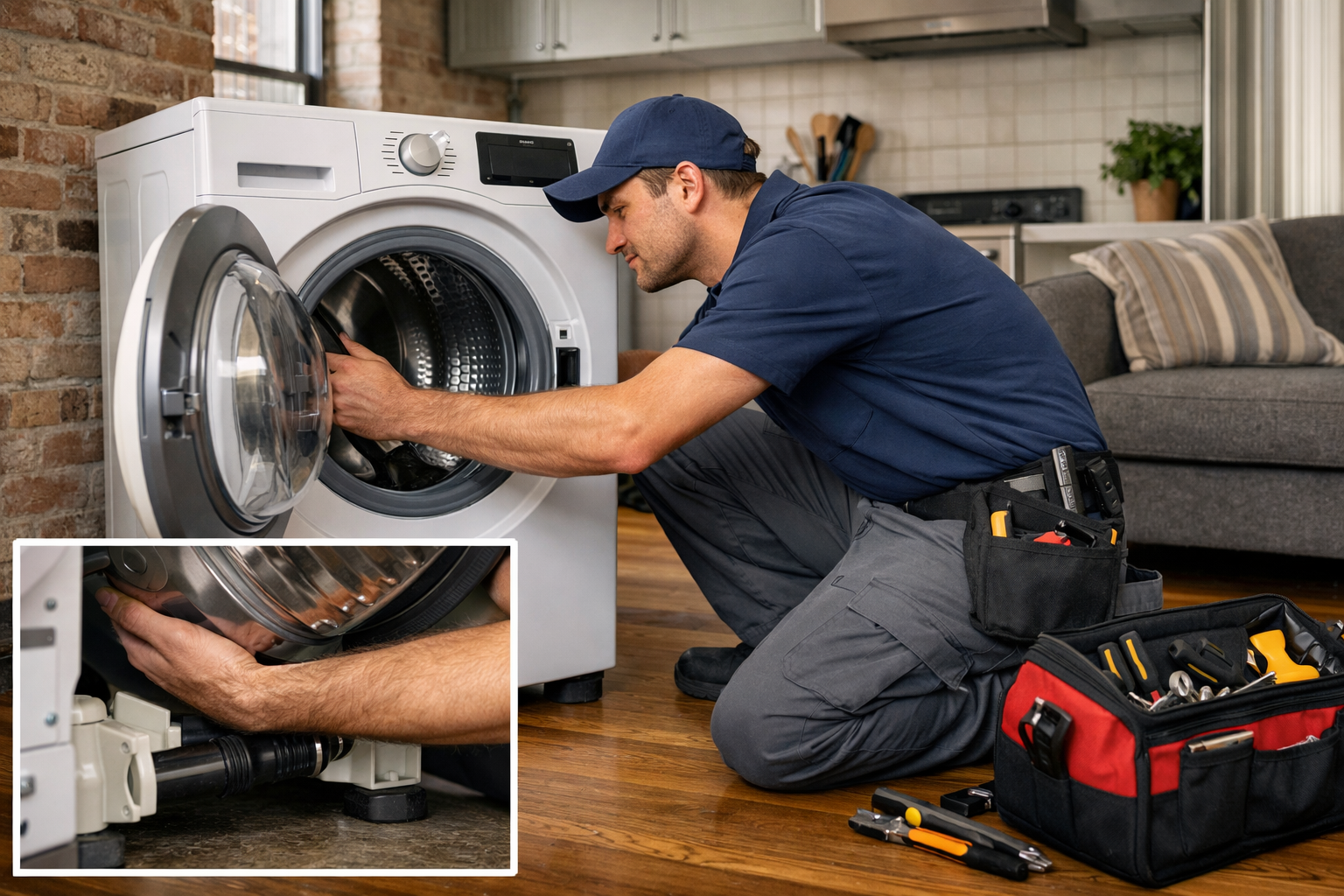
If walking continues with ordinary balanced loads and a stable setup, the washer’s internal support and basket movement need attention. Depending on the model, relevant parts can include suspension rods, struts, springs, dampers, counterweights, mounting hardware, or other components that control tub motion.
Cabinet movement alone does not identify a failed part. Load type, spin stage, error history, floor condition, cabinet stability, and model-specific installation requirements should be considered together. Loud rumbling, grinding, unusual basket wobble, leakage, or repeated spin faults provide clues.
On applicable front-load designs, basket support, bearings, or spider-arm damage can contribute to excessive movement. That does not mean every banging washer has those problems, but persistent motion merits inspection. washer and dryer repair in Pelham can help distinguish installation issues from internal support concerns.
Know When to Pause Use and Seek Diagnosis
Stop using the washer until it is evaluated if it repeatedly travels across the floor, hits nearby surfaces, pulls against hoses, or produces severe banging with normal loads. Pause use as well for leakage, pronounced basket wobble, or harsh grinding or rumbling during spin.
For milder vibration limited to an obviously uneven bulky load, redistribute the laundry and confirm the cabinet is stable. If the pattern returns, do not keep pushing the washer back into place. Repeated impact can worsen installation or mechanical problems.
A technician should verify the complaint before recommending parts. Inspection may include cabinet stability, floor deflection, leveling-foot contact, suspension condition, counterweights, tub play, basket support, bearings, and mounting hardware as applicable. This approach also applies to homeowners seeking appliance repair in Mamaroneck.
Frequently Asked Questions
Why does my washing machine walk only during the spin cycle?
Spin is the basket’s highest-speed stage, so uneven weight or unsupported tub movement becomes more noticeable. The washer may seem normal during wash and rinse, then shake as force increases.
Can a single comforter or bath mat make a washer shake violently?
Yes. A heavy, absorbent item can hold water unevenly and gather on one side. Stop safely, redistribute it with suitable companion laundry if permitted, and do not continue a violent spin.
Is it safe to keep using a washer that moves across the floor?
Not if it is striking walls, cabinetry, hoses, or appliances. Stop the cycle and avoid use until the cause is addressed. Movement can strain connections and may indicate an installation or mechanical concern.
Do uneven feet always make a washer walk?
No. Poor foot contact or an unstable floor can cause or worsen movement, but they are not the only possibilities. Internal suspension, tub, basket-support, bearing, or mounting issues may also be involved.
Could bad bearings or suspension parts make a washer bang during spin?
They can, depending on design and accompanying symptoms. Excessive tub movement, basket wobble, rumbling, grinding, or persistent vibration with balanced loads should be evaluated rather than assumed to be one failed part.
You might also like