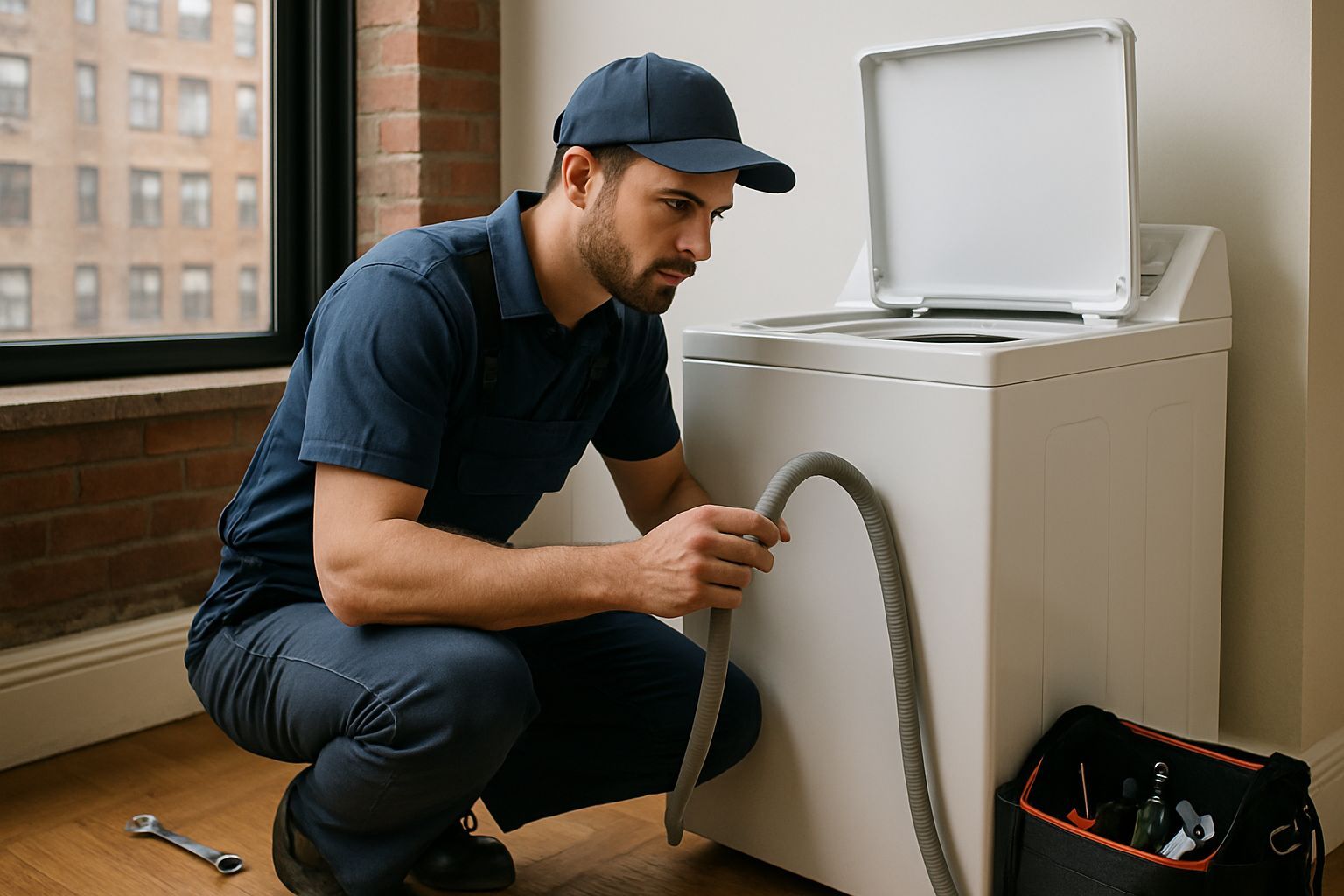
Washer Won’t Drain or Spin? Why the Diagnostic Sequence Matters
A washer that washes or agitates but leaves water in the tub can create two complaints: it will not drain and it will not spin. In Pelham, those symptoms are often connected. Most washers must remove water before high-speed spin, so a full tub can stop the cycle before clothes are spun dry. The diagnostic order matters before anyone assumes a pump, motor, lock, or control has failed.
Why Water in the Tub Changes the Diagnosis
Washers generally follow a fill, wash, drain, and spin sequence, although details vary by model. Before high-speed spin, the appliance usually needs confirmation that enough water has left the tub. Standing water therefore changes the first diagnostic question: is the washer attempting to drain, and what happens when it does?
Observe the cycle without opening panels or defeating safety features. Note whether the pump hums, buzzes, or is silent; whether any water leaves, even slowly; whether the display advances, pauses, clicks, or shows an error; and whether the empty tub will spin normally. Filling and agitation confirm only that earlier parts of the cycle worked. They do not eliminate a later restriction, sensing issue, lock interruption, wiring concern, or control-related problem.
Safe Checks Before Restarting the Washer
Stop using the washer if water is overflowing, you smell burning, a breaker repeatedly trips, there is smoke, or wiring is visibly damaged or exposed. Do not keep restarting a washer that remains full of water.
If outside inspection is safe, record the exact point where the cycle stops. Note any error code, pump sound, water movement, and whether the display continues counting down. This information helps narrow the diagnosis.
Check the external drain hose for crushing, sharp kinks, or a hose that has shifted out of position. Do not detach it if water may spill onto the floor. Some washers have an owner-accessible drain-pump filter or coin trap. If the owner manual identifies one, unplug the washer and follow its instructions. Keep towels and shallow containers nearby because retained water is normal when the filter is opened.
What a Humming or Silent Pump Can Mean
A humming pump is useful evidence, but it is not a diagnosis. The pump may be receiving power while an obstruction prevents water from moving through the filter area, pump, sump hose, or outlet hose. It may also be struggling under load. Replacing the pump before checking the complete drain path can miss the actual cause.
A silent pump does not automatically prove that the pump has failed. Depending on the model and cycle status, the washer may be waiting for lid or door-lock feedback, responding to water-level sensing, dealing with a wiring issue, or not receiving expected control output.
The important question is whether the pump is being commanded to run, whether it receives the correct electrical supply, and whether water can physically travel through the drain path. One sound alone cannot distinguish between those possibilities.
How a Technician Separates Possible Causes
A service visit begins by confirming the water level and the model’s expected sequence of operation. The technician may inspect the pump inlet, sump hose, outlet hose, and applicable filter or coin trap for restrictions that shift or appear only under a load of water.
Diagnosis can also include lid or door-lock feedback and water-level or pressure-sensing behavior. A washer may not proceed to spin if it does not receive the required locked-door or empty-tub confirmation. When needed, testing can evaluate pump behavior, harness connections, wiring integrity, and relevant control output using manufacturer wiring information.
This sequence separates a true drain failure from an interruption involving the pump circuit, lock system, drive components, timer, or electronic control. For help, see our washer and dryer repair in Pelham and nearby Westchester communities or appliance repair service in Yonkers.
Frequently Asked Questions
Why will my washer not spin with water left in the tub?
Many washers will not enter high-speed spin until they have drained sufficiently. Standing water can make a drainage problem appear to be a spin failure, so the drain sequence should be evaluated before blaming the motor or spin components.
Does a humming washer always need a new drain pump?
No. Humming can mean the pump is trying to run against an obstruction or restriction. The pump, filter area, sump hose, outlet hose, and external drain-hose condition should be considered before replacing a part.
Can a kinked drain hose stop a washer from spinning?
Yes. A crushed or kinked external drain hose can slow or block water removal. If the washer cannot drain as expected, it may not receive the conditions required to begin high-speed spin.
Why does my washer drain sometimes but not every cycle?
Intermittent draining can involve a shifting restriction, pump behavior under load, a connection issue, or a sensing or lock-related interruption. The timing of the failure and any displayed error provide useful diagnostic clues.
Is it safe to run another spin cycle if the washer will not drain?
Avoid repeatedly restarting a washer that is full of water. If there is overflow, burning odor, smoke, breaker tripping, or damaged wiring, stop immediately and have the appliance evaluated rather than forcing more cycles.
You might also like