Gas Cooktop Keeps Clicking After the Burner Lights? Flame-Sensing Checks
A gas cooktop that keeps clicking after the burner lights presents a different issue from one that clicks but will not ignite. Here, gas lights and a flame is present, but the igniter continues to spark or re-spark. On re-ignition models, the system may not be reliably recognizing the flame. The sound alone does not identify a failed part.
Start With Gas-Safety Conditions
Turn the burner off immediately if you smell gas, hear hissing, experience delayed ignition, see a flash at lighting, or notice abnormal yellow or lifting flames. Leave the area and contact the gas utility or emergency services from outside. Do not operate electrical switches or use electronics before leaving.
Do not keep cycling a burner to make the clicking stop. Repeated ignition attempts are not a safe troubleshooting method when combustion appears abnormal and can complicate the symptom.
If the flame lights promptly, remains stable, and there is no gas odor, let the cooktop cool fully before making basic visual checks identified in the owner’s manual. Do not adjust gas settings, bypass switches, or move ignition components. Those actions involve combustion performance and electrical parts that require model-specific procedures.
Why a Lit Burner May Continue Clicking
Re-ignition systems need dependable feedback to confirm that ignition succeeded. The control must recognize a stable flame near the electrode. When that feedback is interrupted, the cooktop can act as though the burner needs another spark even while it is already lit.
Possible causes include a burner cap that is not seated level, moisture or food residue near the electrode, restricted burner ports, poor burner-head contact, or a flame pattern that does not consistently reach the sensing area. An electrode may also be damaged, contaminated, or incorrectly positioned. Wiring, grounding, ignition-switch, or shared module conditions can matter as well.
These possibilities overlap, so clicking alone does not establish a single failed component. If one burner is affected, the cause may be localized. If several burners click, shared electrical or grounding conditions may also be part of the diagnostic path.
Make Only Safe, Useful Observations
With the cooktop off and fully cool, confirm that the removable burner cap sits level and is positioned as the owner’s manual directs. A cap that appears nearly correct can still affect flame carryover and flame contact around the electrode.
Remove visible residue from homeowner-accessible surfaces without disassembling the cooktop. Do not enlarge ports, insert tools into small openings, scrape the electrode, or remove parts beyond those the manufacturer identifies as accessible.
Note whether one burner or several burners click, whether the issue began after a spill or cleaning, and whether it occurs only on low flame or simmer. Also note whether a pan changes the flame appearance or makes clicking return. Record the model number with these details. Owners of compatible units may review GE appliance repair in Pelham for the relevant appliance category.
What Low Flame, Cookware, and a Technician Check
A smaller simmer flame may not reach the sensing zone as consistently as a higher flame. Cap alignment, small simmer ports, burner-head condition, airflow, and electrode placement can all contribute. Low-flame clicking does not automatically mean the igniter has failed.
Cookware can redirect heat and airflow around the grate, making an existing flame-sensing weakness more noticeable. The pan is not necessarily defective, but the pattern is useful diagnostic information.
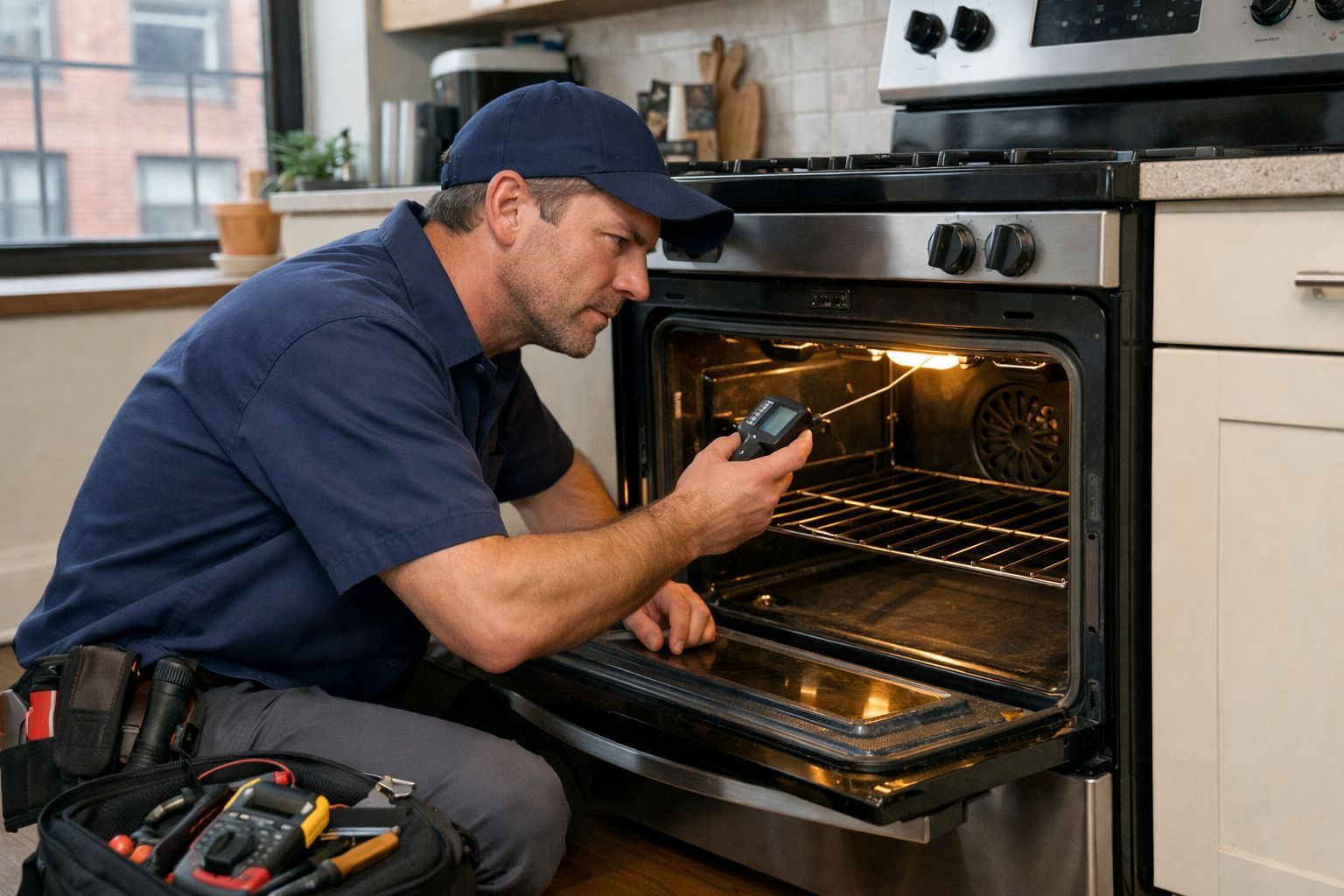
A technician verifies the complaint and checks whether the cooktop uses flame-sensing re-ignition. Evaluation can include cap indexing, burner-head contact, electrode condition, contamination, flame carryover, harness connections, chassis grounding, ignition-switch behavior, and applicable supply polarity. Manufacturer procedures and wiring information guide module evaluation. Arrange professional oven and cooktop repair rather than performing live-voltage tests. Sultan also provides New Rochelle appliance repair service information for the surrounding area.
Frequently Asked Questions
Why does my gas cooktop click after the burner lights?
On a re-ignition system, clicking can mean the control is not receiving reliable flame confirmation. Cap alignment, moisture, residue, flame shape, electrode condition, grounding, and wiring may all affect that feedback.
Can moisture make a burner keep sparking?
Yes. Moisture or contamination near the electrode can interfere with dependable ignition and flame-sensing behavior. Let the cooktop cool, check only accessible surfaces, and avoid disassembling or scraping at the electrode.
Why does clicking occur only on low or simmer?
A smaller flame may not consistently reach the sensing area. Restricted small ports, cap position, burner condition, airflow, and electrode placement are among the conditions a technician evaluates.
Why does placing a pan make clicking return?
Cookware can alter airflow and redirect the flame pattern. If the flame no longer reaches the sensing zone consistently, a re-ignition system may begin sparking again. Note that pattern for diagnosis.
Should I replace the spark module myself?
Not based on this symptom alone. A technician should verify burner alignment, flame contact, ports, electrode condition, grounding, wiring, and applicable electrical conditions before determining whether the ignition module is involved.
You might also like