Why a Gas Oven Preheats but Won’t Hold Temperature
A gas oven that reaches the selected temperature then cools can be confusing. Initial preheat may look normal, yet the bake burner may not relight when the oven needs heat again. In Pelham homes, this pattern points to the temperature-maintenance ignition sequence rather than the first ignition alone. It also deserves careful safety attention. The symptom can have more than one cause.
How Preheat and Temperature Maintenance Differ
During preheat, the control calls for heat and the bake burner ignites. As the cavity reaches the set temperature, the burner cycles off. During baking, the control should call again as the cavity cools slightly, and the burner must relight.
A successful preheat therefore does not show that every later cycle works. The display can still show the selected setting while food cooks slowly and the oven loses heat. From outside, safely note whether there is clicking or sparking, whether ignition appears normal if visible, and roughly when cooling begins. Those details help distinguish an apparent control issue from a relight failure.
Do not rely on a single short test: the failure may appear only after the oven has been hot long enough to cycle off and request heat again.
When to Stop Using a Gas Oven
Stop using the oven if you smell gas, hear hissing, see delayed ignition, a flash or pop when the burner lights, smoke, visible sparking, or an unstable or lifting flame. Do not repeatedly restart it to make it light. If gas is suspected, leave the area and contact the gas utility or emergency services from a safe location.
When no warning sign is present, limit homeowner checks to observation. Confirm that the door closes normally. After the appliance is off and cool, photograph the model and serial label plus any displayed fault code. The use-and-care manual may explain normal sounds, codes, or cycling for that model. Do not remove panels, burner covers, or access gas connections.
Why Reignition Can Fail After Preheat
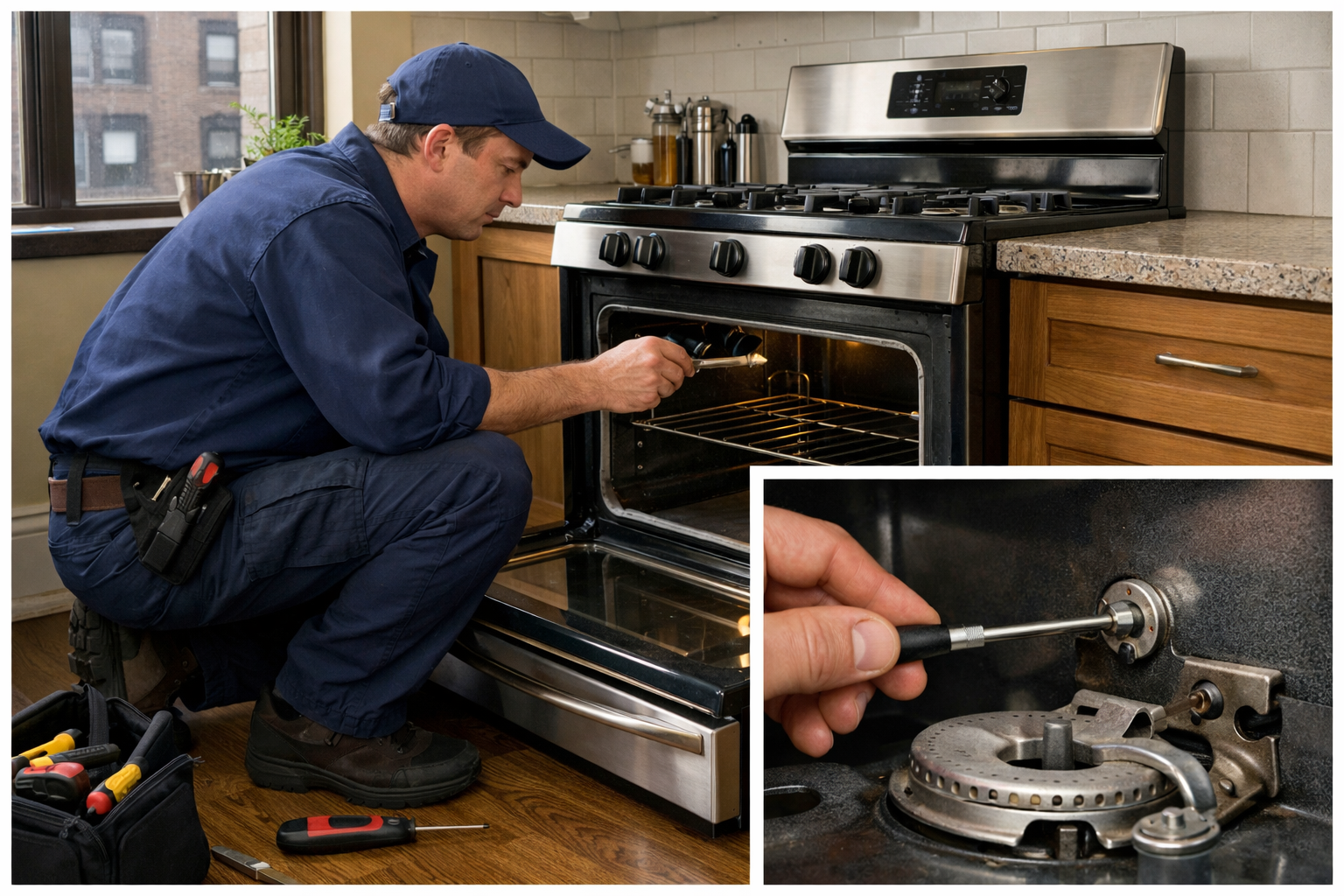
Some gas ovens use a hot-surface igniter. It may glow during preheat, but visible glow alone does not prove correct performance throughout the bake cycle. As the oven warms, an igniter may not maintain the electrical characteristics needed for the gas valve to reopen. The symptom alone does not identify a failed igniter.
Other models use direct-spark ignition and may click or spark when heat is requested. Relighting can depend on spark delivery, electrode condition and position, wiring, grounding, ignition-module operation, and flame recognition. Some designs monitor flame proof and may enter a safety lockout after unsuccessful ignition attempts.
The bake burner also needs proper ignition timing and carryover. A technician evaluates the complete system rather than assuming one part is the cause.
What to Record and What a Technician Checks
A technician begins with the exact model, fuel type, selected temperature, and failure pattern. The diagnosis considers whether the oven calls for heat as it cools, whether it clicks or sparks, stays silent, or displays a code. For hot-surface systems, the igniter-and-valve circuit is evaluated under the manufacturer procedure rather than by glow alone. Direct-spark checks can include electrodes, spark delivery, flame proving, module operation, ground paths, and lockout history. Controls, sensor feedback, valve operation, and harnesses may also be checked.
Before service, record approximate preheat time, when cooling starts, any sounds or codes, and unusual flame behavior. For relevant help, review oven and cooktop repair in Pelham. Outside Pelham, the New Rochelle appliance repair service page covers cooking-appliance heating and ignition concerns.
Frequently Asked Questions
Why does my gas oven preheat but not maintain temperature?
The initial ignition can succeed while a later bake-cycle relight fails. The cause may involve ignition, gas-valve operation, flame recognition, controls, sensor feedback, wiring, or another part of the bake sequence. The symptom itself does not isolate one failed component.
Can an igniter glow yet fail during relight?
Yes. On hot-surface systems, visible glow does not confirm the igniter has the electrical performance required when hot. Testing should follow the manufacturer procedure because performance can change as the oven heats.
Why does my oven click after preheat but not heat back up?
Clicking can indicate a direct-spark ignition attempt. Spark delivery, electrode condition, flame proving, wiring, grounding, module logic, or a safety lockout may require professional evaluation. Clicking alone does not identify the cause.
Should I keep resetting an oven that will not reignite?
No. Avoid repeated restarts, especially with delayed or inconsistent ignition. Record the behavior and consult the manual only when no safety warning exists. Do not try to force a relight through repeated testing. Stop use for gas odor or abnormal ignition.
When is a gas oven ignition issue an emergency?
Treat gas odor, hissing, delayed ignition, flash ignition, popping, smoke, sparking, or abnormal flames as urgent stop-use conditions. Leave the area when gas is suspected and contact the gas utility or emergency services from a safe location.
You might also like