Why Is My Dishwasher Detergent Dispenser Door Still Closed?
A dishwasher detergent dispenser door that remains physically closed after a completed cycle is different from an open cup with detergent still inside. A closed door can indicate that the cup was blocked, its release mechanism did not operate, or the dishwasher did not reach the appropriate wash stage. Observe the exact condition before forcing anything.
Confirm the Symptom and the Cycle Stage
Dishwashers do not release detergent merely because they fill or later drain. The unit must latch safely, fill, progress through the appropriate part of the selected cycle, and send its model-specific release command. A completed drain therefore does not prove that the dispenser operated.
After a normal cycle, check whether the cup is fully closed, partly open, or open with detergent remaining. The last condition is different: the dispenser released, but moisture, detergent condition, water movement, or cycle timing may affect use. For that concern, read why a dishwasher can fill and drain but still leave dishes dirty. Note the selected cycle and model number if service is needed.
Check for Items Blocking the Cup Door
Large cookware is one of the first things to rule out. A baking sheet, tall pan, cutting board, utensil handle, or improperly positioned rack can sit in the cup door’s path. The dishwasher may otherwise run, but the door cannot swing open.
After the dishwasher is off and cool, look at the inside of the door and the loading pattern. Confirm that nothing in either rack interferes with the dispenser door’s travel, especially when oversized items extend toward the inner door.
Correct the loading, then run a normal cycle and inspect the cup afterward. A photo, the selected cycle, and the model number can help clarify the symptom if service is needed. For broader concerns, see our dishwasher and garbage disposal repair in Pelham information.
Clean Only Accessible Residue
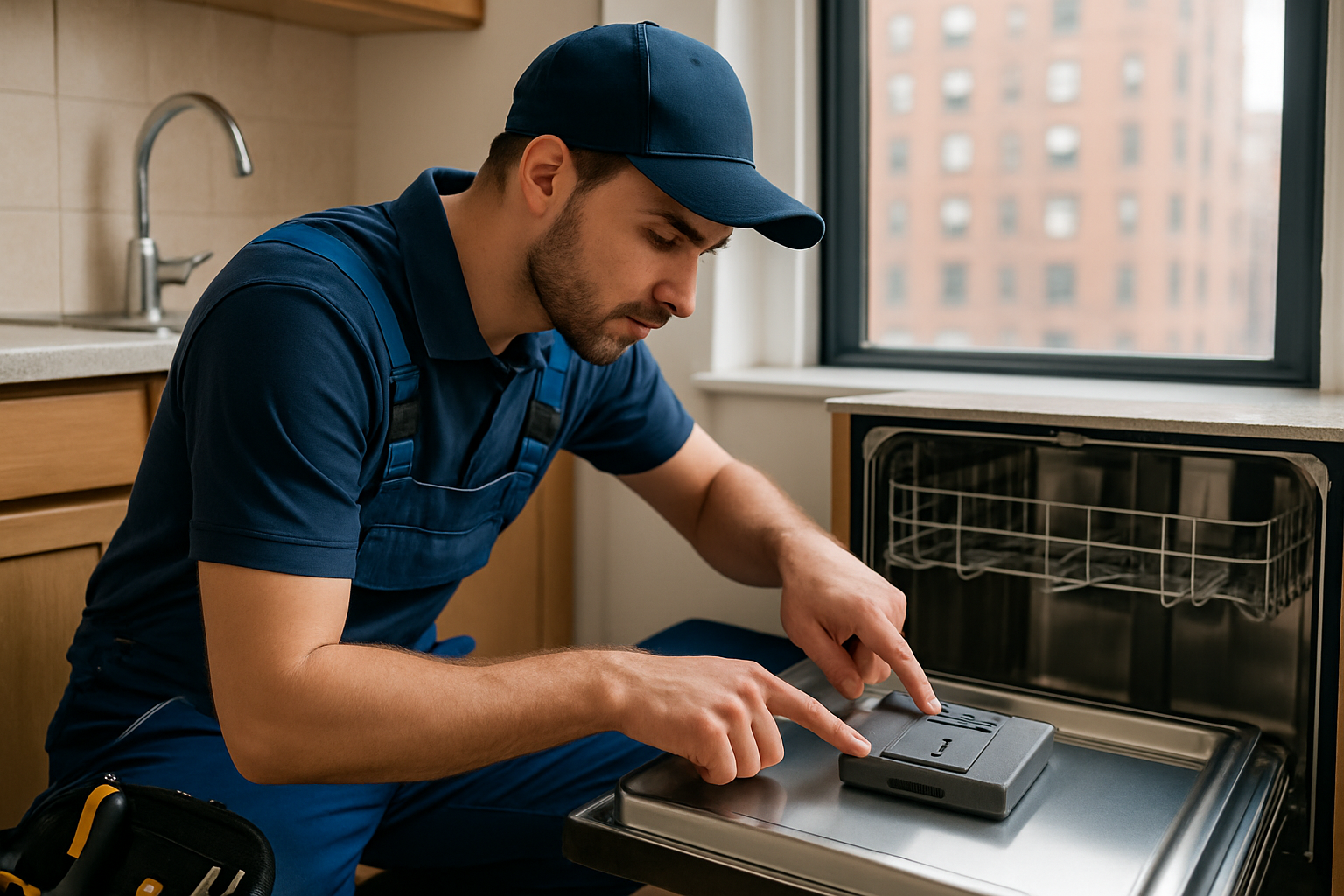
Detergent residue or deposits around the cup and latch area can interfere with smooth movement. With the dishwasher switched off and cool, clean only accessible residue in the dispenser cup and around the latch using methods approved by the owner’s manual.
Do not pry the latch open, force the cup door, apply lubricant, or remove the dishwasher door panel. The dispenser mechanism and its wiring are behind the inner door on many models. Forcing a stuck component can damage the latch, hinge, or surrounding door parts and make diagnosis harder.
If the door closes and latches normally by hand but fails to release during a cycle, an internal issue remains possible. First confirm that cookware was not blocking it and that the dishwasher progressed to its release stage.
Know When Diagnosis Requires Service
When basic loading and accessible-cleaning checks do not resolve a closed dispenser door, diagnosis focuses on where operation stops. A technician verifies cycle progression and whether the dispenser receives its release command at the intended stage.
Model-dependent checks can include cup-door clearance, latch and hinge movement, actuator condition, wiring harnesses, connectors, and moisture damage within the door where applicable. Before recommending a dispenser assembly or control, testing should distinguish a failed release mechanism, damaged wiring, and missing control output.
For dishwasher-related diagnosis beyond Pelham, visit appliance repair in Scarsdale. Stop use and seek service for smoke, a burning smell, repeated breaker trips, active leaking, or a door that will not latch safely.
Frequently Asked Questions
Why is my dishwasher detergent dispenser still closed after a cycle?
Cookware may block the door, residue may affect movement, or the dishwasher may not have reached the stage that commands release. The mechanism can also have an internal actuator, wiring, or control-related issue that needs model-specific diagnosis.
Can a baking sheet or large pan block the detergent door?
Yes. Tall or awkwardly loaded items can obstruct the cup door’s swing path. Check baking sheets, pans, cutting boards, utensil handles, and rack position for clearance before another normal cycle. Load oversized items so they do not extend toward the inner door.
Why is detergent left behind even though the dishwasher drained?
Draining only confirms that water was removed at some point. It does not prove that the cup opened or that wash action was adequate. Determine whether the cup is closed, partly open, or open with detergent remaining.
Does a closed dispenser door always mean I need a new dispenser?
No. A blocked door, accessible residue, cycle-progression concern, actuator issue, damaged wiring, or missing control output can produce the same result. Testing should identify the failed point before a dispenser assembly or other part is recommended.
Can I keep using a dishwasher when the detergent cup will not open?
Avoid relying on it for normal washing because detergent may not release at the correct time. Stop using the dishwasher immediately if there is active leaking, an electrical smell, smoke, breaker trips, or an unsafe door-latching condition.
You might also like