Why Is My Refrigerator Water Dispenser Flowing So Slowly?
A refrigerator water dispenser that takes too long to fill a glass is frustrating, but weak flow does not automatically mean the inlet valve has failed. For Pelham homeowners, comparing door-dispenser performance with ice-maker behavior is a helpful first step. That comparison can narrow the water path involved, but it cannot identify a defective component by itself. Refrigerator water routing varies by model.
Start With the Symptom Pattern
Consider whether the change was gradual or sudden. A gradual decline may point toward filter restriction or a developing blockage. A sudden change can follow filter replacement, refrigerator movement, plumbing work, or sediment entering the home water supply.
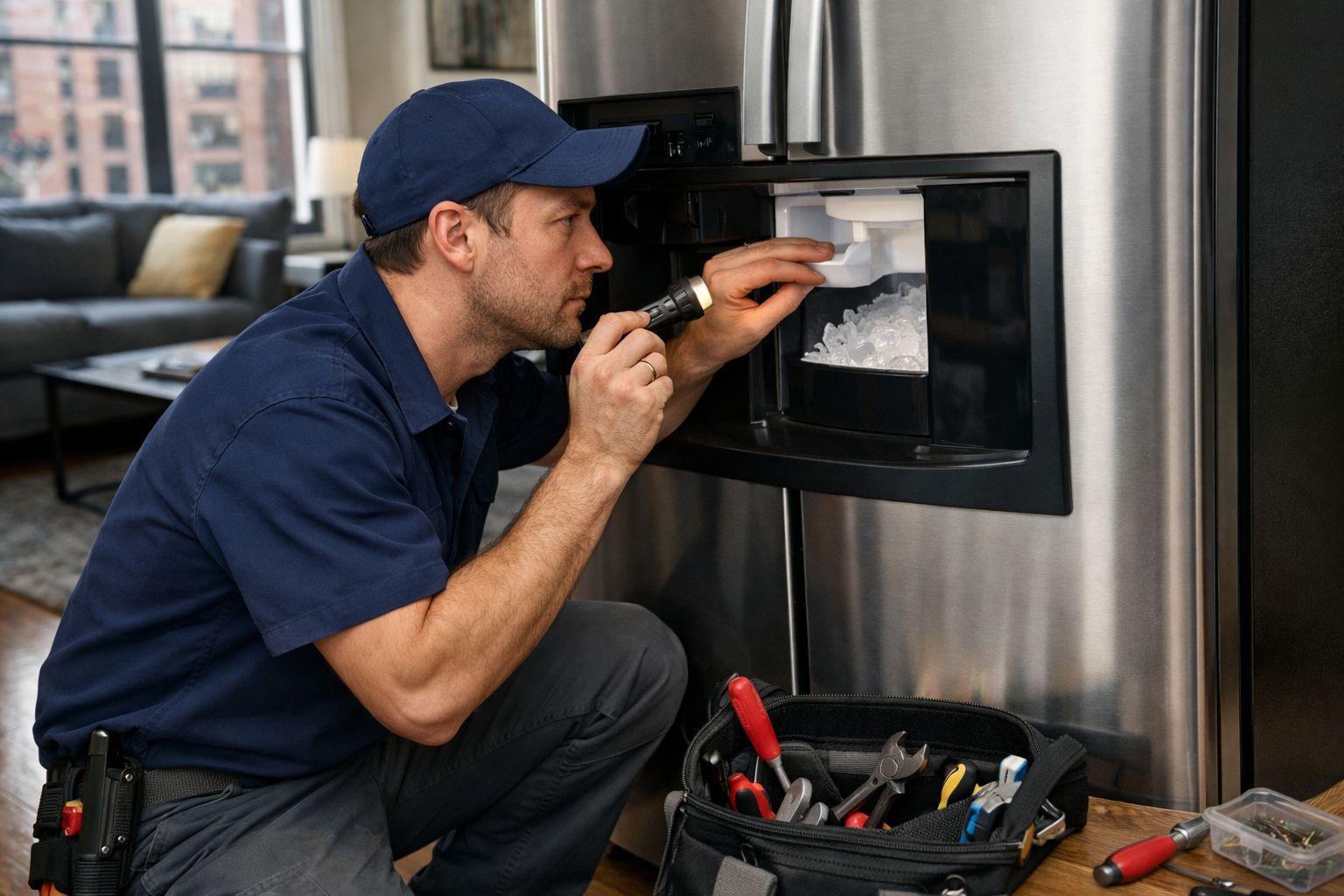
Compare the ice maker as well. Are cubes smaller than usual, hollow, or taking longer to form? Slow ice-maker filling along with a slow dispenser can suggest a concern in a shared portion of the system, such as the incoming supply, filter, housing, or an early valve stage.
Normal ice production with weak door water may shift attention toward a dispenser-specific valve path, reservoir, tubing, door line, or dispenser actuation. These patterns are useful clues, not final answers. Refrigerator designs differ, and more than one restriction can exist at the same time.
Complete Safe Homeowner Checks
First, note whether the change was gradual or sudden and whether the ice maker also changed. A short video can document whether the dispenser stream pulses, dribbles, or flows steadily but weakly. Record the model number, filter messages, and display errors before arranging service.
Check the filter replacement date and filter indicator, if the model has one. Reinstall or replace the filter only as directed in the owner manual. An overdue, incorrectly seated, or unapproved filter can reduce flow. Do not force a filter into place, alter the housing, or use an unauthorized bypass.
Look at the accessible water line for visible kinks, especially if the refrigerator was moved recently. Avoid removing rear covers, disconnecting water lines, testing voltage, or trying to thaw door tubing with heat. Those steps can create water damage, electrical risk, or component damage.
Understand the Filter and Shared Water Path
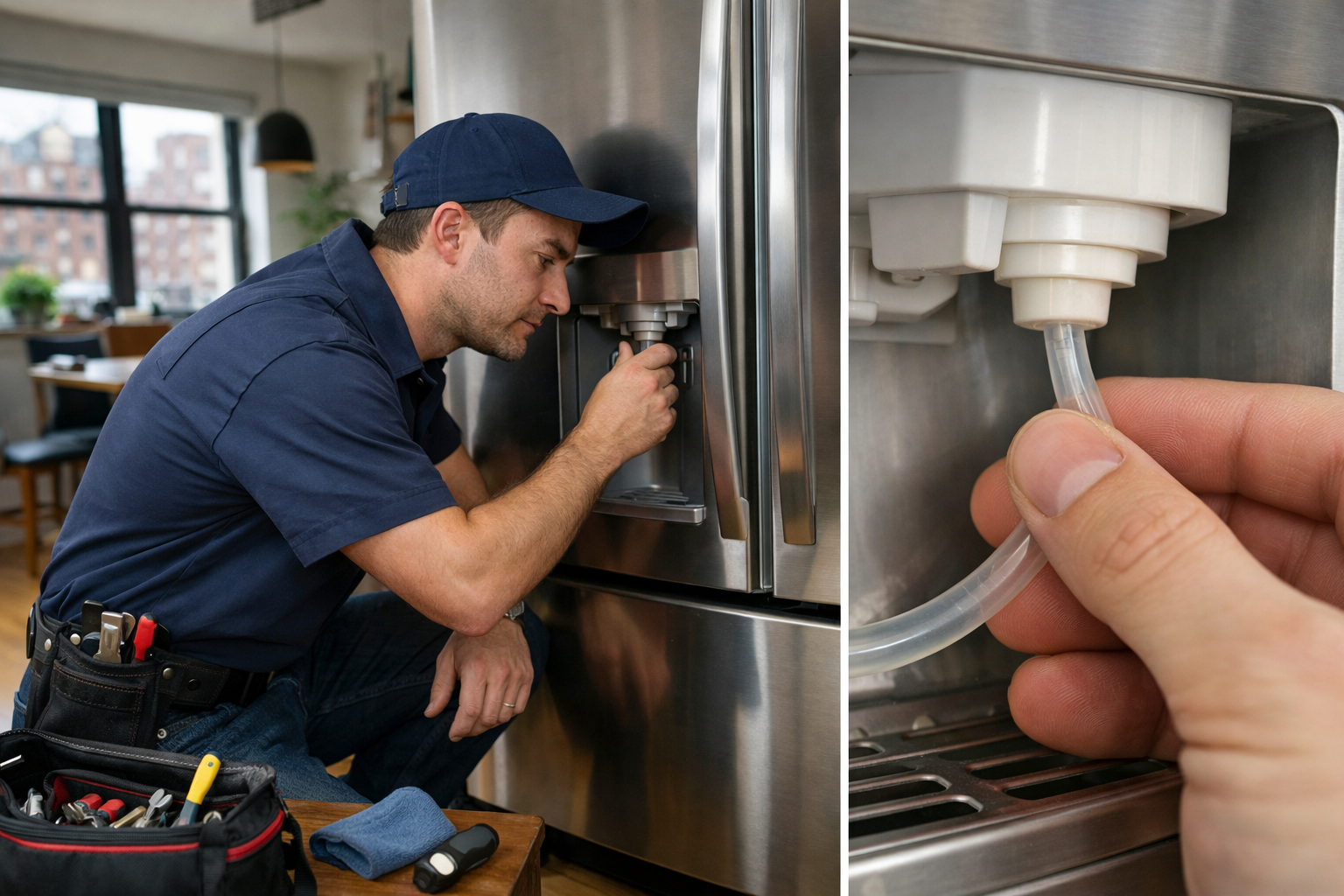
The filter is a common starting point because it is homeowner-accessible and part of the water path. Still, replacing it without confirming the cause can leave the same slow-flow symptom behind. A restricted filter housing can limit water even when a new filter is installed correctly.
Sediment introduced after plumbing work may affect screens, housings, valves, or narrow passages. In other cases, the household supply to the refrigerator may be inadequate, or a supply line may be pinched where it cannot be safely inspected without moving or opening the appliance.
For dispenser or ice-system concerns, refrigerator repair in Westchester County should focus on identifying where flow drops instead of assuming the inlet valve is the cause. The relationship between dispenser and ice-maker performance helps direct that assessment.
Know What a Technician Evaluates
A technician begins by confirming the exact refrigerator model because water routing, valve arrangement, wiring, and test procedures vary. The next step is comparing door-dispenser and ice-maker operation, then checking available household supply and flow to the appliance.
Diagnosis follows the model’s water path. Depending on the design, this can include the filter and housing, inlet or isolation valve, dispenser and ice-maker valve sections, tubing, reservoir, door water path, and dispenser switch or control circuit. The technician may compare commanded valve operation with actual output using model-specific procedures.
If both functions slowed after plumbing work, sediment or a shared-path restriction deserves attention. If ice production remains normal but door water is weak, a dispenser-only restriction or actuation issue becomes more likely. Homeowners researching appliance repair in Rye Brook can prepare by providing the model number, symptom timeline, filter information, and dispenser video.
Frequently Asked Questions
Why did my refrigerator water dispenser suddenly become slow?
A sudden change can follow a filter issue, refrigerator movement that kinks an accessible line, plumbing work that introduces sediment, or a change in the appliance water path. Note whether the ice maker also changed.
Can an old or incorrectly seated filter reduce dispenser flow?
Yes. A filter can restrict flow when it is overdue, improperly installed, or not approved for the refrigerator model. Follow the owner manual exactly, and do not force or modify the filter or housing.
If my ice maker works, can the water valve still be involved?
Yes. Some refrigerators use separate valve paths for the dispenser and ice maker after a shared supply section. Normal ice production does not rule out a dispenser-side valve issue, but it does not prove one.
Why is water flow slow after plumbing work?
Plumbing work can disturb sediment in the water supply. That material may contribute to a restriction in a filter, housing, valve, or narrow water passage. A technician can determine where flow is reduced.
Should I replace the inlet valve for weak dispenser flow?
Not based on weak flow alone. The filter, supply, housing, tubing, door path, dispenser controls, and valve operation need evaluation in the correct order for the specific refrigerator model.
You might also like