
Why Does Clean Water Return to My Dishwasher Overnight?
A dishwasher that is empty when a cycle ends but contains clean water by morning can be confusing. Timing is more useful than the amount. Water left immediately after a cycle may indicate incomplete draining. A tub that empties first and refills hours later suggests either water entering through the fill side or movement back through the drain path.
Confirm the Dishwasher Was Empty After the Cycle
First, determine whether the dishwasher fully drained at the end of the cycle. Open the door when the cycle finishes and check the visible tub bottom. Check again several hours later or the next morning. A photo at both points can help document the change.
Some models retain a small amount of water in the sump below the visible tub surface. That is different from standing water that becomes visible after the tub appeared empty.
Notice the water’s condition as well. Clear, fresh-looking water can be consistent with water entering from the supply side, but it does not prove the inlet valve is at fault. Cloudy water, food particles, or a sink-like odor can make drain-path backflow more plausible. Record the approximate time before water returns, along with the model number and any displayed error codes.
Understand Delayed Water Entry and Backflow
Two broad causes can explain clean water returning after an empty dishwasher sits overnight: unintended water entry or drain-path backflow.
The inlet valve controls water entering the dishwasher during operation. If it does not close fully, it may allow a slow seep of water into the tub while the appliance is off. Clear water returning after an otherwise empty tub is consistent with that possibility, but the valve should be tested before it is blamed.
Backflow can also occur through the drain path. The drain hose typically connects to a sink drain, disposal connection, high loop, or air-gap arrangement. Incorrect routing, a dropped high loop, or a sink-side connection problem may allow water to move toward the dishwasher. A dishwasher can drain normally during a cycle and still have water return later.
Limit Home Checks to Safe Observation
Keep homeowner checks limited to observation. Turn the dishwasher off before looking beneath the sink. Do not detach hoses, remove panels, or access the pump or internal components.
Inspect the visible drain hose section for a sharp kink or a hose that has fallen from its intended high position. A high loop or air-gap configuration is intended to help limit unwanted movement through the drain line. Do not change plumbing connections based only on appearance, because the correct arrangement depends on the installation.
Repeat the timing test after a normal cycle. Confirm whether the tub is empty at cycle end, then note how long water takes to return. This helps distinguish a drain-completion concern from delayed water entry.
Stop using the dishwasher and arrange service if water leaks outside the tub, collects in the base area, produces smoke or a burning odor, or trips a breaker.
Let a Technician Identify the Actual Source
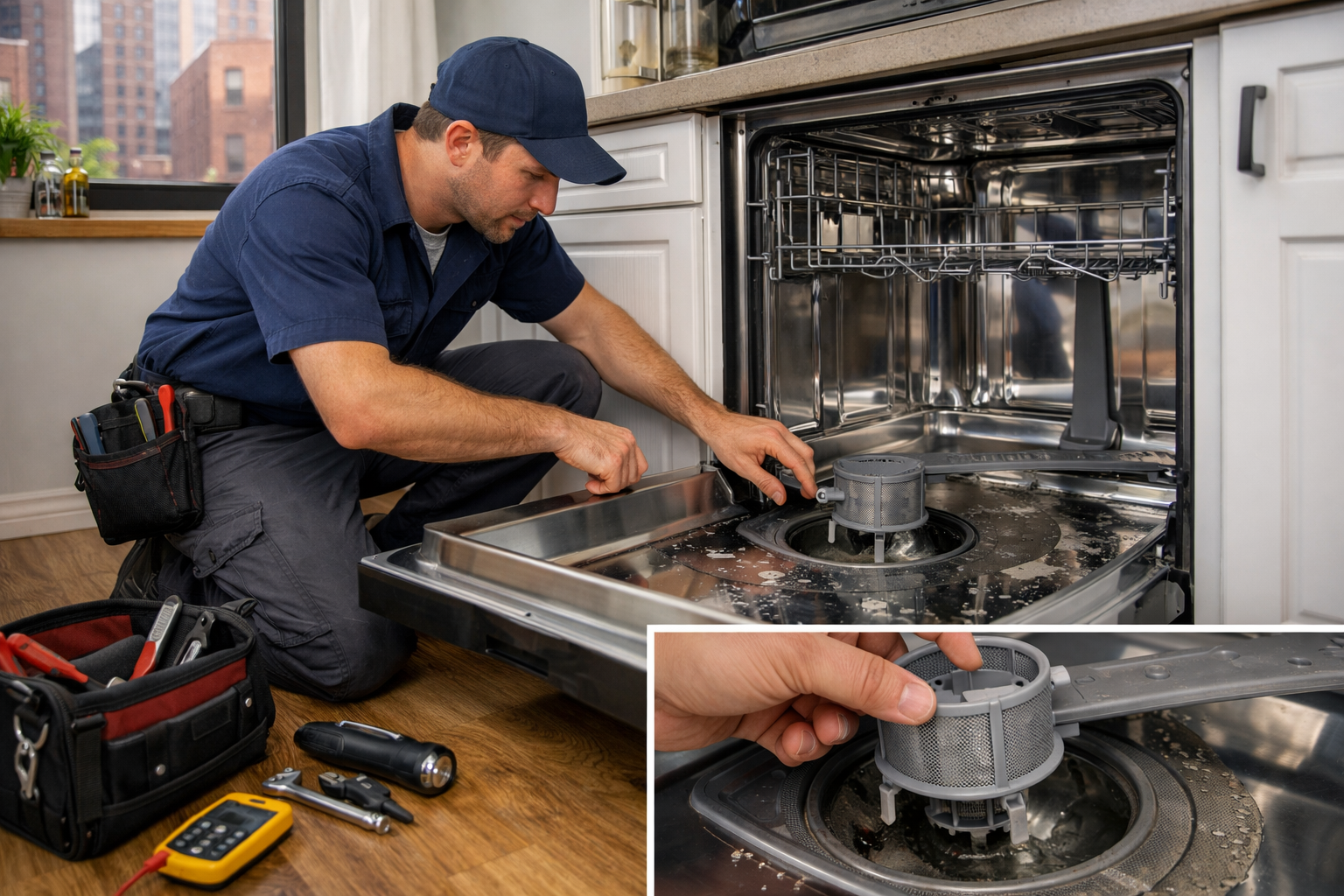
A technician should first verify end-of-cycle drain performance and the time between draining and returning water. That process helps separate a weeping inlet valve from drain-path backflow without replacing parts based only on the symptom.
Evaluation may include the drain hose routing, high loop or air gap, sink or disposal connection, drain restrictions, and check-valve behavior. Depending on the model, the sump and pump assembly may also need inspection. Model-specific procedures and wiring information matter before identifying a valve, pump, control, or check valve as failed.
This approach avoids replacing a drain pump simply because water is visible in the tub. For delayed return water, review dishwasher repair in Pelham and Westchester County. Nearby homeowners can also see appliance repair in White Plains.
Frequently Asked Questions
Is a little water in the dishwasher bottom normal after a cycle?
Some models retain a small amount of water below the visible tub surface in the sump. Visible standing water that was absent at cycle end and appears later is different and should be documented.
Why is the water clear when it comes back into my dishwasher?
Clear water can be consistent with slow entry through the fill side, including possible inlet-valve seepage. It can also occur with certain drain-path conditions, so water color alone cannot identify the cause.
Can an inlet valve leak water when the dishwasher is off?
An inlet valve can potentially allow water to seep when it should be closed. A technician should verify this with safe, model-appropriate isolation and leak-testing procedures instead of replacing the valve based on appearance.
Can a drain hose routing problem let water return to the tub?
It can contribute to backflow concerns. A lost high loop, kinked hose, sink connection issue, or related drain-path problem may affect water movement, but the complete installation and dishwasher design require evaluation.
Should I replace the drain pump if water returns hours later?
Not based on that symptom alone. If the dishwasher empties at cycle end and water returns later, delayed inlet seepage and drain-path backflow should be investigated before deciding whether the pump is involved.
You might also like