
Why Does My Dishwasher Make a Grinding Noise When Draining?
Dishwashers make normal operating sounds, but rattling, grinding, or a harsh hum heard only while water leaves the tub deserves attention. A draining noise follows a different diagnostic path than poor wash performance or sound heard while spray arms circulate water.
For Pelham homeowners, note whether it starts during the initial drain or after washing. This helps separate drain-system concerns from circulation-system concerns.
Why Cycle Timing Matters
Dishwashers commonly drain more than once during a cycle. When a drain portion begins, the drain pump moves water from the sump and through the drain path. A brief sound change as the machine switches functions is expected.
Grinding, repeated rattling, or harsh humming differs from a routine operating-noise change. It can mean something interferes with water removal, but sound alone does not prove the drain pump needs replacement.
Notice whether water remains after the cycle and whether the sound is brief or repeats throughout draining. A dishwasher can drain completely while loose debris intermittently contacts a moving component. Likewise, a concerning noise may reflect another internal component that changes the sound during the drain sequence.
Potential Causes of a Drain-Only Grinding Noise
Loose debris near the sump or pump area may rattle or interfere with moving parts. Food particles and other buildup can restrict the lower path and affect drain behavior, although a restriction does not automatically cause grinding.
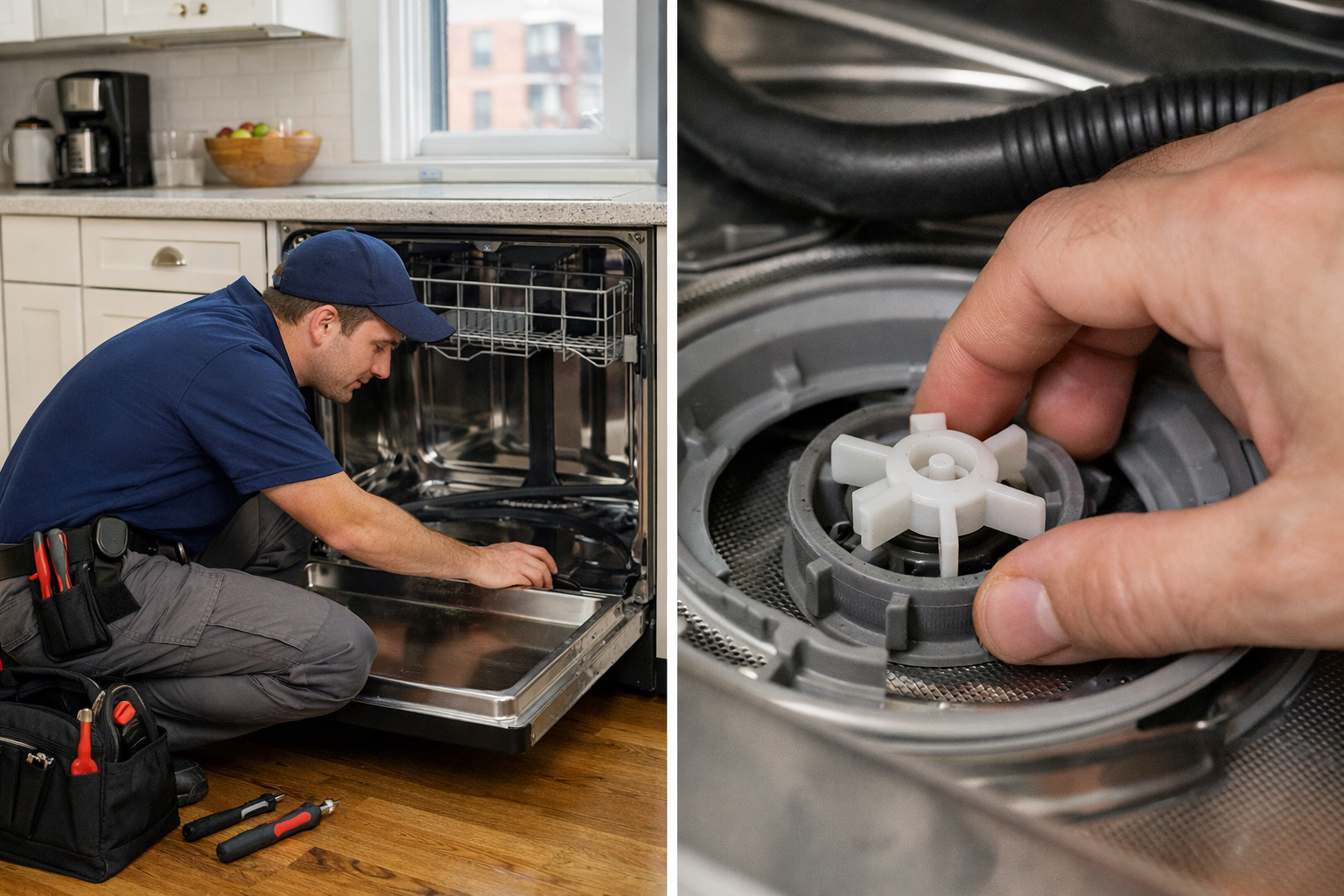
An obstructed or damaged drain-pump impeller can produce harsh noise when the pump runs. A motor concern can also hum, grind, or operate noisily if it cannot turn as intended.
Some dishwasher designs have internal components that change the sound heard during a drain sequence. For that reason, replacement should follow diagnosis, not a guess based only on noise. If water remains in the bottom after a cycle, the drainage concern needs prompt attention. For related help, see dishwasher and garbage disposal repair in Pelham.
Safe Checks You Can Perform
Start with the dishwasher off and cool. Note the cycle stage, sound type, any displayed error code, and whether water remains after the cycle. Inspect racks, utensil holders, and visible interior surfaces for a loose utensil, broken rack piece, or visibly damaged part that could shift.
If the owner manual permits filter removal and cleaning, follow its instructions. Clean only the removable filter as directed for that model. Do not reach into a pump opening, force parts that resist, or remove access panels.
After correcting an obvious loading issue or cleaning the filter, run one normal, supervised cycle. Stop using the dishwasher instead of repeatedly testing if you notice leaking, smoke, a burning smell, or breaker tripping.
Professional Diagnosis and When to Stop Using It
A technician begins by confirming whether the noise truly occurs when the drain pump runs, rather than when the wash pump or circulation system is active. Diagnosis may include drain performance, standing water, stored fault information, accessible sump and filter condition, and model-specific debris paths.
The drain pump, impeller, housing, wiring, connectors, and commanded electrical operation should be evaluated under the manufacturer’s service procedure. This helps avoid replacing a pump when debris, a restriction, or another component is responsible.
Stop operation and arrange professional diagnosis if water remains, the sound grows louder or more frequent, or an error code appears. Stop immediately for a burning odor, smoke, leaking, or electrical interruption. Record the cycle stage, sound type, code, and drainage result. Homeowners outside Pelham can review appliance repair in Greenburgh.
Frequently Asked Questions
Why does my dishwasher make a grinding noise only when it drains?
Because the sound coincides with water removal, the drain system is the first area to evaluate. Debris near the sump or pump, an impeller obstruction, a pump concern, or a model-specific component can change the sound.
Can a loose rack part cause a dishwasher drain-pump noise?
It can in some cases. A loose or damaged rack-related piece may become debris and reach an area near the drain-pump housing. Inspect visible rack components, but do not disassemble the pump area or reach into an opening.
Is it safe to use a dishwasher that drains but makes a rattling sound?
One supervised cycle after correcting an obvious loading issue or cleaning a permitted removable filter may be reasonable. Avoid repeated use when the sound continues or worsens, or when standing water, leaks, smoke, burning odors, or breaker tripping occur.
Why does my dishwasher drain normally but still sound harsh?
Normal water removal does not confirm every internal component is healthy. An intermittent obstruction, a worn component, or a developing pump issue may still allow draining while producing an unusual sound during that portion of the cycle.
Should I replace the drain pump when I hear grinding?
No. Noise alone is not enough to identify the failed part. A technician should confirm cycle timing, drainage results, fault history, pump condition, wiring, and model-specific configuration before recommending drain-pump replacement or related repair.
You might also like