Why Does My Washing Machine Keep Filling With Water?
A washer that keeps adding water may appear to be overfilling, but the diagnosis depends on what happens during the cycle. The key question is whether the tub is holding too much water, losing water through the drain as it fills, or continuing to receive water when it should stop. These patterns point to different concerns. Careful observation helps keep those possibilities separate.
Start With Water Safety
If water is nearing the top of the tub, leaking, or continuing to enter unexpectedly, stop the cycle and turn off the household water supply to the washer. Do not leave it unattended.
Before restarting, observe from a safe distance whether water leaves through the drain during filling, whether the washer begins agitating before adding water again, and whether any error codes appear.
Also note the selected cycle and water-level option, and whether water stops entering when the appliance is powered off. Do not remove panels, disconnect plumbing, blow into pressure tubing, bypass switches, or test energized wiring. These observations help distinguish an active filling request from uncontrolled water entry or a drain-routing issue. Keep children and pets away from the area.
A Drain Hose Can Cause Siphoning Problems
With siphoning, the washer brings water into the tub while water is pulled out through the drain hose. It may keep filling because the expected water level never stabilizes. This is not necessarily true overfilling; the machine may be responding to water that is leaving the tub.
Siphoning is more likely when the hose is installed too low, inserted unusually far into a standpipe, crushed, or routed outside the manufacturer’s instructions. Required hose height, insertion depth, and anti-siphon arrangement vary by model, so use the owner manual as the reference.
Without moving the machine or disconnecting plumbing, look at visible hose routing. Note a pinched hose, unusually deep standpipe insertion, or water draining away while filling. A technician can verify the setup against model-specific installation requirements.
When the Washer Holds Water but Keeps Refilling
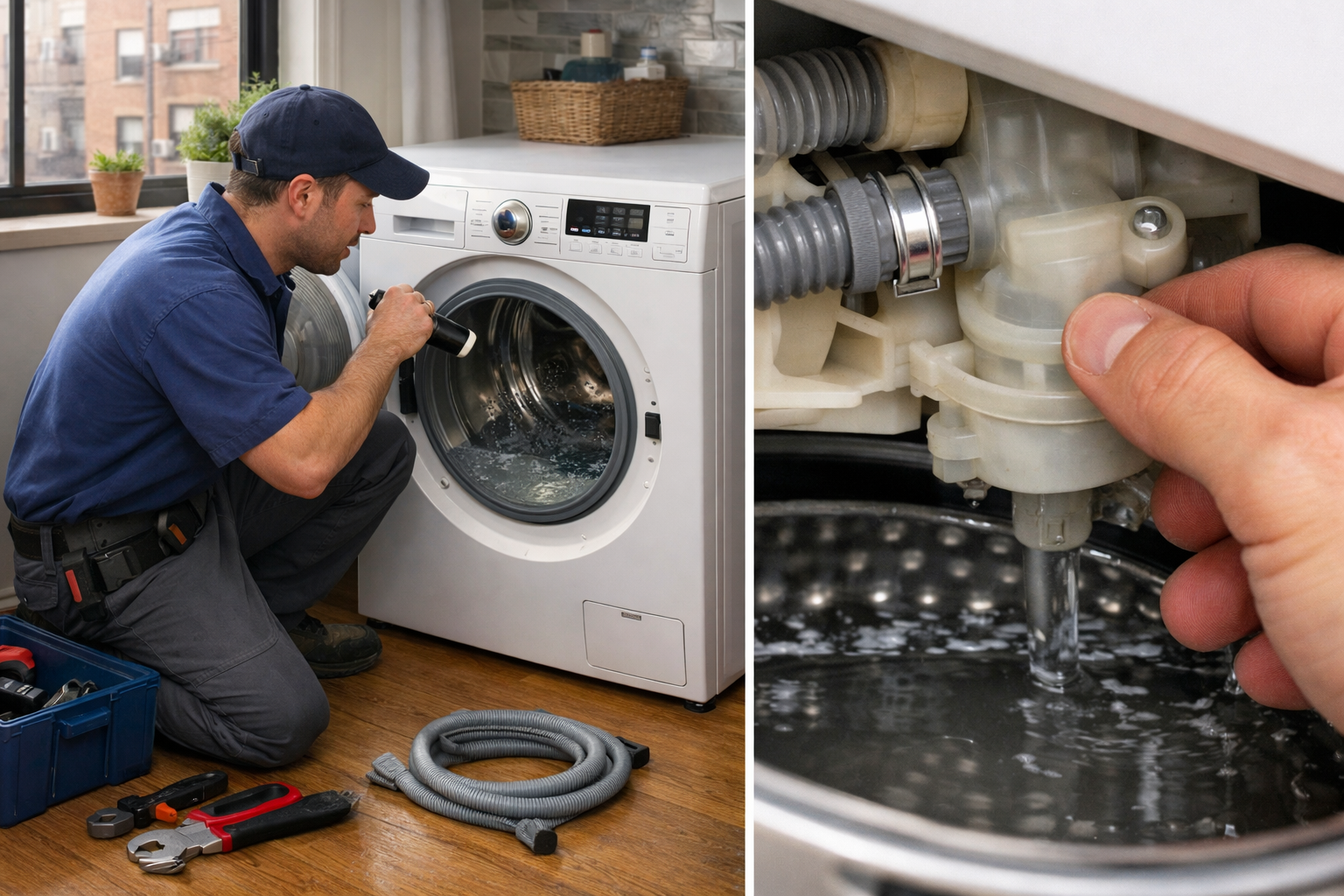
If water remains in the tub but the washer adds more after briefly beginning agitation, the diagnostic path changes. The washer uses pressure feedback to determine water level. Depending on design, this can involve a pressure chamber, hose, sensor or switch, wiring, and control logic.
A blockage, moisture, damage, loose connection, or loss of pressure feedback can keep the machine from recognizing the level accurately. That does not identify a failed sensor or justify replacing a part based on the symptom alone.
Proper diagnosis can include inspection of the pressure path and wiring, stored faults, and sensor and control behavior using model service information. Washer and dryer repair in Pelham can focus on the actual cause rather than treating every refill as the same failure.
Do Not Assume the Inlet Valve Is the Cause
The inlet valve controls water entering the washer. If it does not close properly, water may continue flowing when it should stop, but repeated filling does not prove valve failure. Water entering after the washer is powered off is different from a running washer repeatedly requesting more water. It should not be replaced based solely on this symptom.
A technician can test valve closure and compare it with the control’s command behavior before deciding whether the valve, wiring, sensing system, or control is responsible. The visit should confirm true overfilling, refill, or siphoning, then verify normal fill cutoff and complete cycle operation after the cause is corrected.
For service beyond Pelham, appliance repair in Yonkers also covers washer-related concerns.
Frequently Asked Questions
Why Does My Washing Machine Keep Filling With Water?
Possible causes are drain-hose siphoning, an incorrect water-level signal, or an inlet valve that does not close properly. Watch whether water drains during fill or enters after power is off.
Can a Drain Hose Cause a Washer to Keep Filling?
Yes. A hose installed too low, inserted too far into a standpipe, crushed, or routed incorrectly can siphon water away. The washer may continue filling because it cannot reach the expected level.
How Can I Tell Whether My Washer Is Siphoning During Fill?
Look for water visibly draining while the washer is filling. Without moving the appliance or disconnecting plumbing, note a low, pinched, or unusually deep hose installation and compare it with the owner manual.
Does Repeated Filling Always Mean the Inlet Valve Is Bad?
No. Siphoning and pressure-feedback problems can also cause repeated filling. Continued water entry after the appliance is powered off is more concerning for valve closure, but proper testing is still needed.
When Should I Shut Off the Water Supply?
Shut it off if the tub is nearing overflow, water is leaking, or water continues entering unexpectedly. Stop the cycle and do not leave the washer unattended until the condition is identified.
You might also like