Why Does My Refrigerator Water Dispenser Keep Dripping?
A refrigerator water dispenser may release one or two drops after the paddle is released because water remains in the nozzle. A repeated drip, continuing trickle, puddle, or dispenser that runs without being pressed is different. For Pelham homeowners, the first step is recognizing the behavior before assuming that a particular part has failed.
Separate Normal Nozzle Drops From a Continuing Water Problem
Place a dry cup beneath the dispenser after filling a glass, then watch the nozzle once the paddle is fully released. One or two drops that stop quickly can be normal residual water draining from the short outlet tube.
A continuing drip needs closer attention. It may refill the cup over time, become a thin stream, leave water in the dispenser recess, or create a puddle on the floor. Water appearing when nobody has used the dispenser is also a concern.
The symptom may involve water still passing through a component when it should be closed, but it can also involve an unintended dispensing command. A dripping nozzle alone does not prove that the inlet valve, filter, or control board is the cause. Note whether water dispensing, ice production, or the display has changed, since those details help distinguish the possible paths.
Inspect Accessible Areas Without Taking the Refrigerator Apart
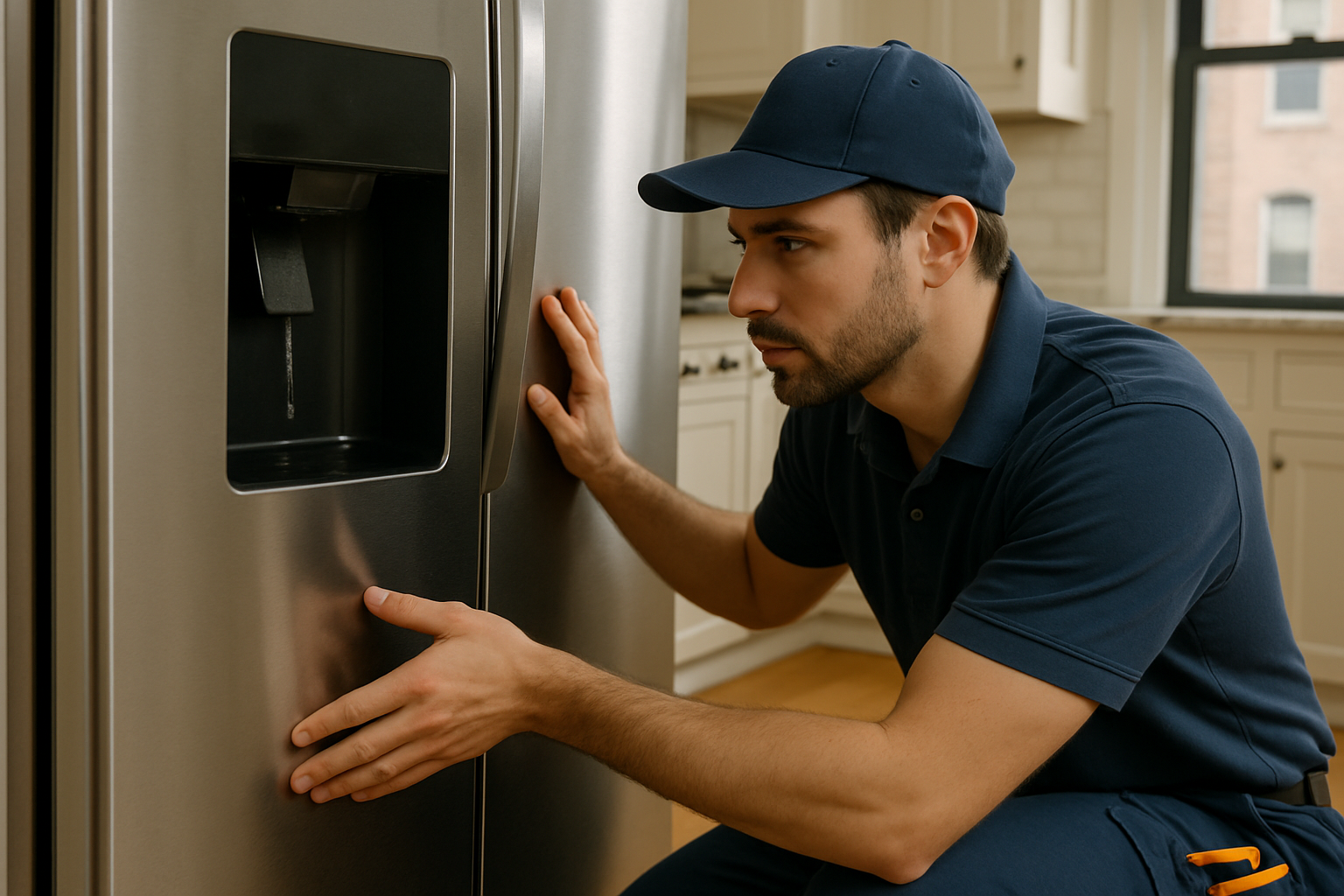
Check the dispenser recess, filter area, floor beneath the refrigerator, and accessible household water connection. If you find water, photograph where it appeared before wiping it up. Water at the nozzle suggests a different diagnostic path than moisture around the filter housing, beneath the cabinet, or near the rear supply line.
If the refrigerator uses a replaceable filter, confirm that it is seated only as shown in the owner manual. Do not force it into position. A damaged filter, improper installation, or a filter-head problem can allow water to leak, but a new filter is not an automatic solution for every dispenser drip.
Record the model number and note when the problem occurs. Does it happen only after dispensing, or on its own? Avoid removing panels, disconnecting tubing, or attempting electrical repairs while investigating a water issue.
Understand Why a Drip Does Not Identify One Failed Part
The inlet valve is a reasonable possibility because a valve can sometimes allow water through when it should be closed. However, refrigerator water-routing designs differ. Some models use more than one valve or separate paths and isolation components for ice and water dispensing.
The paddle or switch can also be involved. If it does not release correctly, the refrigerator may interpret the dispenser as still being pressed. Depending on the model, the concern could include the dispenser interface, door wiring, connectors, or moisture around dispenser electronics.
Water-path issues may involve the filter head, tubing, quick-connect fittings, or valve outlets. Command issues may involve the paddle input, switch, dispenser board, or wiring that tells a valve to open. These faults can look alike from outside, so model-specific testing is needed before choosing a replacement part.
Shut Off Water When Needed and Arrange Proper Diagnosis
A small nozzle drop that stops quickly is usually not an emergency. Stop using the dispenser and close the refrigerator water shutoff, if it is safely accessible, when water will not stop flowing, pools beneath the refrigerator, reaches electrical areas, or the dispenser activates unexpectedly.
Once the supply is off, document whether water began at the nozzle, filter area, rear line, or another location. Do not bypass switches, remove refrigerator panels, or handle electrical connectors during a water-related problem.
For a persistent drip, leak, or unexpected dispensing, refrigerator repair for water-dispenser and leak concerns can identify whether the issue involves the water path or dispenser controls. A technician can check the nozzle, filter housing, tubing, valve area, paddle input, wiring, and model-specific schematic. Residents needing appliance repair in Mount Vernon can follow the same safety steps.
Frequently Asked Questions
Are a few drops after dispensing refrigerator water normal?
Yes. One or two final drops can be residual water draining from the outlet tube after the paddle is released. Dripping is more concerning when it continues, worsens, refills a cup, or creates a puddle.
Why does my refrigerator dispenser drip after I release the paddle?
Possible causes include residual nozzle water, a filter or tubing concern, a valve that is not closing as intended, or an unintended electrical command involving the paddle, switch, wiring, or dispenser controls.
Can a water filter cause a refrigerator dispenser to leak?
It can if the filter is damaged, improperly seated, or the filter head has a problem. Check its position only as directed by the owner manual, and do not force it into place.
Should I turn off the water supply for a dripping dispenser?
Turn off the supply if water keeps flowing, pools beneath the refrigerator, reaches electrical areas, or dispensing begins unexpectedly. Do this only when the shutoff is safely accessible, then stop using the dispenser.
Does a dripping dispenser always mean the inlet valve failed?
No. The nozzle, filter head, tubing, paddle, switch, dispenser electronics, door wiring, or one or more valves may be involved. The refrigerator’s model-specific design should be tested before a repair is selected.
You might also like