Why Is My Electric Oven Taking So Long to Preheat?
An electric oven that eventually reaches 350°F but takes much longer than expected deserves attention. Slow preheat may also appear as uneven baking, longer cooking times, or a preheat signal followed by poor results. Before assuming a part has failed, confirm the symptom under consistent conditions. Preheat behavior varies by model, selected mode, and the programmed heating sequence, so clear observations are more useful than guesses.
Start With a Consistent Preheat Test
Check the use-and-care manual for your model’s normal preheat guidance and any limits on rapid-preheat features. Manufacturer documentation, rather than a general rule, establishes what is normal. For a useful observation, begin with an empty oven. Remove cookware and extra racks, leave one rack in place, confirm the door closes fully, choose the usual bake mode, and set 350°F. Record the start time, selected mode, alerts or error messages, and the time when the display announces preheat is complete.
Afterward, note how food cooks. Uneven browning, continued heating after the signal, or different results across a pan can indicate more than a timing concern. A 15- to 20-minute preheat to 350°F may occur on some ovens in certain conditions, but it is not a universal specification. Compare a changed pattern with the manual and the oven’s prior normal performance.
Why an Electric Oven Can Preheat Slowly
An electric oven taking too long to preheat can have several causes, and the complete heating system must be evaluated before a failed component is named. A supply condition may leave power present while the range does not receive the correct line supply for full heating performance. A working cooktop does not prove the oven circuit is healthy.
One heating circuit may not contribute as intended. Depending on the model and selected mode, preheat can use the bake element, broil element, or a programmed combination. A glowing element does not prove all required components, connections, and control outputs work correctly. Inaccurate temperature-sensing feedback, a control or relay output issue, door heat loss, or normal model-specific logic can also affect timing. Replacing an element, sensor, or control based on appearance alone can lead to the wrong repair.
Safe Checks Pelham Homeowners Can Make
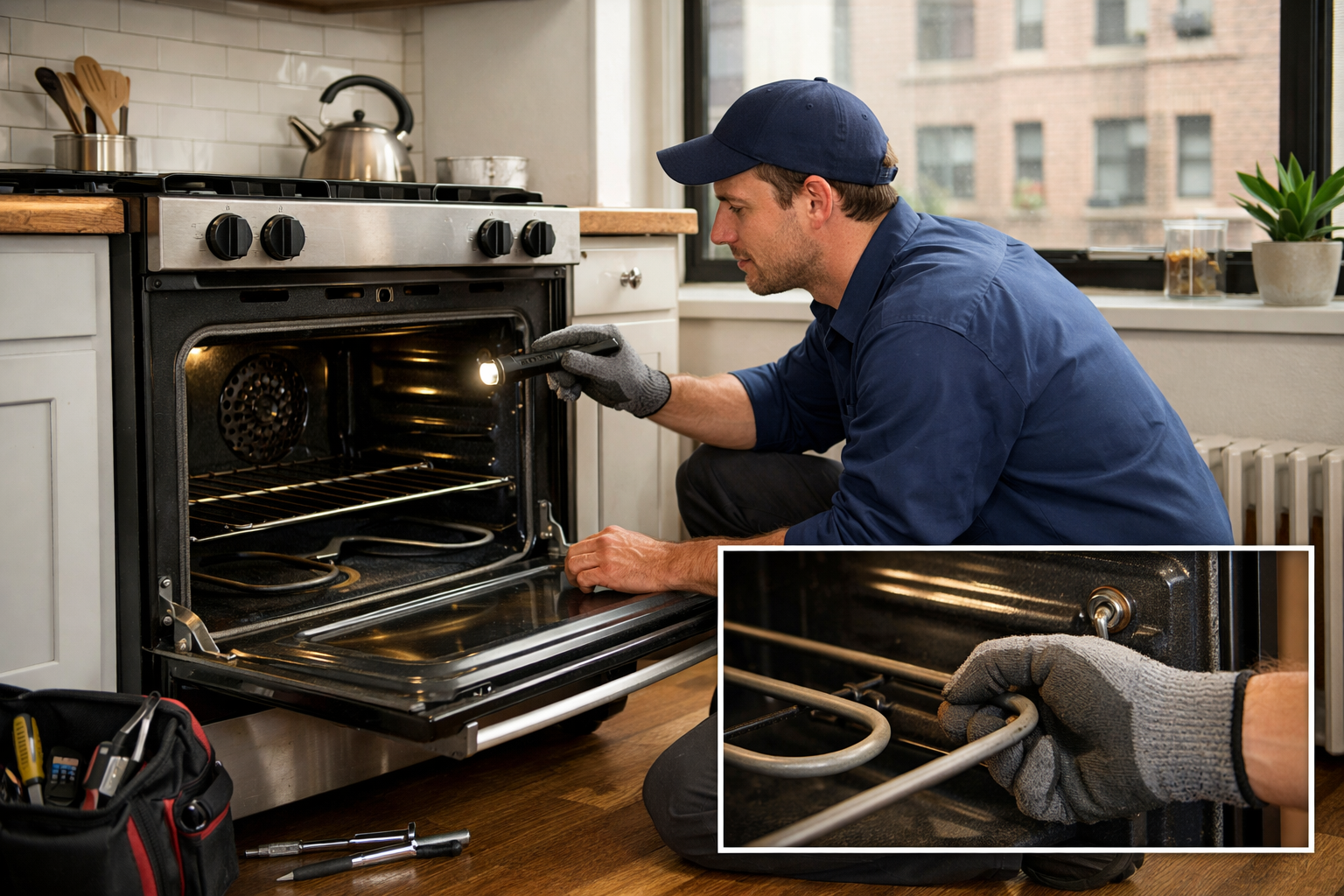
You can gather useful information without removing panels or testing electrical connections. Inspect the door area for an obvious obstruction, torn gasket material, or a bent rack that prevents full closure. Confirm that the door closes normally before repeating the controlled preheat observation.
Watch for warning signs during operation. Smoke, sparking, a strong burning odor, melted material, repeated breaker trips, or an element that remains on unexpectedly are not normal slow-preheat symptoms. Stop using the oven and turn off power at the breaker in these situations. Do not repeatedly reset a tripped breaker.
Avoid accessing terminals, rear panels, or voltage connections. Electric ranges use hazardous 240-volt circuits. For help with slow preheat or inconsistent baking, review oven and cooktop repair in Pelham.
What Professional Diagnosis Can Determine
A technician can begin with the model number, selected mode, set temperature, displayed alerts, and results from a standardized preheat test. Comparing display behavior with actual cavity temperature helps determine whether the concern continues under controlled conditions.
For an electric range, diagnosis may include confirming safe, correct incoming supply; inspecting terminal blocks, harnesses, and element connections for heat damage; and evaluating bake and broil circuits during the model’s actual preheat sequence. Relevant testing can also include the temperature sensor circuit, door closure and seal condition, control relays or outputs, and stored fault information.
This process avoids assumptions that the cooktop proves supply is fine or that a glowing element must be good. If you need service beyond Pelham, appliance repair in White Plains also covers oven and cooktop concerns. Review these signs an oven needs professional repair for additional escalation guidance.
Frequently Asked Questions
How long should an electric oven take to preheat to 350°F?
There is no single preheat time for every electric oven. Consult the use-and-care manual for your model. An empty-oven 350°F test provides a consistent comparison point, but model documentation determines expected performance.
Why does my oven eventually heat but take longer than it used to?
Possible causes include a supply issue, a heating circuit not participating correctly, sensor feedback, a control output concern, door heat loss, or a connection problem. Testing is needed to identify the actual cause.
Can an oven preheat slowly even when the cooktop works?
Yes. Working surface burners do not prove the oven receives correct power or that every oven heating circuit and connection is operating properly during the preheat sequence.
Does a glowing bake element prove the heating system works correctly?
No. An element can glow while another needed circuit, connection, sensor input, or control output is not performing as intended during preheat.
When should I stop using an electric oven with slow preheat?
Stop use and turn off power at the breaker for sparking, smoke, strong burning odor, repeated breaker trips, melted material, or an element that stays on unexpectedly.
You might also like