Why Does My Electric Oven Keep Heating After I Turn It Off?
If your electric oven keeps heating after you select Off or Cancel, treat it as more than a temperature concern. Cavity surfaces, racks, and metal can remain warm after cooking because they retain heat. However, an oven that continues producing heat, shows a glowing element, or keeps climbing substantially in temperature may have an energized heating circuit. Stop use rather than testing it again.
Shut Off Power and Avoid Electrical Repairs
Press Off or Cancel once, then observe from a safe distance. If the oven remains actively hot beyond expected residual heat, continues heating, smokes, sparks, smells burned, or trips its breaker, stop using it.
If the electrical panel is safely accessible, turn off the dedicated range or oven breaker. Do not repeatedly reset a breaker that trips. Removing power can stop an electric heating circuit that may still be energized.
Do not remove oven panels, pull the range out to reach wiring, test voltage, touch an element, or attempt to replace a relay or control board. These repairs may involve live-voltage circuits, heat-damaged terminals, and model-specific wiring paths.
This guidance applies to electric ovens. If you have a gas range and notice a gas odor, hissing, delayed ignition, or an uncontrolled flame, leave the area and contact the gas utility or emergency services from a safe location.
Tell Residual Heat From Continued Heating
An oven cavity, door, racks, and elements can remain warm for a period after cooking. That stored heat does not automatically indicate a failed component, especially when the oven gradually cools after being turned off.
The concern is whether the appliance is still adding heat. Warning signs include a bake or broil element that remains visibly hot, a display temperature that continues rising, or an oven that becomes substantially hotter after Off or Cancel than it was when cooking ended.
Note where the heat appears strongest without touching the appliance. Heat from the lower bake area, upper broil area, or both can help describe the symptom. Also note whether the display changed after cancellation or whether a breaker tripped. These observations can help distinguish normal retained heat from an active heating circuit.
What Can Cause an Oven to Keep Heating
Several components and circuits can create similar symptoms. A relay may remain closed when it should open, allowing power to continue reaching an element. An electronic oven control may have an output problem, or it may receive inaccurate feedback from the temperature-sensing circuit.
Other possibilities include a damaged harness, a loose or overheated element terminal, or another model-specific control or feedback fault. Previous heat damage at a connection can complicate what initially appears to be a straightforward control problem.
A glowing bake element does not prove the element itself has failed. Likewise, hearing a relay click does not confirm that the relay is functioning correctly. The key question is whether the control is commanding heat, an output is staying closed, or wiring or feedback is causing misleading behavior. Testing is needed before selecting a replacement part.
Record Details for a Proper Diagnosis
After the oven cools and power is off, write down what happened. Note the selected cooking function, set temperature, display behavior after Cancel, and whether the temperature appeared to rise, remain steady, or gradually fall. Record whether the issue began after a power interruption or an earlier repair.
Photograph displayed fault codes or visible element damage from outside the oven cavity only. This information can give a technician a clearer starting point without requiring you to handle electrical components.
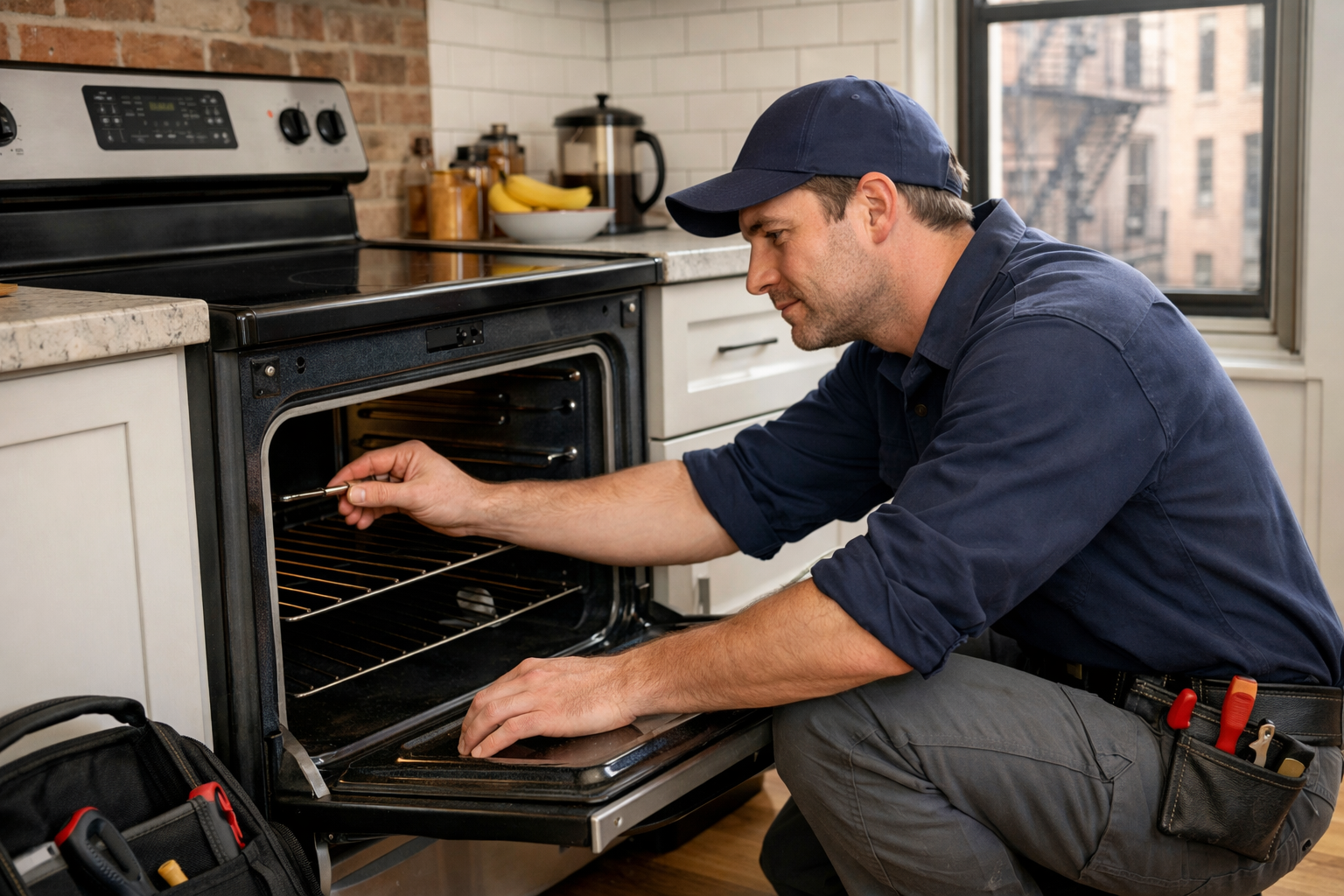
A proper evaluation for oven and cooktop repair in Pelham can include checking supply connections, terminal blocks, element terminals, harnesses, temperature-sensor feedback, relay behavior, and stored fault information. Homeowners outside Pelham can also review appliance repair in New Rochelle for cooking-appliance service information.
Frequently Asked Questions
Why is my electric oven still hot after I turn it off?
Residual heat from the oven walls, racks, and elements is normal after cooking. Continued heating is different: the cavity keeps getting hotter, an element remains visibly hot, or the temperature rises substantially after Off or Cancel.
Should I turn off the breaker if my oven will not stop heating?
Yes, if the electrical panel is safely accessible, turn off the dedicated oven or range breaker. Do not keep resetting a breaker that trips, and do not attempt to access wiring behind or inside the appliance.
Can a bad oven temperature sensor make an oven keep heating?
A faulty temperature-sensing circuit can provide inaccurate feedback and may contribute to overheating behavior. It is not the only possible cause, so the sensor, wiring, control response, and heating outputs should be evaluated together.
Does a glowing bake element mean the element is the problem?
Not necessarily. A glowing element shows that it is receiving power. The cause may involve the element circuit, a relay that remains closed, a control output, or wiring rather than the element itself.
Why test wiring and relays before replacing the control board?
Overheated terminals, damaged harnesses, stuck relays, and feedback faults can resemble a failed control board. Testing identifies whether the control is commanding heat or whether another component is keeping the heating circuit energized.
You might also like