Why Does My Refrigerator Ice Maker Fill Tube Freeze Up?
A frozen ice-maker fill tube can stop cube production even when the refrigerator otherwise appears to work normally. Ice may collect at the tube tip, fill cup, or bin, and cubes can become small, hollow, or fused. The visible ice is a symptom, however. It may return after thawing when a water-delivery, alignment, airflow, or model-specific heating condition remains.
Why a Fill Tube Freezes
The fill tube directs water into the ice maker mold. For normal operation, water must enter the fill cup cleanly, stop at the end of the fill, and not remain where freezer air can freeze it. Several conditions can disrupt that sequence.
- A water inlet valve may seep slightly after a fill cycle instead of closing fully. Small drips can freeze at the tube outlet.
- The fill tube or fill cup may be out of position, allowing water to overshoot, splash, or run onto nearby surfaces.
- Restricted or mineral-affected water flow can produce a weak, irregular, or poorly directed fill.
- Some designs use a fill-tube heater or depend on insulation and air sealing around the ice maker. Cold air reaching the entry point can freeze lingering water.
Visible ice does not, by itself, identify which condition is responsible.
What to Note Before Any Thawing
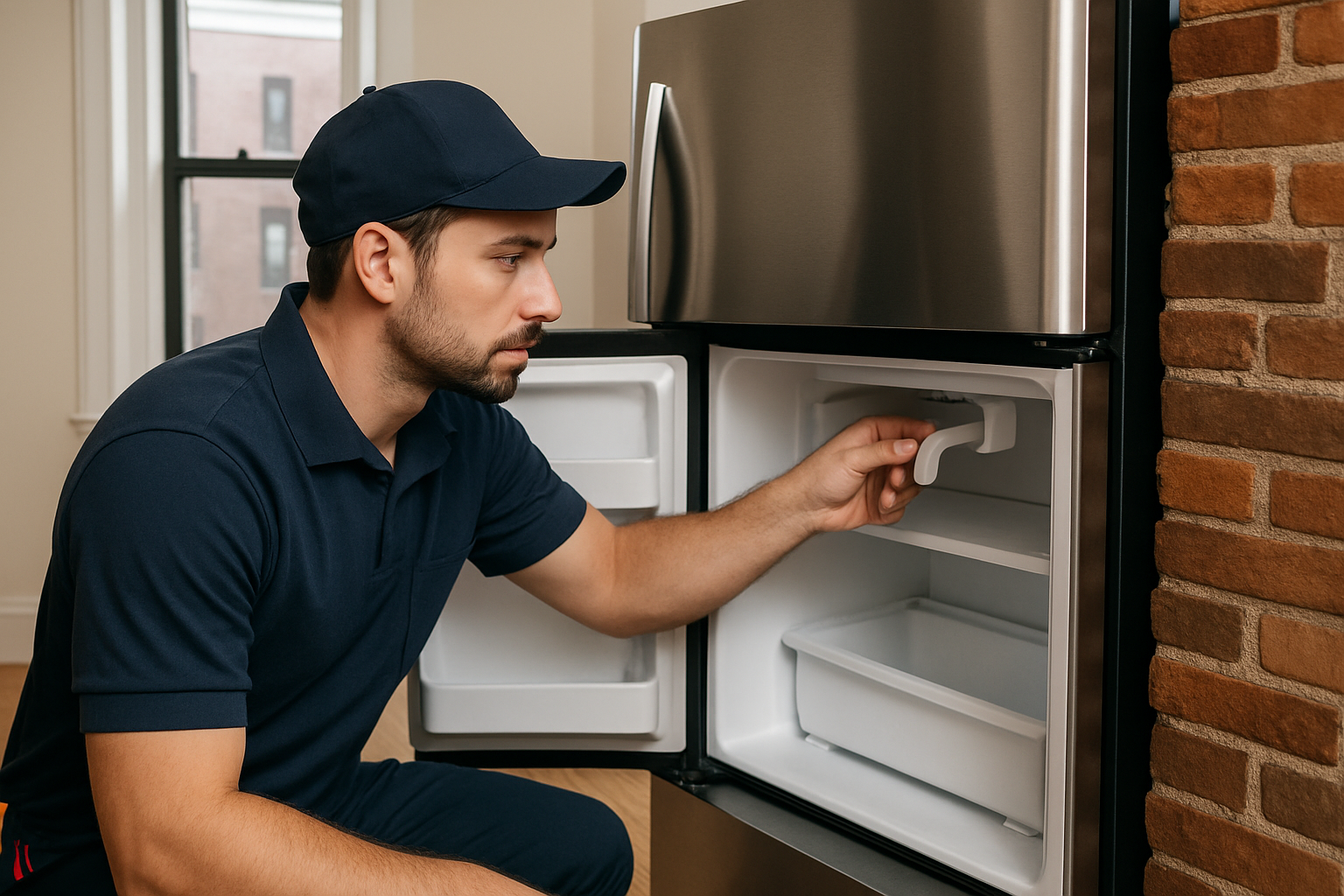
Before resetting the ice maker or melting the ice, note where the buildup formed. Is it limited to the tube tip, packed around the fill cup, or extending into the bin? A clear photo can preserve details that disappear once the ice melts.
Also consider what happened before production stopped. Small or hollow cubes can indicate inconsistent water delivery. Fused cubes, water outside the mold, or ice concentrated on one side can suggest that water is not entering the fill cup as intended. If the refrigerator has a dispenser, note whether its water flow seems normal.
Check the owner manual for approved instructions to turn the ice maker off. Follow accessible water-filter guidance when provided, but do not assume a filter change will correct every frozen fill tube. Recurring ice, leaks, frost, or water-delivery concerns may require refrigerator repair for ice-maker and water-path problems.
Why Thawing May Be Temporary
Thawing clears the immediate blockage, so the next fill cycle may look normal. That does not mean the original cause has been corrected. A seeping valve can leave water behind again, a misaligned tube can continue missing the fill cup, and unwanted cold air can refreeze moisture at the entry point.
Avoid adjusting fill time based on this symptom alone. The correct setting and procedure vary by refrigerator model, and changing settings without diagnosis can hide the pattern rather than resolve it.
Do not probe inside the tube, remove freezer panels, or test energized electrical components. Avoid improvised heating methods as well. These steps can damage plastic parts, wiring, insulation, or the ice-maker assembly. Follow only owner-manual instructions intended for normal user access and operation.
What Professional Diagnosis Involves
A technician first confirms the complaint and identifies the exact location of the ice. A conventional freezer ice maker may be evaluated differently from a refrigerator-compartment ice maker with a dedicated ice box.
The inspection can include fill-tube routing, fill-cup condition, and alignment. Water delivery is evaluated for restrictions, while inlet-valve sealing is assessed rather than presumed faulty. On models with a fill-tube heater, model-specific documentation and wiring information may be needed to evaluate relevant heater circuits, harnesses, sensors, valve operation, and control outputs. Airflow, insulation, and sealing around the ice maker may also need attention.
Pelham homeowners should stop using the ice maker and arrange service for active leaking, water near electrical components, a burning smell, or worsening refrigerator temperatures. Bosch owners may need model-aware Bosch refrigerator and ice-maker repair. Nearby households can also review Mount Vernon appliance repair service.
Frequently Asked Questions
Why does my refrigerator ice-maker fill tube keep freezing?
The tube can freeze when water drips after filling, misses the fill cup, flows inconsistently, or encounters an airflow, sealing, temperature, or model-specific heater issue. The ice location and pattern help narrow the diagnosis.
Can a leaking water inlet valve freeze the ice-maker fill tube?
Yes. A valve that seeps after the normal fill can leave water at the tube outlet, where freezer air turns it into ice. Ice alone does not prove the valve is responsible, because alignment and airflow can create similar buildup.
Will replacing the water filter fix a frozen ice-maker fill tube?
A filter may matter when water delivery is restricted and the owner manual identifies it as accessible maintenance. It will not correct fill-cup alignment, post-fill dripping, or an airflow, sealing, or heater-related condition.
Why does the ice maker work after thawing but fail again later?
Thawing removes the blockage, but it does not necessarily resolve why water froze there. Subsequent fill cycles can recreate the same buildup if the valve, water path, tube position, or cold-air condition remains unchanged.
Should I use a hair dryer or remove freezer panels?
No. Do not use improvised heating methods, remove panels, or perform internal electrical testing for this symptom. Follow the owner manual’s approved ice-maker instructions and leave internal access and component diagnosis to a technician.
You might also like