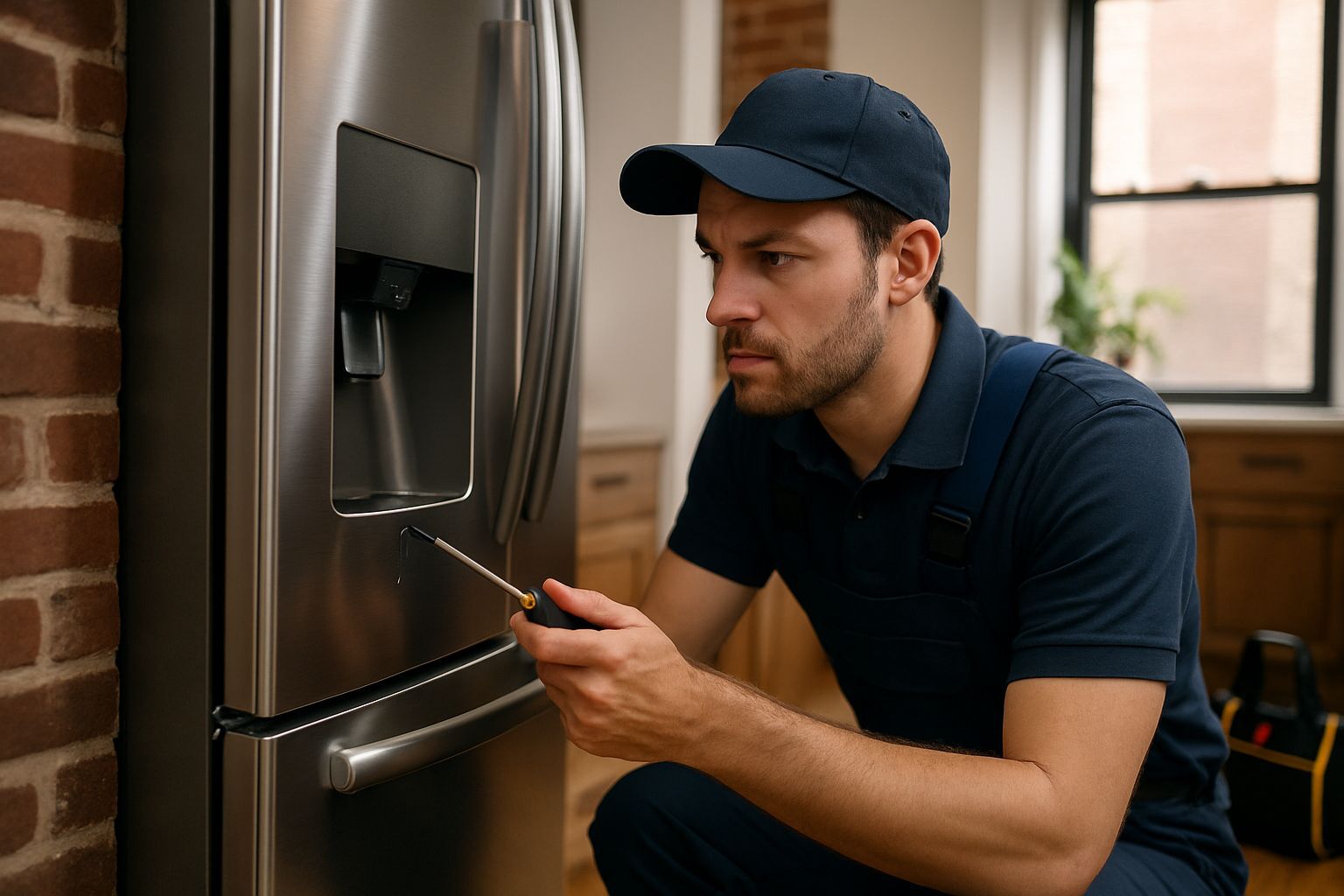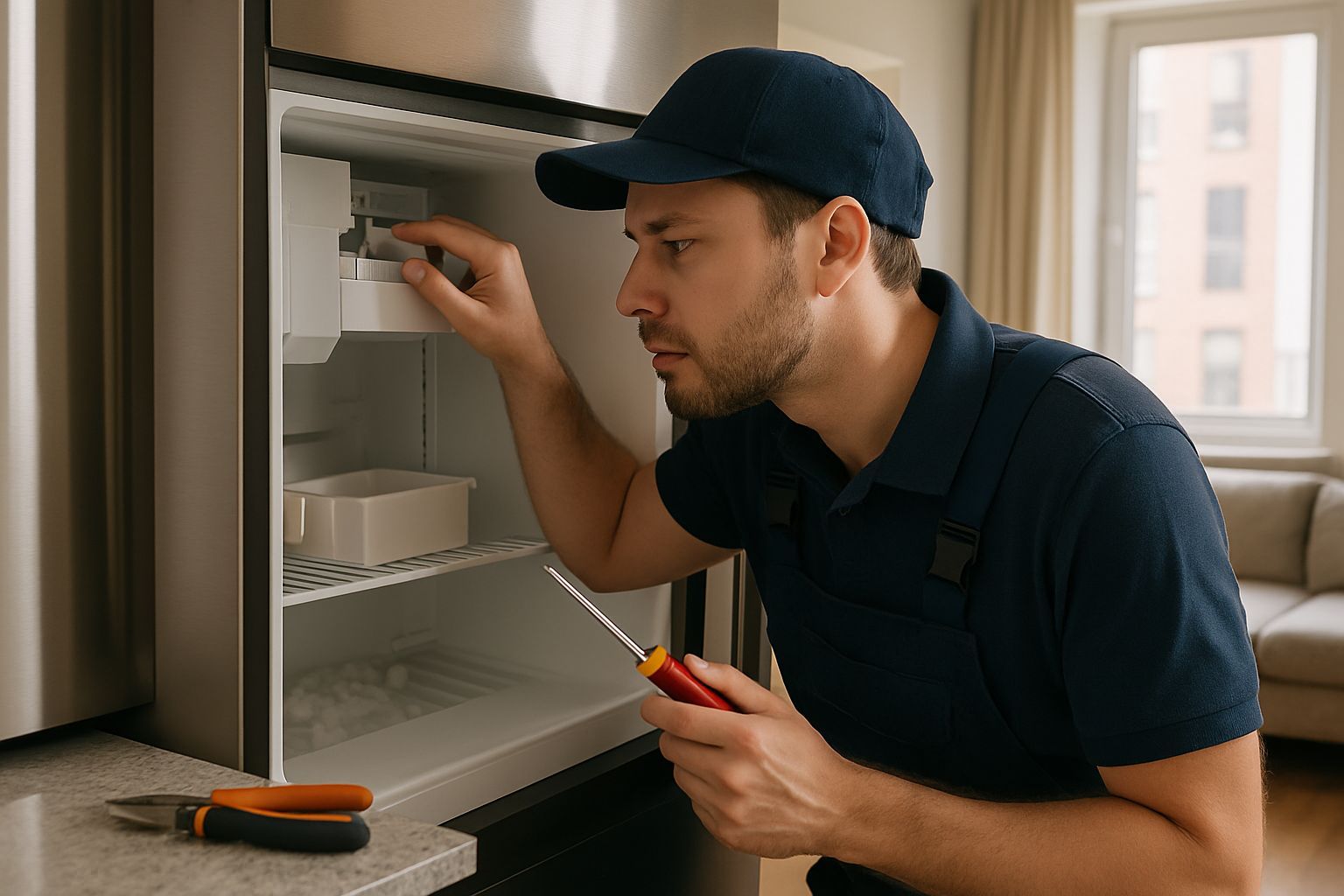
Appliance repair technician diagnosing a refrigerator freezing food in Pelham NY
"Refrigerator freezing food instead of keeping it cold? Learn what causes overcooling and what a technician checks before replacing parts."
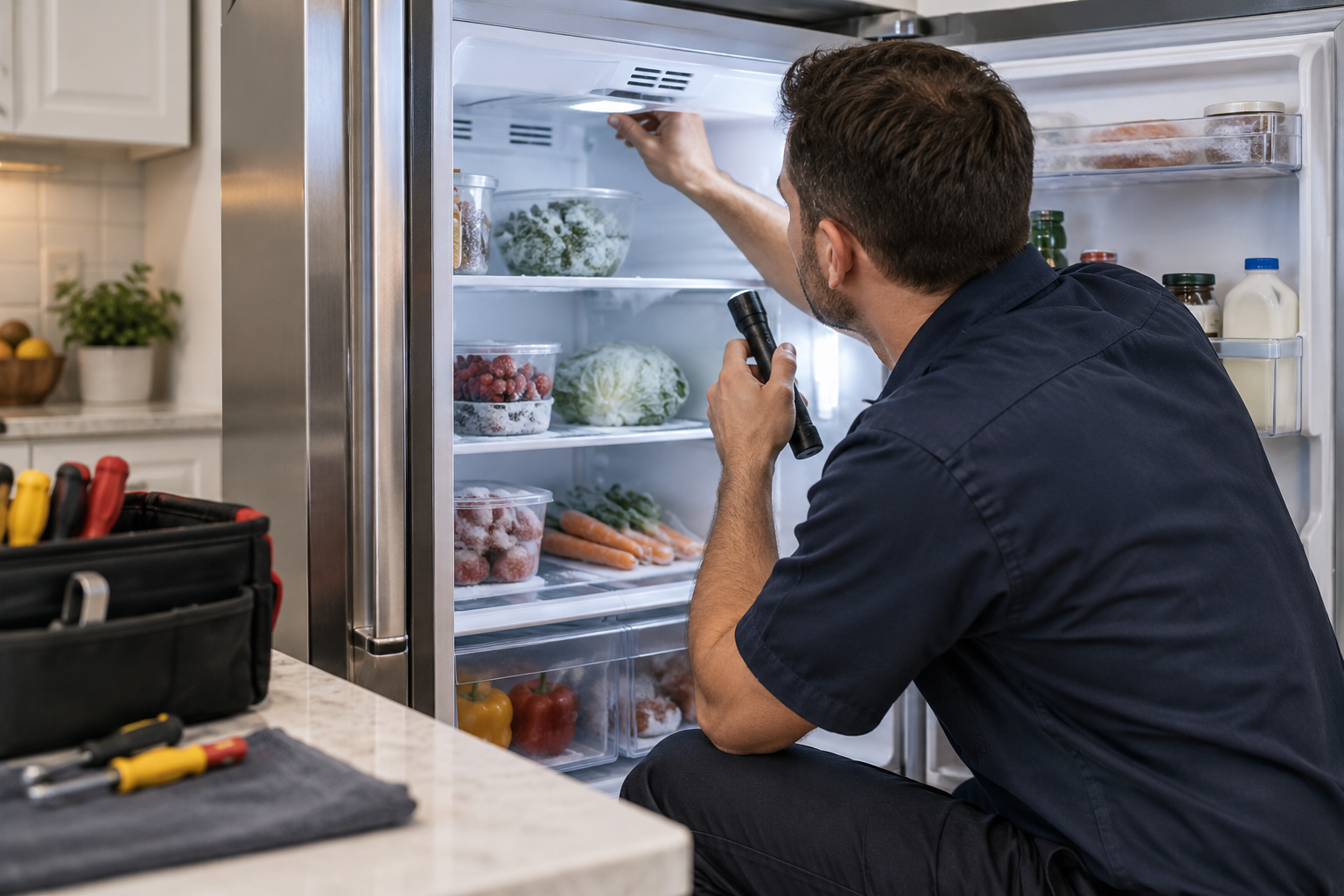
Finding frozen lettuce, icy milk, or partially frozen drinks in the refrigerator section usually means the appliance is cooling more than it should. Sometimes the problem is as simple as food blocking an air vent or an incorrect temperature setting. Other times, the refrigerator is receiving bad temperature information or allowing too much freezer air into the fresh-food compartment. The important part is figuring out why it's happening before replacing anything.
When we diagnose a refrigerator that's freezing food, we don't automatically assume the thermostat or temperature sensor is bad. Several components work together to control temperature, and a failure in one part of that system can produce almost the same symptom as a failure somewhere else.
Start With Where the Food Is Freezing
The location of the frozen food gives us useful information. If items freeze mainly on one shelf or directly in front of an air vent, the refrigerator may not have a mechanical failure at all. Cold air entering from the freezer can be concentrated in that area, especially when containers are pushed against the back wall or placed directly in the airflow path.
If food is freezing throughout the entire fresh-food compartment, however, we start looking more closely at temperature control. A refrigerator set around a normal fresh-food temperature should not consistently drop below freezing.
If adjusting the setting doesn't correct the problem, professional refrigerator repair may be needed to determine whether the refrigerator is sensing or controlling temperature correctly.
The Air Damper May Be Staying Open
Many refrigerators cool the fresh-food compartment by moving cold air from the freezer through a damper. Think of the damper as a small controlled doorway. It opens when the refrigerator needs more cold air and closes or reduces airflow when the correct temperature has been reached.
If that damper sticks mechanically, breaks, or receives an incorrect command, too much freezer air can continue entering the refrigerator compartment. Food near the air outlet may freeze first, but a severe problem can eventually make the whole section too cold.
A common mistake is replacing the damper just because food is freezing. Before doing that, a technician needs to determine whether the damper itself is actually stuck or whether another component is telling it to remain open.
A Temperature Sensor Can Give the Control Bad Information
Modern refrigerators commonly use thermistors to monitor temperature. A thermistor changes electrical resistance as its temperature changes, allowing the electronic control to determine how cold the compartment is.
If the sensor's reading is inaccurate, the control may think the refrigerator is warmer than it really is. The appliance can then continue cooling even though the actual compartment temperature is already low enough.
This is why diagnosis matters. A technician can compare the actual compartment temperature with sensor data and test the thermistor according to the appliance's service information. Simply installing a new sensor because the refrigerator is too cold can turn into an unnecessary parts swap.
What You Can Safely Check at Home
Before scheduling appliance repair near me, there are several safe checks worth making.
Check the temperature setting. Someone may have accidentally changed the control. Return it to the manufacturer's recommended range and give the refrigerator enough time to stabilize before judging the result.
Move food away from air vents. Don't pack containers tightly against the rear wall or directly in front of the cold-air outlet.
Look for a pattern. Note whether only the top shelf, bottom drawers, back wall area, or the entire compartment is freezing. That information can be useful during diagnosis.
Check the door seal. Make sure nothing is preventing the refrigerator door from closing correctly and inspect the gasket for obvious damage.
Homeowners should not attempt live-voltage testing or disassemble electrical controls. If basic adjustments don't change the temperature problem, it's time for proper testing.
What a Refrigerator Technician Checks
When a refrigerator continues freezing food, one of the first things a technician should do is verify the complaint with actual temperature measurements. From there, the diagnostic path depends on the refrigerator design.
We may inspect the damper operation, fresh-food thermistor, evaporator fan airflow, wiring and connectors, temperature controls, and electronic control system. On some models, service diagnostics can provide additional sensor or component information.
The technician also needs to consider whether airflow is being distributed normally. A fan problem, blocked passage, abnormal frost pattern, or airflow restriction can create unusual temperature differences inside the cabinet.
The control board can be involved, but it shouldn't be the first part blamed. Before condemning an expensive electronic control, the inputs going into it and the components it controls need to be checked.
Homeowners in Pelham and surrounding areas experiencing persistent refrigerator temperature problems can also review Sultan Appliance Repair's fridge service repair near me information or the company's full appliance repair services.
Does a Refrigerator Freezing Food Mean It's Failing?
Not necessarily. Overcooling can come from a relatively focused control or airflow problem, so the symptom alone isn't a reason to replace the refrigerator.
Repair-versus-replacement decisions should consider the refrigerator's age, overall condition, exact failure, parts availability, previous repairs, and the cost of correcting the diagnosed problem. Getting the failure properly identified first gives you much better information than making the decision based only on the symptom.
Frequently Asked Questions
Why is food freezing in my refrigerator but the freezer seems normal?
The freezer can operate normally while excessive cold air enters the fresh-food compartment. Airflow placement, a damper problem, an inaccurate temperature sensor, or a control issue can all contribute.
Why does my refrigerator freeze vegetables in the crisper drawer?
Cold air distribution and drawer settings can cause vegetables to become too cold. Check any adjustable humidity or temperature controls and make sure food isn't positioned directly in a cold-air path.
Can a bad thermistor cause a refrigerator to freeze food?
Yes. If a temperature sensor reports an inaccurate reading, the control may continue calling for cooling. The sensor should be tested rather than replaced based on the symptom alone.
Can a blocked refrigerator vent cause food to freeze?
Food placed directly against certain cold-air outlets can freeze because it is exposed to concentrated cold airflow. Rearranging items is a good first check before assuming the refrigerator needs a repair.
Why is my refrigerator freezing food even on the warmest setting?
If changing the temperature setting doesn't affect the actual compartment temperature, there may be a problem with sensing, airflow control, a damper, wiring, or the electronic control system. Proper diagnosis is the next step.
Schedule Refrigerator Repair
If you've adjusted the settings and moved food away from the vents but the refrigerator continues dropping below the proper temperature, don't start replacing sensors or control boards at random. Sultan Appliance Repair provides refrigerator repair in Pelham and surrounding service areas. A technician can measure the actual temperatures, evaluate airflow and test the components responsible for regulating cooling before recommending a repair.
You might also like