Washer Fills With Water but Won’t Wash? What a Technician Checks
"Washer fills with water but won’t wash or agitate? Learn what can stop the wash cycle and what a technician tests before replacing parts."
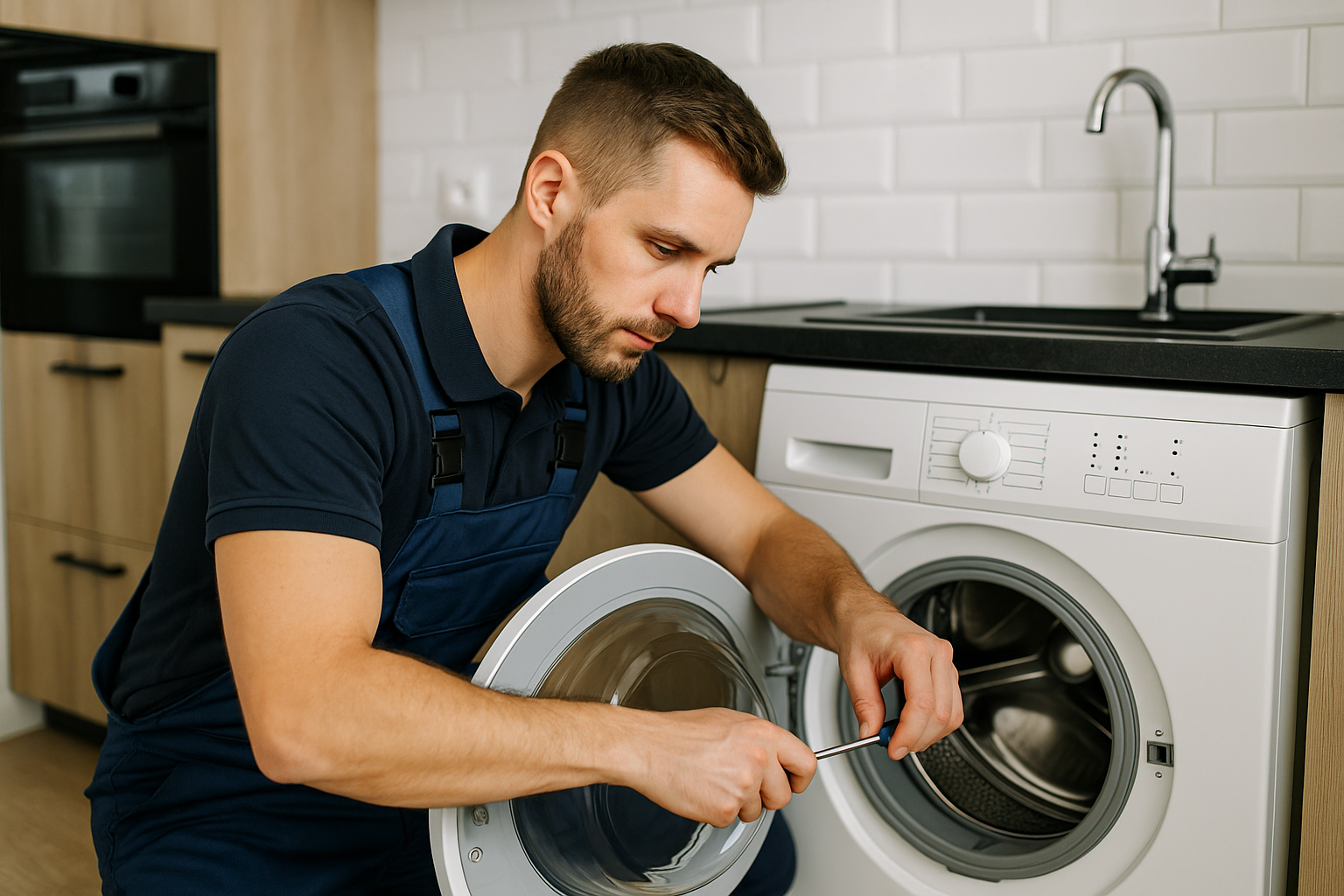
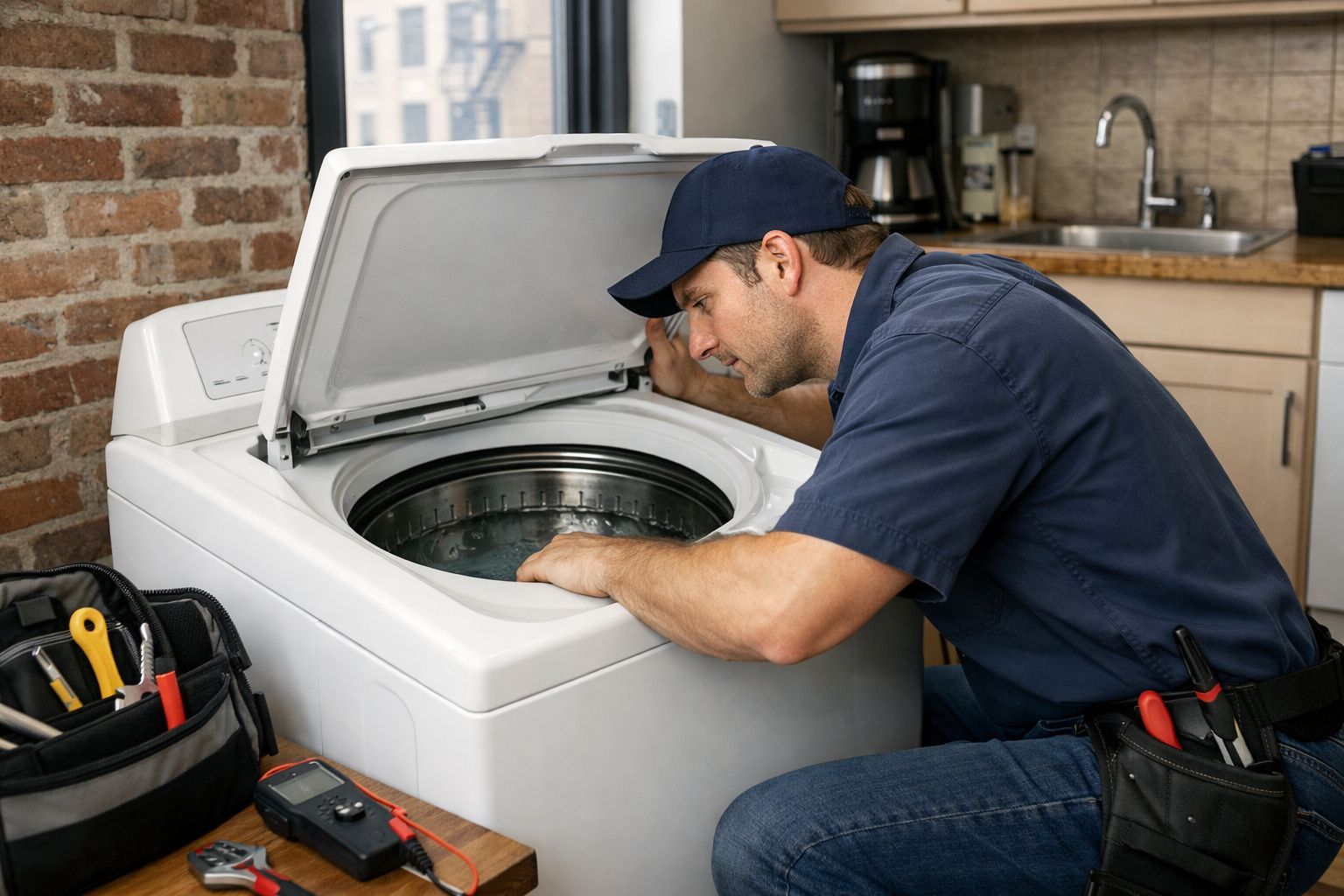
A washing machine that fills with water and then just sits there gives us an important diagnostic clue. The water valves are working well enough to fill the tub, but the washer isn't making the transition into wash action. On a top-load machine, the agitator or wash plate may stay completely still. On a front-loader, the drum may never begin tumbling. Sometimes you'll hear a click or hum; other times the machine becomes strangely quiet.
This doesn't automatically mean the motor is bad. Depending on the washer design, the problem can involve the lid or door lock, drive belt, shift actuator, motor capacitor, drive components, wiring, motor, or electronic control. That's why good washer repair starts with the symptom and the machine's sequence of operation instead of guessing which part to replace.
First, Make Sure the Washer Is Actually Stuck
Modern washing machines don't all begin moving immediately after the water shuts off. Some models pause while sensing the load, locking the lid, or preparing the drive system. Certain cycles can also include a soak period where the clothes remain in water without obvious movement.
Give the washer enough time to advance normally and check the selected cycle. If several minutes pass and there is still no wash action, or the machine eventually displays an error code, then there is likely a problem worth diagnosing.
Pay attention to what happens next. Does the washer eventually drain? Will it spin if you select a drain-and-spin cycle? Does the lid lock? Is there a humming or clicking sound when agitation should begin? Those details can help separate a control or safety-switch problem from a mechanical drive failure.
The Lid Lock or Door Lock Matters More Than Many Homeowners Realize
One of the first things a technician should check is whether the washer knows the lid or door is safely closed. Depending on the design, a washer may be able to fill but refuse to begin normal wash action when it doesn't receive the correct lock or switch signal.
A broken latch isn't the only possibility. The lock mechanism can be mechanically damaged, its switch can fail electrically, or the wiring and connector between the lock and control can develop a problem.
If the washer repeatedly clicks near the lid but never starts washing, that's useful information. It still doesn't prove the lid lock needs replacement. Testing the circuit matters before installing a new part.
Drive-System Problems Can Stop Agitation
If the washer recognizes that the lid is closed but the basket or agitator still doesn't move, attention shifts toward the drive system.
Different washer designs use different components. Some use belts. Others use couplings, shift mechanisms, splutch assemblies, capacitors, or other drive components to transfer motor power into basket or agitator movement. A worn or broken component can allow the washer to fill normally while preventing the actual washing motion.
The exact behavior matters here. A washer that agitates but won't spin isn't necessarily experiencing the same failure as one that won't move at all. Likewise, a washer that makes a strong humming noise but can't start the drive system requires a different diagnostic approach than a completely silent machine.
Why the Motor Shouldn't Be Replaced Just Because Nothing Moves
The motor is an obvious suspect when a washer won't agitate, but it's only one part of the system. Before condemning a motor, a technician needs to determine whether the control is actually commanding it to operate and whether the components needed to start and transfer motor movement are functioning.
On applicable models, a weak or failed motor capacitor can affect the motor's ability to start. A failed shift actuator can prevent the drive system from moving into the required operating mode. A broken belt or coupling can leave the motor running without producing the expected tub movement.
This is where diagnosis saves money. Replacing an expensive motor or control board won't fix a failed mechanical connection elsewhere in the washer.
Safe Checks You Can Make Before Calling for Washer Repair
Homeowners can make several basic observations without taking the washer apart. Confirm that a normal wash cycle is selected rather than a soak or delay option. Make sure the lid or door closes completely and that clothing isn't caught in the latch area. If an error code appears, write it down because the code can give the technician a useful starting point.
You can also try a drain-and-spin cycle after removing the clothes, provided the washer isn't leaking or making a severe grinding noise. Note whether it drains and whether the basket attempts to spin.
Don't bypass the lid lock, defeat a safety switch, or perform live electrical testing. Washers contain moving parts and electrical circuits that require proper service procedures.
What a Washer Technician Tests
When we diagnose this symptom, we're trying to determine where the normal operating sequence stops. That may include checking the lid or door lock operation, looking for stored fault codes, inspecting accessible wiring and connectors, evaluating the drive components, and determining whether the motor is receiving the proper command.
On models that use a capacitor, actuator, belt, or coupling, those components may also require testing or physical inspection. The exact procedure depends on the washer's model and design. There isn't one universal part that causes every washer to fill and stop.
Sultan Appliance Repair provides appliance repair for washing machines and other major household appliances in Pelham and surrounding areas. Homeowners searching for appliance repair near me can also find service throughout Westchester and Rockland Counties, including White Plains, New Rochelle, Scarsdale, Yonkers, and other communities in the current service area.
Frequently Asked Questions
Why does my washer fill with water but not start washing?
The washer may be waiting for a valid lid or door-lock signal, or there may be a problem in the drive system, motor-start circuit, wiring, or electronic controls. The next step is determining which part of the operating sequence isn't happening.
Can a bad lid switch let a washer fill but not agitate?
On some washer designs, yes. The machine may fill but refuse to continue into agitation when it doesn't detect the correct lid or lock condition.
Why does my washer hum after filling?
A hum can indicate that a component is being energized but isn't able to operate normally. Motor-start problems, a jammed or failed drive component, or other mechanical issues are possibilities. The sound alone isn't enough to identify the failed part.
Can a washer belt cause the machine not to agitate?
Yes, on washers that use a belt-driven system. A damaged, loose, or broken belt can prevent normal wash movement. Not every washer uses the same drive design, so the model needs to be identified before assuming a belt is involved.
Why will my washer spin but not agitate?
If the machine can spin but can't perform normal wash action, the technician can focus on components involved specifically in agitation or shifting between operating modes. That symptom is different from a washer that has no basket movement at all.
Is a washing machine worth repairing if it won't agitate?
It often can be. The decision should depend on the actual failure, the washer's age and overall condition, parts availability, repair history, and the cost of repair compared with replacement. Diagnosis should come before making that decision.
Schedule Professional Washer Repair
If your washing machine fills normally but never starts washing, avoid ordering a motor, control board, or lid lock based only on the symptom. Several different failures can produce almost the same behavior. Sultan Appliance Repair provides professional washing machine repair in Pelham, NY and surrounding Westchester County communities, with diagnosis focused on finding the actual failure before parts are replaced.
You might also like