Electric Range Burner Stays on High? What a Technician Checks First
An electric range burner that stays on high is more than an inconvenience. A surface element delivering intense heat on a low setting can scorch food, overheat cookware, and create an unsafe situation. For Pelham, NY homeowners, distinguish normal burner cycling from a control or circuit problem needing professional diagnosis. A burner that repeatedly behaves as though it is at maximum power should not be ignored.
Normal Burner Cycling and Excessive Heat
Many conventional electric ranges use an infinite switch behind the control knob to regulate heat. The switch cycles power on and off rather than delivering identical power continuously at every setting. At lower settings, the element generally has shorter heating periods and longer off periods; at higher settings, it receives power more often.
It can therefore be normal for a burner to glow during part of a cycle, then dim or go dark. Cookware, burner design, and selected setting affect what you see. Concern begins when one burner consistently produces excessive heat at low settings, cannot reduce heat, or does not respond as the knob moves toward OFF. These symptoms do not identify one failed part; the control, wiring, element configuration, and model-specific components require consideration.
What to Do First When a Burner Will Not Reduce Heat
If a burner will not turn down or continues heating after its knob is set to OFF, leave the knob OFF and shut off the range breaker if heat persists. Do not restore power to test it. Keep pans, towels, and children away from the surface. The element remains hot after power is disconnected.
Before service, note whether one burner or several are affected, whether overheating occurs at every setting or only some, and the knob position involved. Note the hot-surface indicator. Have the model number and, if applicable, a control-panel photo available.
Do not remove the control panel, move switch wires between terminals, or perform live-voltage testing. Electric ranges use hazardous 240-volt circuits, and incorrect wiring can cause damage or unsafe operation.
Why One Burner May Stay Effectively Full-On
On a conventional range, a burner effectively at full power can involve infinite-switch contacts stuck closed. An incorrect replacement switch, wrong terminal connections, or a damaged harness connection can also produce abnormal operation.
Terminal layouts vary by model and part configuration, so a replacement that looks similar is not necessarily wired or configured the same way. The affected surface element also matters. Dual radiant elements may include a limiter or sensor that works with the control circuit. Those components add variables to a diagnosis.
When only one burner overheats, attention focuses on its control-to-element circuit rather than the entire range. Still, the symptom cannot confirm the responsible component. Model-specific evaluation prevents assumptions and avoids installing a part that does not address the fault.
What a Technician Checks First and When to Seek Service
Diagnosis confirms the complaint across affected burner settings and determines whether cycling is absent, abnormal, or operating as designed. It establishes whether one element or multiple burners are affected.
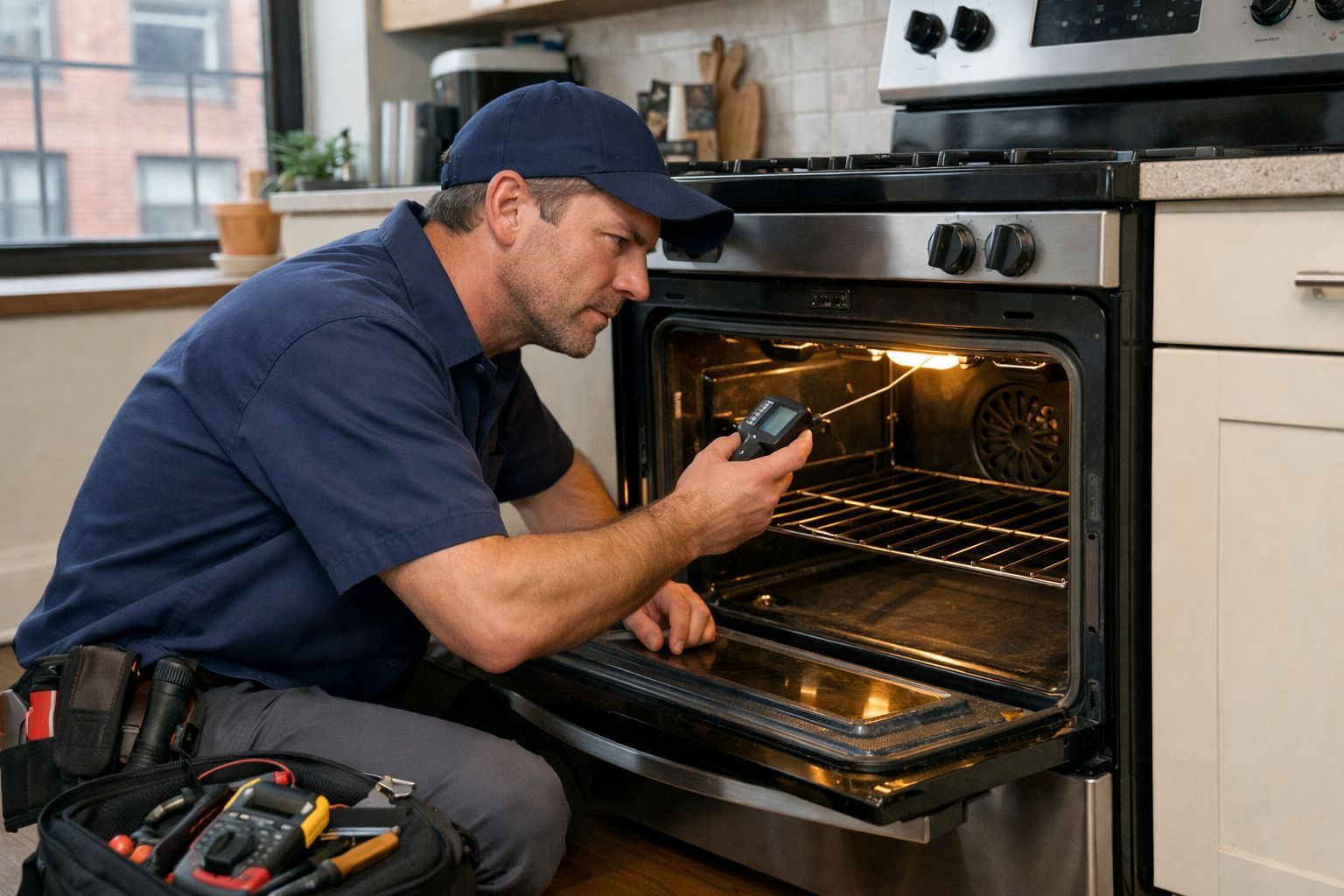
Inspection may include the applicable control, terminal mapping, harness connectors, heat-damaged terminals, and element. For a dual element, applicable limiter, sensor, and related wiring are considered. Using model-specific wiring information, incoming power and voltage delivery through the control circuit can be verified safely. Parts follow isolation of the failed component or connection, not guesswork.
Stop using a burner that will not reduce heat or continues heating when off until inspected. See Sultan Appliance Repair’s electric oven and cooktop repair services. Nearby homeowners can also review appliance repair in New Rochelle.
Frequently Asked Questions
Why Is My Electric Stove Burner Too Hot on Low?
A low setting generally supplies less average heat through shorter power cycles. If one burner consistently acts high, causes can include a control issue, incorrect terminal connections, damaged wiring, or model-specific element components. Diagnosis should precede part selection.
Is It Normal for an Electric Range Burner to Cycle On and Off?
Yes. Many conventional electric burners cycle power on and off as an infinite switch regulates heat output. A burner that consistently delivers maximum-like heat at low settings, cannot be turned down, or keeps heating at OFF is not normal.
Can an Infinite Switch Make a Burner Stay on High?
It can be involved. Stuck switch contacts may allow an element to receive power when it should cycle off. Technicians also check switch configuration, terminal mapping, wiring, and applicable element components before concluding that the switch is the cause.
Why Does Only One Burner on My Cooktop Overheat?
When one burner overheats, the issue may be isolated to its control, wiring, terminals, or element-related components. Dual elements may have limiter or sensor circuitry. A model-specific evaluation is needed because the symptom does not identify the failed component.
Should I Turn Off the Breaker if My Stove Burner Will Not Turn Off?
Yes. Turn the knob to OFF first. If the burner continues heating or will not reduce heat, switch off the range breaker and keep the area clear until the range can be inspected safely.
You might also like